Iron River Residents Blast City Council Over Poor Winter Snow Plowing
A local business owner claims $10,000 in lost revenue after poor winter plowing blocked his Iron River shop, fueling a heated confrontation at the March 18 city council meeting.
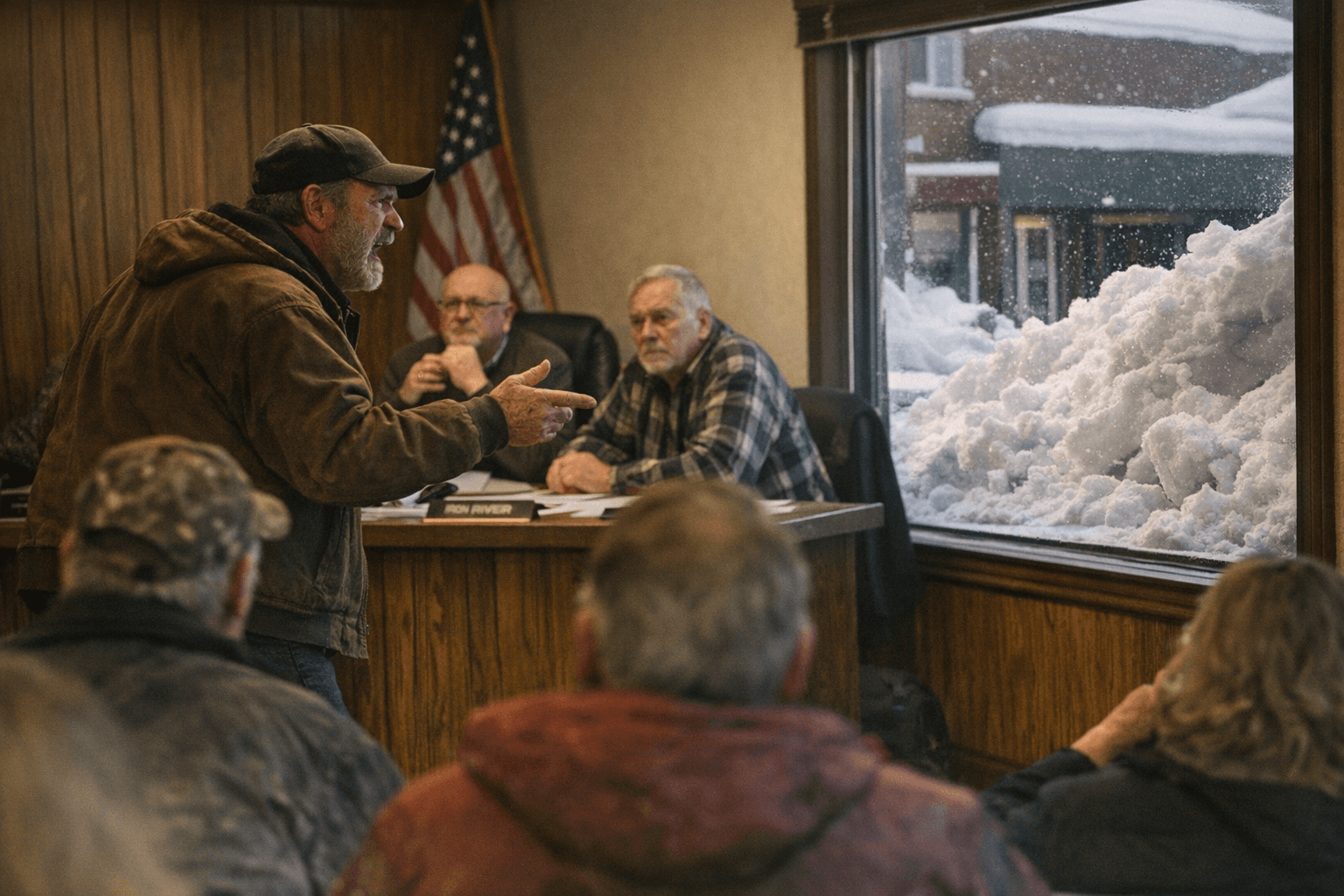
James Welch stood before the Iron River City Council on March 18 and put a dollar figure to the winter's plowing failures: roughly $10,000 in lost business at L&W Pallet Liquidators, where an unplowed road had repeatedly cut off customer access for stretches of the season. By the time conditions near his business improved following a later storm, his vehicle had already been damaged. Welch told the council he had filed multiple complaints with city staff before the damage occurred and criticized both the timing and thoroughness of the city's cleanup response.
He wasn't alone at the microphone. Erica Adams, a Caspian resident, told the council Iron River's plowing had been "awful" and named specific roads and alleys she believed were neglected all winter. Dave Sankey raised what he framed as a structural problem: plow drivers were starting too late in the morning, and he said he had been told low employee morale was a contributing factor. Sankey urged the council to consider raising wages to recruit and keep qualified operators, or to explore contracts with private plowing companies that carry more hands-on experience.
Mayor Rodney Dood acknowledged the criticism and said he did not understand why plows weren't rolling earlier in the morning, adding that he had already raised the issue directly with City Manager Rachel Andreski.
Andreski defended the six-member Department of Public Works crew, noting that workers had logged early mornings, long days and weekend shifts throughout the worst of the season. She also pointed to a concrete equipment problem that squeezed fleet capacity: a 2019 International route plow truck with a malfunctioning transfer case was pulled from service and sent back to the manufacturer for diagnosis and repair on March 2, leaving the city short a key vehicle during subsequent storms. Andreski had previously issued a state of emergency ahead of heavy mid-March snowfall and asked residents to clear their vehicles from city streets to help crews move faster.
The convergence of a reduced fleet, scheduling concerns and a workforce morale question now sits before the council as it weighs what changes to make before next winter. Residents pushed for earlier start times, better operator pay and the use of brining as a proactive, cost-effective alternative to reactive cleanup. Whether those recommendations translate into budget adjustments or new service contracts will signal how seriously the council intends to act on the frustration its own mayor publicly echoed.
This article was produced by Prism’s automated news system from verified source data, official records, and press releases, then run through automated quality and moderation checks before publishing. The system is built and supervised by the people who set the standards it runs under. Read our full AI policy.
Did this article answer your question?