Iron River, WIC Fire Board to Split Cost of Emergency Siren Relocation
The city's emergency warning siren is moving to a new location, raising questions about which Iron River neighborhoods will and won't hear it. Cost: roughly $10,000, split with the WIC Fire Board.

The outdoor emergency warning siren that alerts Iron River residents to tornadoes, severe storms, and civil emergencies is headed to a new location, and where it lands will determine which parts of the city receive reliable audible warning and which don't.
The Iron River City Council will take up the relocation proposal at a special meeting Thursday, April 9, acting on a cost-sharing agreement with the West Iron County Fire Board that both bodies first approved last July. The shared price tag for moving the siren runs approximately $10,000. The current agenda also includes replacing the unit's transformer/rectifier, a critical electrical component that must operate without failure for the siren to sound at all when a storm or civil emergency is declared.
City Clerk Tyana Elenbaas posted the special meeting agenda and supporting packet Monday at 3:00 p.m. The materials include an updated technical proposal and specification sheets for the transformer/rectifier replacement, documents attached specifically to accelerate procurement the moment the council acts.
The relocation is framed by both agencies as a dual upgrade: improved reliability through new equipment, and optimized geographic coverage to better match where Iron River's population actually concentrates today. Outdoor warning sirens remain the primary community alert system for severe weather in rural Michigan, and in Iron County, an audible siren is often the fastest notification residents receive when a tornado warning is issued.
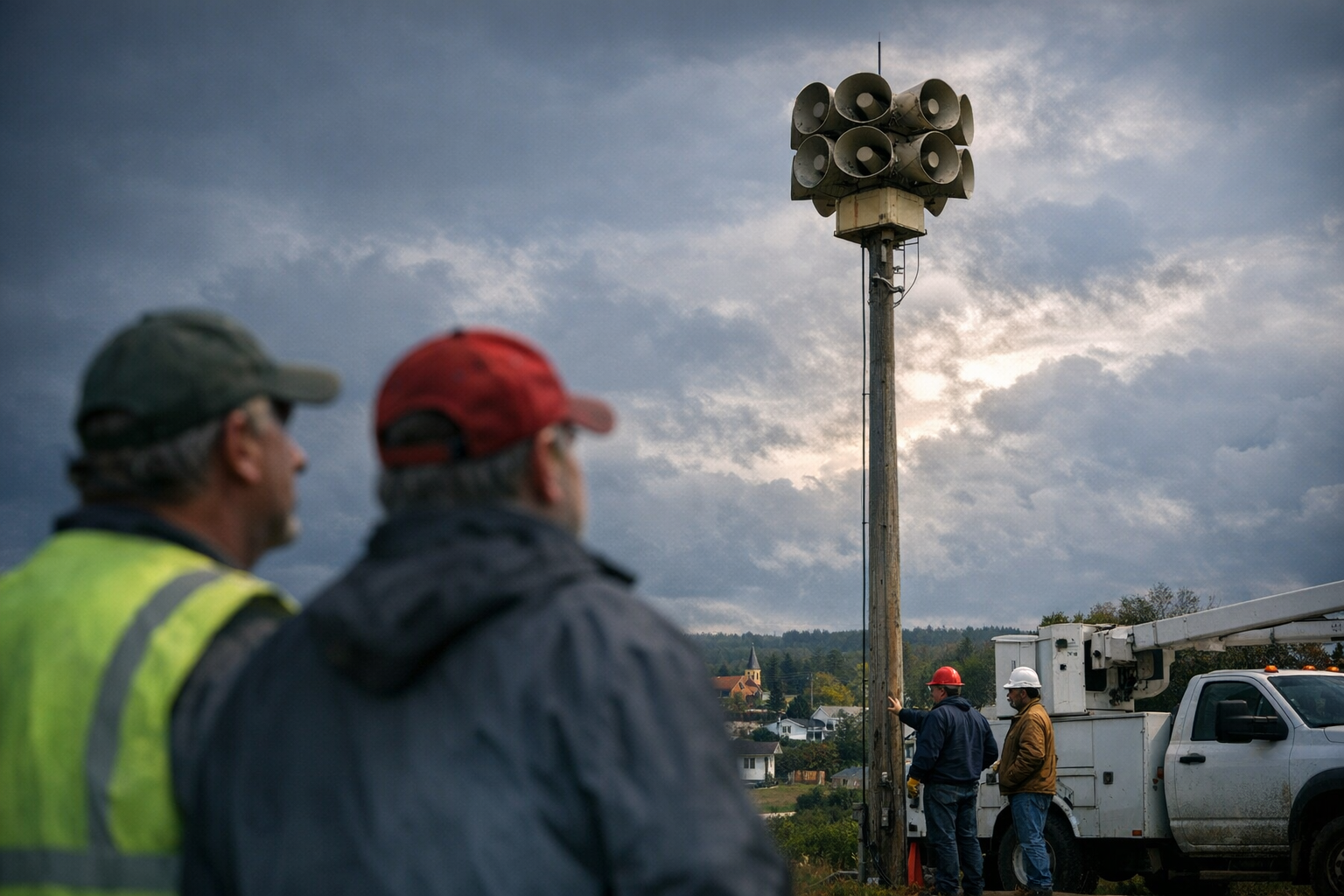
Shifting the siren's position means neighborhoods currently within strong signal range could sit further from the new site while areas that have been marginally covered stand to gain. Neither the city nor the WIC Fire Board has yet released a coverage map showing the projected audibility radius before and after the move, leaving unanswered the central public-safety question: which streets fall inside or outside the warning zone under either configuration. No timeline for installation, field testing, or transition-period notification has been publicly announced.
By splitting costs across both agencies, Iron River and the WIC Fire Board distribute the hardware expense beyond city taxpayers alone, a structure that reflects the broader Iron County population the warning system serves. If the council confirms the arrangement Thursday, contracting could follow quickly; the technical specifications already attached to the agenda packet were included to close the gap between approval and procurement.
What the final coverage map shows, and how the city verifies audibility at the new site, will ultimately determine whether the relocation delivers the public-safety improvement both agencies say it will.
This article was produced by Prism’s automated news system from verified source data, official records, and press releases, then run through automated quality and moderation checks before publishing. The system is built and supervised by the people who set the standards it runs under. Read our full AI policy.
Did this article answer your question?