Oak Harbor naval air museum opens new permanent home
A new Oak Harbor museum home puts PBY history on Ault Field Road, with simulators, archives and a direct link to the first warplanes that flew from Whidbey.
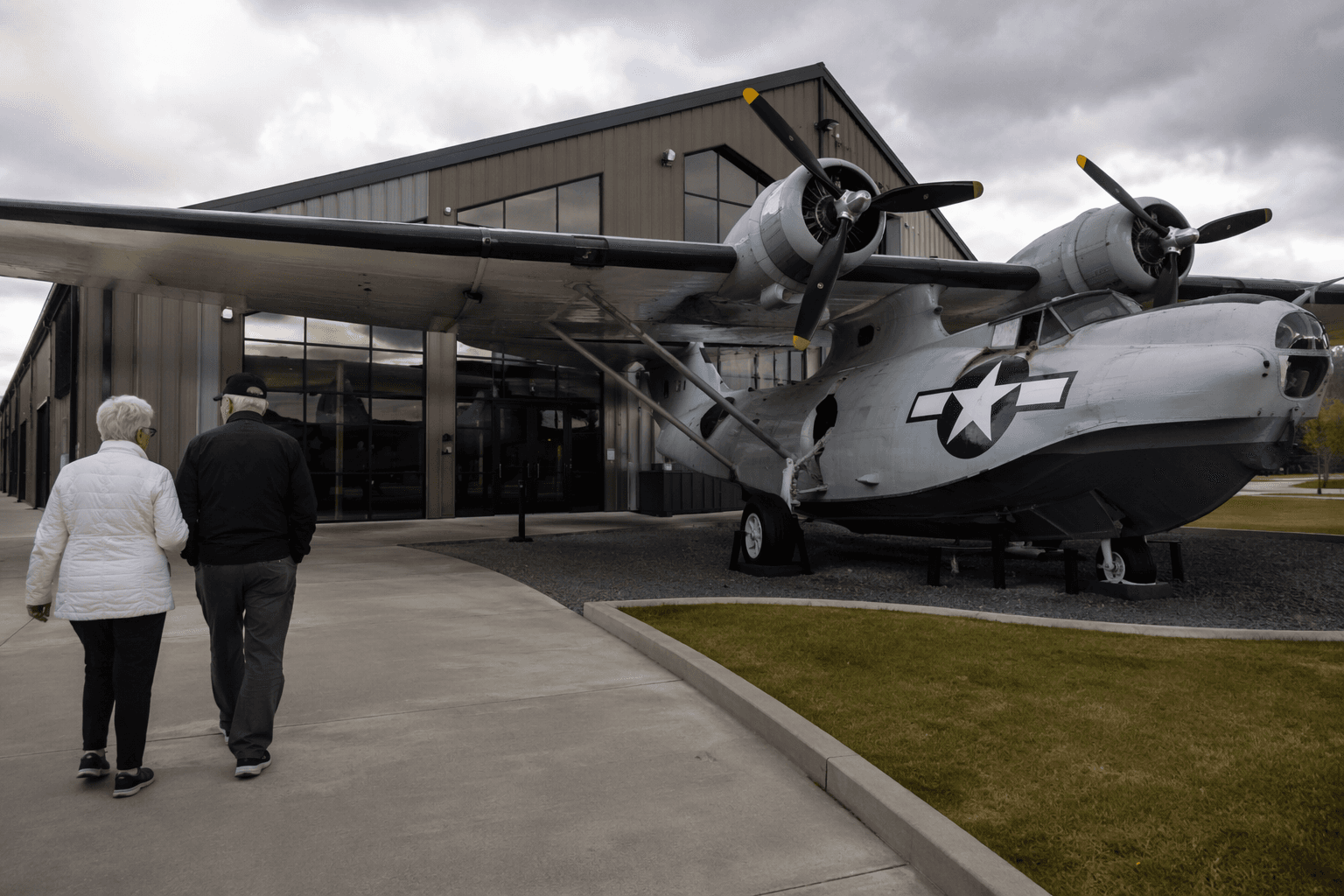
The Pacific Northwest Naval Air Museum opened its permanent home at 545 Ault Field Road, Building D, on Aug. 21, 2025, ending 14 years at its Pioneer Way site in Oak Harbor. The move placed the museum closer to Naval Air Station Whidbey Island, the wartime installation that helped define the city and still shapes daily life around the base.
The museum began with a Sept. 22, 1998 meeting of World War II PBY veterans and their wives at the NAS Whidbey Island Chief Petty Officers Club. That effort became the PBY Memorial Association, a nonprofit incorporated in 1999, and grew into a museum built around preserving naval aviation heritage on Whidbey Island.
Visitors now find hands-on flight simulators, rare historical artifacts, a research library and archives arranged across 11 display areas. The museum also includes a pre-Navy exhibit on Whidbey Island’s Native Americans and early pioneers.
The PBY Catalina remains the museum’s central story. PBY stands for Patrol Bomber, and the aircraft could operate from both water and land runways. It was used for patrol, bombing, reconnaissance, rescue and anti-ship work. In December 1942, the first PBY squadrons began flying out of Oak Harbor’s newly built seaplane base after Lt. J.A. Morrison brought in the first PBY to NAS Whidbey Island.
Those squadrons flew missions to Dutch Harbor, Cold Bay, Umnak, Nazan Bay, Adak, Amchitka, Shemya and Attu. Construction of Ault Field began March 1, 1942. The first plane landed there Aug. 5, 1942, and NAS Whidbey Island was commissioned Sept. 21, 1942, with 212 people present. The station’s location at the eastern end of the Strait of Juan de Fuca provided visual flying conditions about 89 percent of the time.
The NAS Whidbey Island seaplane base is the only remaining World War II-era seaplane base in the Pacific region that has not been extensively altered.
This article was produced by Prism’s automated news system from verified source data, official records, and press releases, then run through automated quality and moderation checks before publishing. The system is built and supervised by the people who set the standards it runs under. Read our full AI policy.
Did this article answer your question?