Oak Harbor’s waterfront history shaped Island County’s largest city
Pioneer Way still traces Oak Harbor’s shift from shoreline trading post to Island County’s largest city, and preservation choices decide how much of that history stays visible.

Oak Harbor’s downtown still follows the line of the water that made it possible. Along Pioneer Way and nearby Fidalgo Avenue, the city’s oldest commercial core shows how a shoreline settlement became Island County’s largest incorporated city, and why the buildings that remain matter as much as the ones that disappeared.
Walk the city’s earliest shoreline
Long before incorporation, the area was home to the Lower Skagit people, who called it Kla-tole-tsche. In the early 1850s, settlers including Zakarias Toftezen, Thomas Maylor Sr., C.W. Sumner and Ulrich Freund began claiming land there, while sea captain Edward Barrington and Charlie Phillips opened a trading post so they would not have to make a two-day canoe trip to Olympia for supplies. That detail still explains Oak Harbor’s first street pattern: houses and businesses clustered along the shore because water transportation was the town’s lifeline until the 1900s.
That waterfront logic is still readable if you move through Historic Downtown Oak Harbor today. Pioneer Way remains the best place to see the city’s original character in built form, not as a nostalgic backdrop but as a practical record of where people lived, traded and traveled when the shoreline was the main road. The surviving blocks matter because they show a settlement organized around access to boats, not cars.
A downtown shaped by current use, not just memory
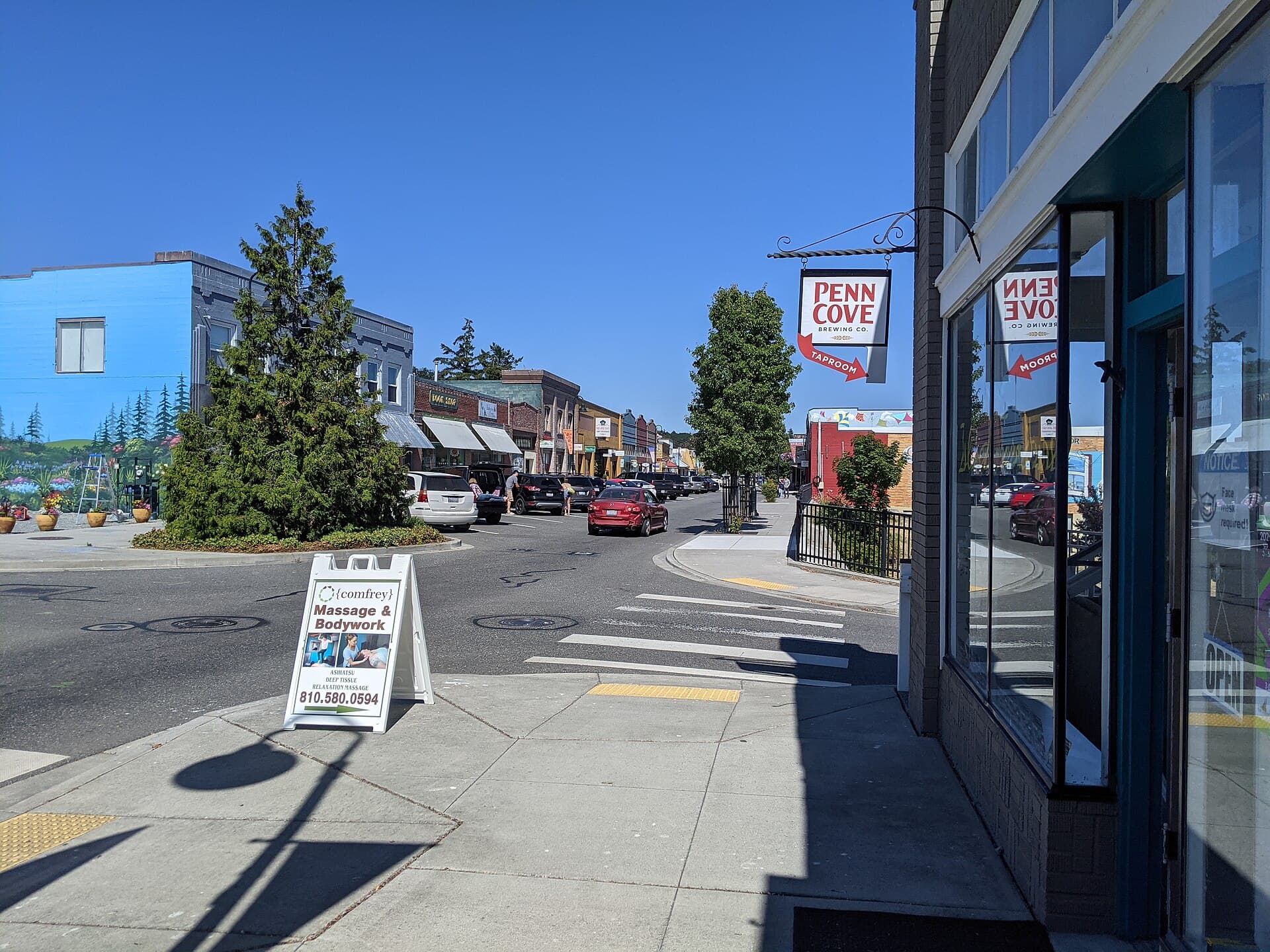
The downtown business district includes about 100 businesses, and Oak Harbor Main Street’s shopping directory shows a dense cluster along SE Pioneer Way and nearby Fidalgo Avenue. That concentration makes the area more than a historical district: it is still a working retail and service core for the city. The walkable layout also reveals how the oldest commercial spine was never fully replaced, even as Oak Harbor grew beyond its waterfront origins.
Oak Harbor Main Street Association, founded in 2016, describes the city as one of 36 Washington Main Street communities. That designation matters because it ties local preservation to everyday commerce. The organization’s work helps keep the downtown legible for residents and visitors who want to read the city through still-standing storefronts, not just plaques or archival photos.
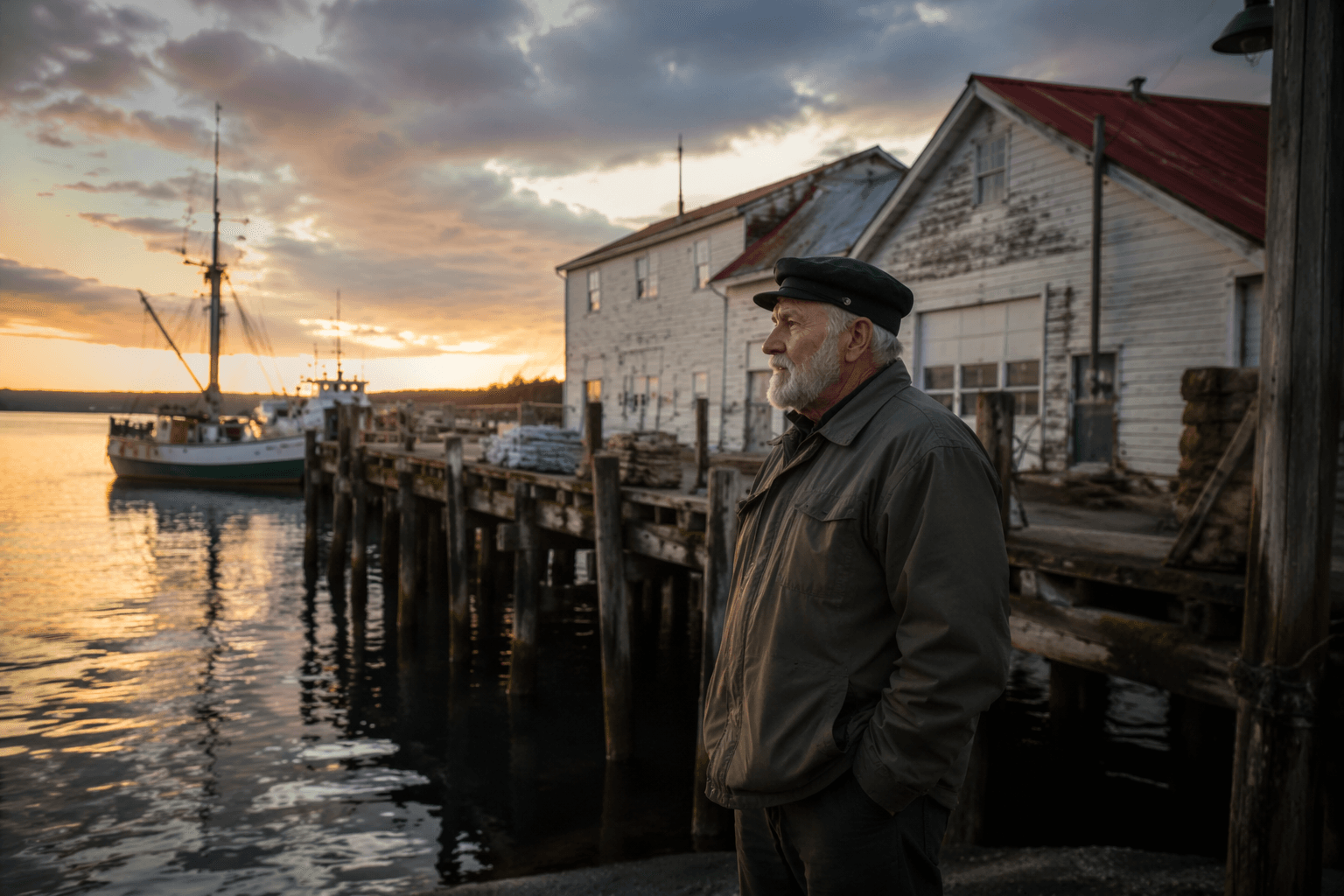
Oak Harbor’s historic core also reflects layers of change beyond the shoreline era. Dutch heritage arrived in the 1890s, the high school was built in 1906, the Deception Pass Bridge opened in 1935 and Naval Air Station Whidbey Island opened in 1942. Each milestone shifted where people lived, worked and shopped, but Pioneer Way retained enough of its older structure to show the city’s earlier shoreline identity underneath later growth.
Why incorporation changed daily life
Oak Harbor became a city on May 14, 1915, after 308 residents petitioned for incorporation. The push was practical: residents wanted paved roads, drinking water and other public services. That was not a symbolic move. It was an early example of how local government can shape public health and equal access, because paved streets and reliable water systems are basic infrastructure that determine whether a community can grow safely and serve everyone who lives there.
The population numbers show how that decision eventually played out. Oak Harbor had 24,622 people in the 2020 census, and the July 1, 2025 estimate was 24,083. The city is still far larger than the shore settlement that first formed around the trading post, but the old downtown remains the place where that growth is easiest to understand. Incorporation created the framework for roads, utilities and services; the waterfront core shows what the city chose to keep from its older geography.
What preservation protects, and what it can still lose
Oak Harbor’s preservation system gives the city a direct way to decide which parts of that history stay visible. The City of Oak Harbor Historic Preservation Commission says its job is to maintain a register of historic places, raise community awareness and serve as the city’s primary resource for history, historic planning and preservation matters. City code Chapter 18.50 creates the preservation framework and requires permit applications affecting designated register properties or historic districts to be reported to the commission.
The process is more than paperwork. The city’s historic register nomination form is required to nominate properties to the Oak Harbor Register of Historic Places, which means preservation depends on active local action, not passive admiration. That structure can help keep older buildings in use, but it also means the city’s original character survives only when owners, planners and residents choose to maintain it.
That choice has direct community impact. When older buildings remain occupied by current businesses, the city preserves more than architecture. It preserves the scale of the street, the way storefronts relate to sidewalks, and the sense that the downtown still belongs to everyday life rather than to history alone. When those buildings are lost or altered without care, Oak Harbor risks losing the shoreline-based layout that still distinguishes it from newer commercial strips elsewhere on Whidbey Island.
How to read Oak Harbor on foot
The easiest way to understand the city is to start on Pioneer Way and follow the blocks where businesses still cluster. Look for the dense run of storefronts and services near Fidalgo Avenue, then think about why this corridor exists at all: the earliest town grew beside the water, where freight, passengers and supplies moved before roads carried most of the load. The downtown still functions because it was built for connection first.
From there, the city’s story becomes clear. Oak Harbor began as a Lower Skagit homeland, became a shoreline trading post, incorporated to secure basic public services, and then expanded into the county’s largest incorporated city as the bridge, the high school and the Navy base reshaped daily life. What survives along Pioneer Way is not just a preserved district. It is the city’s original map, still visible in the way Oak Harbor lives and works today.
This article was produced by Prism’s automated news system from verified source data, official records, and press releases, then run through automated quality and moderation checks before publishing. The system is built and supervised by the people who set the standards it runs under. Read our full AI policy.
Did this article answer your question?