WICA festival turns Whidbey into a testing ground for new performance
Whidbey’s WICA is turning New Works June into a live test lab, where audiences can watch and help shape pieces before they travel farther.
Why this festival matters now
Whidbey Island Center for the Arts is not treating New Works June like a routine arts calendar stop. It is presenting the festival as a chance for Island County audiences to encounter work while it is still being shaped, with talkbacks, staged readings, dance, solo theater and poetry all built around the same idea: the audience is part of the process.
That makes the festival feel unusually participatory for a rural arts center. Instead of polished productions arriving fully formed, WICA is giving Whidbey a seat at the table while artists test ideas, sharpen language and see how new material lands in front of real people. For South Whidbey, that is the appeal. The island becomes a proving ground for work that may later move on to larger stages.
A festival built around risk and access
New Works June runs June 4 through June 14, 2026, and the schedule is packed into a short stretch that gives the event a concentrated, almost laboratory-like feel. WICA’s calendar lists an opening-night performance on Thursday, June 4, at 7:30 p.m., followed by staged readings, solo performances and a pair of later collaboration nights. The structure matters because it invites audiences to see not just finished entertainment, but creative risk in progress.
WICA leadership says the festival is meant to push boundaries and lift up new voices, and that mission is visible in the programming choices. The company is pairing first-run material with opportunities for conversation after the performance, which gives local audiences a more active role than they would have at a standard show. For a community that already supports the arts as part of island identity, that is a meaningful shift from passive viewing to direct engagement.
Opening night sets the tone
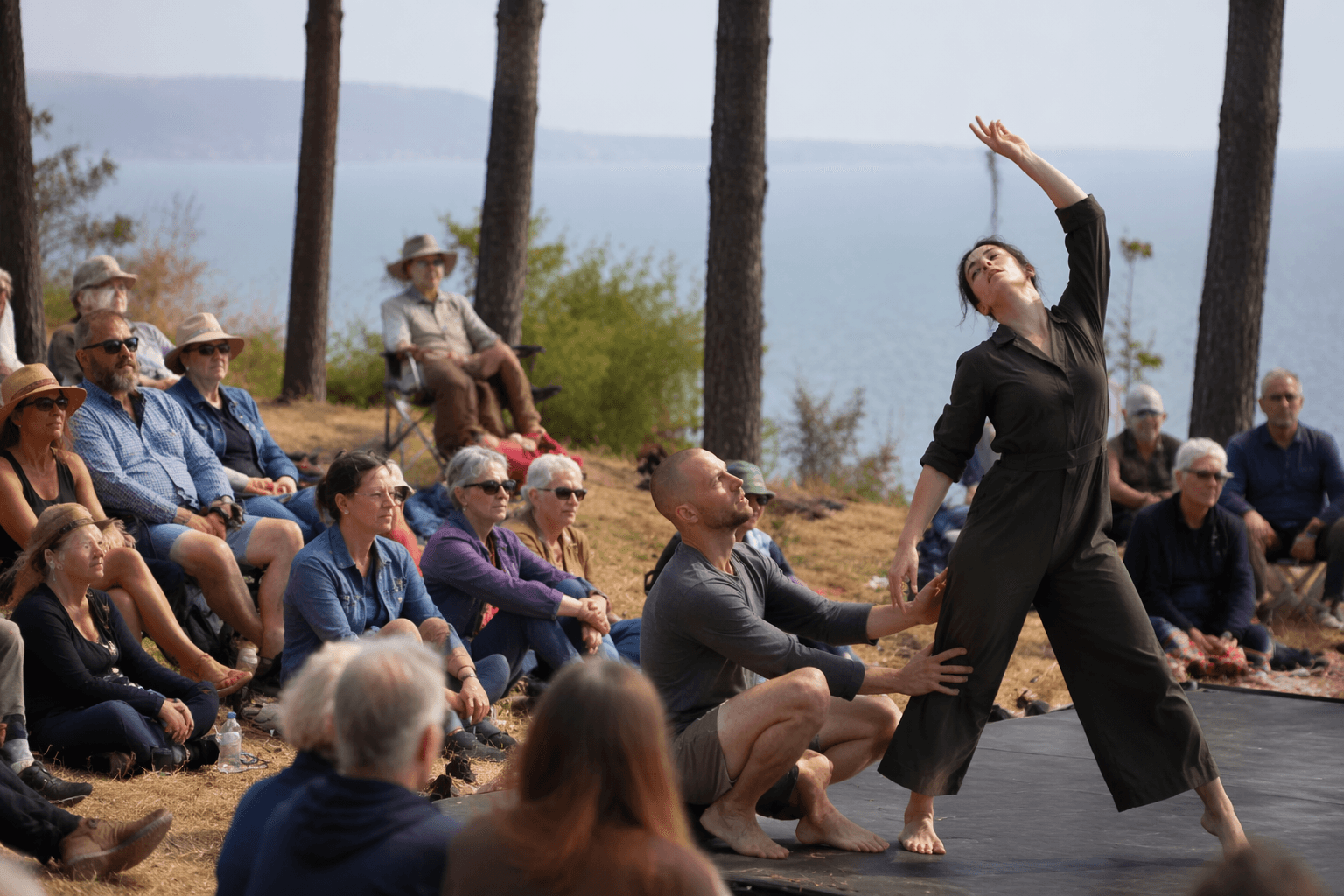
The festival opens with NWJ - Opening Night - Who Are We? by Meander Dance Collective. Even the title signals the festival’s larger question: who gets to define identity, and how do artists translate that into movement and performance? It is a strong choice for a launch event because it frames the week not as a showcase of finished answers, but as an invitation to watch artists wrestle with them.
That opening-night placement also gives the festival a clear local hook. Whidbey audiences are being asked to start with a piece that is about recognition, self-definition and community perception, which fits the broader goal of turning the island into a testing ground rather than a passive venue. In a place where arts attendance often depends on personal connection, that kind of direct question can be the difference between a show people attend and a show people talk about afterward.
What to watch across the week
One of the most closely watched pieces is GIANT, listed on WICA’s calendar as a professional staged reading on June 5, June 7 and June 13. The work explores the legacy of Roald Dahl and examines how charm and intelligence can mask prejudice, which gives it the kind of moral tension that staged readings often reveal especially well. The invite-only format for those readings underscores the developmental nature of the project and reinforces WICA’s role as a place where artists refine work before it expands outward.
Solo Theatrics brings another layer of experimentation on June 6 and June 14 with Return to Chef Boutonne / Make it Beautiful. WICA identifies the solo theater artists as Alyssa Keene and Eric Mulholland, and says their performances explore memory, caregiving, history, grief and human connection. Those themes give the festival emotional range, moving it beyond literary adaptation and dance into intimate storytelling that can resonate closely with local audiences.
The festival also reaches into poetry and cross-company collaboration. On June 11, WICA pairs Island Shakespeare Festival’s world-premiere staged reading of Robin Hood of Sherwood Forest with Claudia Castro Luna. On June 12, the same Island Shakespeare Festival reading is paired with Meander Dance Collective’s Who Are We? The poetry reading is partly inspired by Whidbey’s landscape, which ties the festival back to place in a direct way, while the pairing of disciplines keeps the event from feeling narrowly theatrical.
How the collaborations deepen the island connection
The Island Shakespeare Festival partnership is one of the clearest signs that New Works June is not just a collection of separate shows. WICA’s page on the festival says Robin Hood of Sherwood Forest will receive a world-premiere staged reading and a new works conversation, which means the audience is not only seeing the script performed, but also hearing it discussed as it develops. Island Shakespeare Festival describes the piece as a world premiere by Erin Murray, and says a full production is planned for later in summer 2026, with Davion Tynarious Brown set to star as Robin.

That development arc matters for Island County because it shows how work can move through the region rather than simply arrive and disappear. A staged reading at WICA can become a later full production elsewhere, giving local audiences the rare experience of seeing a title before it breaks out beyond the island. It also shows how regional arts organizations build one another up, with WICA serving as a launch point rather than a final stop.
Why WICA’s own moment adds weight
The festival lands at a symbolic moment for WICA itself. The organization says it has showcased theatre, music, dance, visual and literary arts since 1996, and it officially opened on May 16, 1996. That 30-year milestone gives New Works June a clear institutional context: this is not a new arts center trying something tentative, but a long-running South Whidbey institution using its anniversary year to make a statement about what a local cultural hub can be.
That statement is reinforced by the physical space itself. WICA says its renovated Michael Nutt Mainstage reopened in March 2026 after upgrades that included a new stage floor, curtains, seating and refreshed lobby and gallery space. A newly refreshed venue is a fitting setting for work that is still in motion. It suggests an organization investing not just in presentation, but in the conditions for experimentation.
What Island County gets out of it
For Whidbey and the wider county, the practical effect is a dense stretch of programming that could draw audiences from across Island County and strengthen Langley’s place as an arts destination. The festival is not only about seeing what is new; it is about seeing how a small island community can help new work become sharper, braver and more complete. In that sense, New Works June gives local audiences something more valuable than a preview: it gives them a role in what comes next.
This article was produced by Prism’s automated news system from verified source data, official records, and press releases, then run through automated quality and moderation checks before publishing. The system is built and supervised by the people who set the standards it runs under. Read our full AI policy.
Did this article answer your question?