Alice-born Alonso S. Perales rose from hardship to civil rights leadership
Alice gave Alonso S. Perales his start, and he turned field labor and wartime service into a LULAC leadership role that still shapes civil rights in Texas.
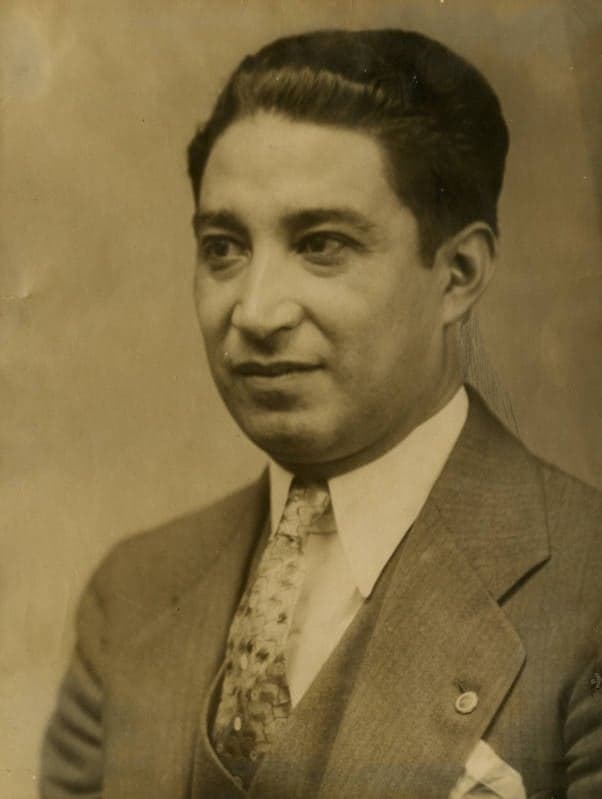
Alice is the starting point for one of Texas Mexican American history’s most consequential lives. Alonso S. Perales was born here on October 17, 1898, orphaned young, and pushed through field labor, railroad work, school, and wartime service before becoming a lawyer, diplomat, and a principal founder of LULAC. His story still matters in Jim Wells County because it connects a local grave, a historical marker, and a national civil-rights movement built around schooling, voting, discrimination, and public standing.
From field labor to school desks
Perales’ early life was marked by loss and hard labor. The Texas State Historical Association says he was orphaned at age six, while the Alice historical marker says his father died when he was six and his mother when he was twelve. He worked in the fields and on the railroad, and archival materials add that he laid railroad ties and picked cotton to help support his schooling.
Even with that start, he moved through Alice’s schools and into professional training. The marker in Alice says he graduated from Alice High School and attended Draughon’s Practical Business College. That practical training mattered when the country was pulled into World War I, because his stenography skills helped him land work as a U.S. Army field clerk.
His military service is another bridge between local hardship and national public service. He was drafted into the U.S. Army during World War I and received an honorable discharge in 1920. After the war, he worked for the U.S. Department of Commerce in Washington, D.C., then earned a B.A. from the School of Economics and Government at the National University and a law degree in 1926.
Why LULAC began in the Rio Grande Valley
Perales’ Jim Wells County roots help explain why he became such a force in Mexican American civil-rights organizing. By the late 1920s, he was already pushing for a stronger organization of American citizens of Mexican origin, and the Alice marker places that advocacy by June 29, 1927. In August 1927, he worked with J. T. Canales and J. Luz Sáenz on a civil-rights conference in Harlingen that helped set LULAC in motion.
That effort became formal on February 17, 1929, in Corpus Christi at Salón Obreros y Obreras. The Texas State Historical Association identifies LULAC as the oldest and largest continually active Latino political association in the United States, and the first nationwide Mexican American civil-rights organization. Perales authored LULAC’s founding documents and served as one of its presidents, which places him not just near the organization’s origin, but at the center of its political language and early structure.
For local readers, that matters because the movement did not begin in a distant capital. It was forged through Valley and coastal Texas networks that included Harlingen, Corpus Christi, and Alice, with Perales helping turn neighborhood frustration into an organized public campaign. The same geography that shaped his early life also shaped the legal and political strategies that followed.
A civil-rights paper trail that reaches beyond Texas
Perales did not stop with the founding of LULAC. He testified before the U.S. Congress in 1930, 1943, and 1944, carrying Mexican American concerns into the federal record at moments when discrimination in schooling, employment, and civic life demanded national attention. After leaving LULAC around 1938, he continued advocacy through the League of Loyal Americans and the Committee of One Hundred.
His public service also extended into diplomacy. Perales served as U.S. consul to Nicaragua from 1937 to 1960, a long assignment that reflects how far his career moved from the orchards, rail lines, and classrooms of South Texas. That combination of advocacy and diplomatic work made him part of the generation that insisted Mexican Americans were not a social problem to be managed, but citizens whose rights and contributions had to be recognized.
The University of Houston’s Perales papers show how wide his network was. The collection includes correspondence with J. T. Canales, Dr. Carlos Castañeda, José Luz Sáenz, Mauro Machado, George I. Sánchez, and Adela Sloss de Vento, along with organizational materials for LULAC, the Committee of One Hundred Citizens, and the League of Loyal Citizens. Those records place Perales inside a broader web of educators, attorneys, organizers, and civic leaders who built the infrastructure of Mexican American rights in Texas.
Alice’s role in his memory
Perales is not only a national figure with local roots. He is physically tied to Alice’s memorial landscape. The historical marker says he is buried in Collins Cemetery next to his mother, and Collins Cemetery is a documented burial ground in Alice with thousands of memorial records. That gives Jim Wells County a specific place where history, family, and public memory meet.
The marker, the cemetery, and the archival record at the University of Houston make his legacy unusually tangible. Alice can point to a birthplace, a school record, a military file, a burial site, and the organizing papers of a man who helped launch the first nationwide Mexican American civil-rights organization. That is more than biography. It is a local civic inheritance that reaches into the institutions and public rights still debated across South Texas today.
If his name is not as visible in classrooms, courthouse halls, or county ceremonies as his record would justify, that gap is itself part of the story. The paper trail is already here, anchored in Alice, and it traces one of the clearest lines from Jim Wells County hardship to civil-rights leadership in Texas history.
This article was produced by Prism’s automated news system from verified source data, official records, and press releases, then run through automated quality and moderation checks before publishing. The system is built and supervised by the people who set the standards it runs under. Read our full AI policy.
Did this article answer your question?