Free Kukui Grove Event Spotlights Endangered Hawaiian Duck Conservation
Just 700 ʻalae ʻula survive statewide and most live on Kauaʻi, where the wetland threats driving their decline also undermine stormwater protection and water quality for island residents.
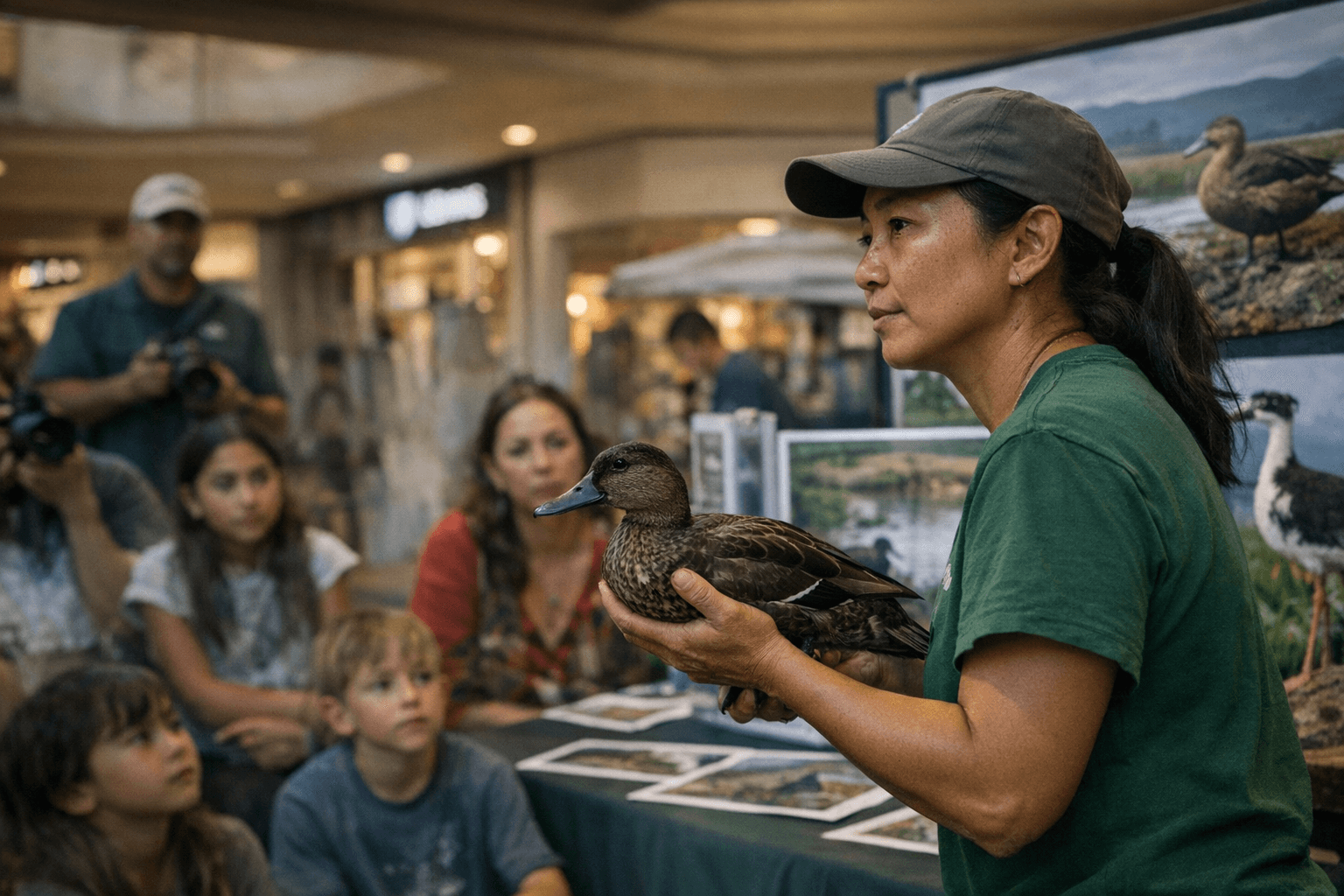
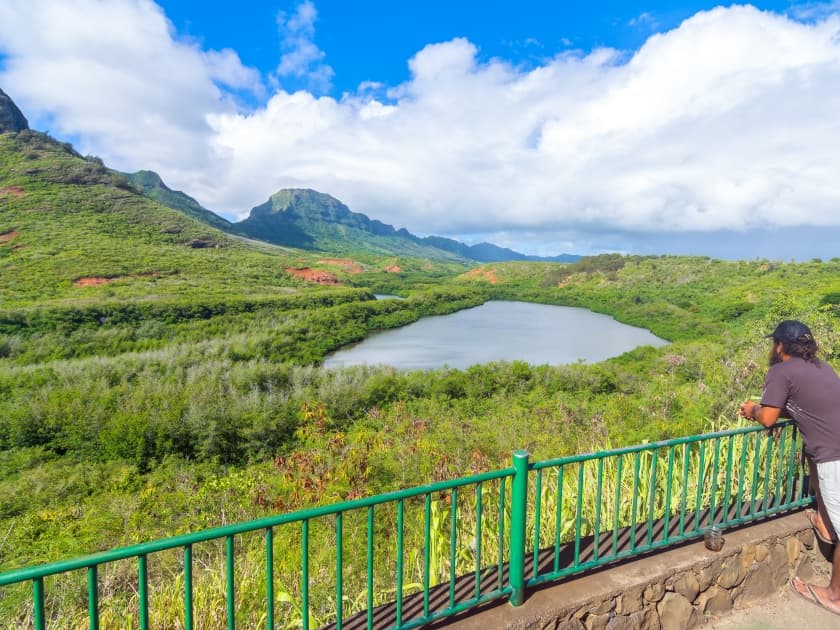
Roughly 700 ʻalae ʻula are left across the entire state, and the majority live on Kauaʻi, concentrated in the Hanalei and Wailua river valleys. Those same corridors function as the island's primary natural stormwater buffers. Pacific Birds Habitat Joint Venture used a free campaign launch event at Kukui Grove Shopping Center on Saturday to make that connection explicit, framing the Hawaiian moorhen's decline not as a wildlife abstraction but as a signal of wetland dysfunction with direct consequences for residents downstream.
The species is now found only on Kauaʻi and Oʻahu, having been lost from every other Hawaiian island. Three overlapping pressures are responsible. Feral cats, rats, mongoose, cattle egrets, barn owls, and bullfrogs all potentially prey on adult or young ʻalae ʻula. In the last 110 years, approximately 31 percent of coastal plain wetlands have been lost to development and agricultural conversion. Altered hydrology, engineered for flood control or municipal water supply, strips remaining wetlands of the structure waterbirds need to nest, and open water in degraded systems becomes more susceptible to botulism outbreaks and runoff contamination events that have caused direct bird die-offs. A wetland sick enough to lose its moorhen population is signaling the same dysfunction to the neighborhoods it drains into.
The Hanalei National Wildlife Refuge was established in 1972 under the Endangered Species Act to recover threatened and endangered waterbirds, including the ʻalae ʻula, and remains the oldest of Kauaʻi's three national wildlife refuges. The 917-acre refuge provides one of the most important wetland habitat sites in Hawaiʻi. Predator control and water-level management at Hanalei represent the funded baseline for ʻalae ʻula recovery on Kauaʻi. Comparable active management at smaller wetland sites across the island depends largely on community-based programs without guaranteed resources.
Saturday's event was the public launch of Pacific Birds' "Celebrate the ʻAlae ʻUla" campaign, which features student artwork from a statewide competition and a block print by Lihue-based artist Holly Kaʻiakapu. Callum Raine of Pacific Birds, who coordinated the campaign, framed the conservation case in terms residents could take home: "What is good for the birds is also good for our community."
Governor Josh Green proclaimed 2026 the Year of Our Coastal Kuleana in January, a designation tied in part to stabilizing Hawaiʻi's remaining wetland ecosystems. Whether that proclamation generates new dedicated funding for predator control and habitat restoration at Kauaʻi sites beyond Hanalei NWR has not been determined.
The most immediate protective actions require no funding at all. Keep cats indoors near any wetland area; free-roaming cats are among the most consistent predators of ground-nesting waterbirds. Walk dogs on a leash on all wetland trails. Avoid feeding ʻalae ʻula, which conditions birds to approach roads and human activity where predator exposure rises. Watch for birds crossing roads near Hanalei and Wailua. Sightings of injured birds or unusual predator concentrations near wetland areas can be reported to the state Division of Forestry and Wildlife in Lihue.
This article was produced by Prism’s automated news system from verified source data, official records, and press releases, then run through automated quality and moderation checks before publishing. The system is built and supervised by the people who set the standards it runs under. Read our full AI policy.
Did this article answer your question?