Kauai Volunteers Spot 169 Humpback Whales in 2026 Final Ocean Count
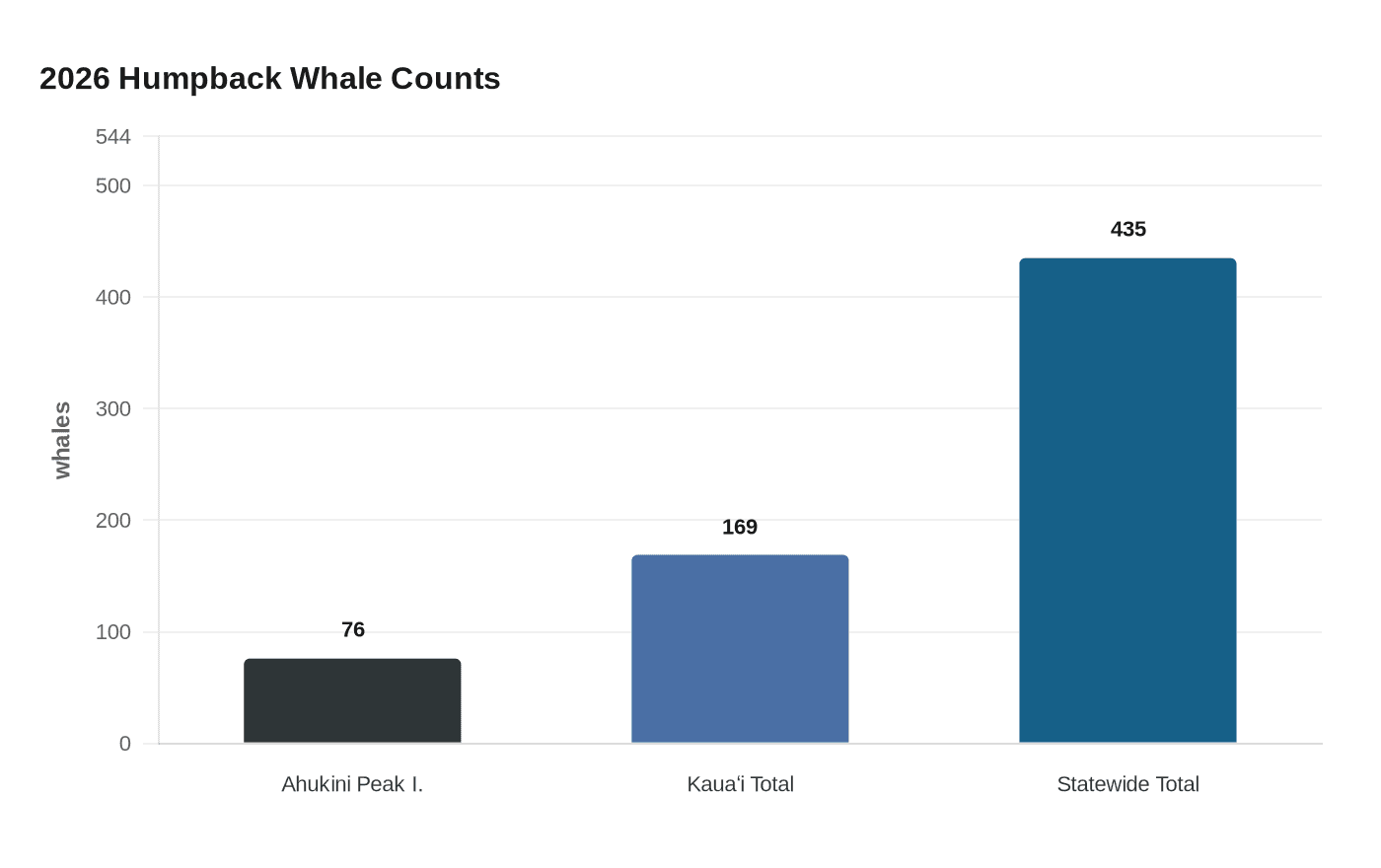
From Ahukini Landing, Kauaʻi volunteers logged 76 humpback whales in a single morning interval during the 2026 final Ocean Count, reaching 169 island-wide.
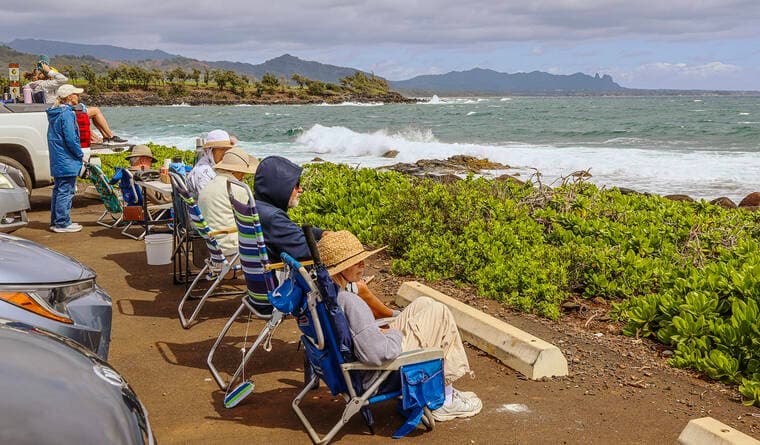
From Ahukini Landing in Līhuʻe, volunteer site leader Marga Goosen and her team were scanning the water at 8:30 a.m. on March 28 when they logged what became the highest single-interval whale count of the day across all the Hawaiian Islands: 76 humpback whales spotted in one observation window. By the close of the four-hour count, Kauaʻi observers had tallied 169 humpbacks total across the island's shoreline sites.
Goosen called the day "exciting" and said volunteers saw a lot of humpback whales and active behaviors. Across sites, observers recorded breaches and blows despite windy, rough conditions that complicated counts elsewhere. Weather-related cancellations at several statewide sites likely held down the overall numbers.
Cindy 'Iwalani Among-Serrao, the Hawaiian Islands Humpback Whale National Marine Sanctuary's Ocean Count coordinator and program coordinator, consolidated the 2026 totals. Kauaʻi's 169 contributed to a statewide count of 435 whales across all main Hawaiian Islands, down 279 from the March 2025 figure. Sanctuary coordinators caution that the year-over-year gap is not a straightforward decline: raw shore-based counts are susceptible to double-counting when the same whale surfaces within view of multiple sites, and weather-reduced visibility can mask animals that are genuinely present.
Now in its 30th year, the Ocean Count runs on volunteer labor at 37 sites statewide and functions as a community science snapshot and public outreach tool rather than a precision population survey. Its value lies in training observers, building long-term records, and maintaining a monitoring baseline that can reveal shifts in whale distribution and nearshore behavior over decades.
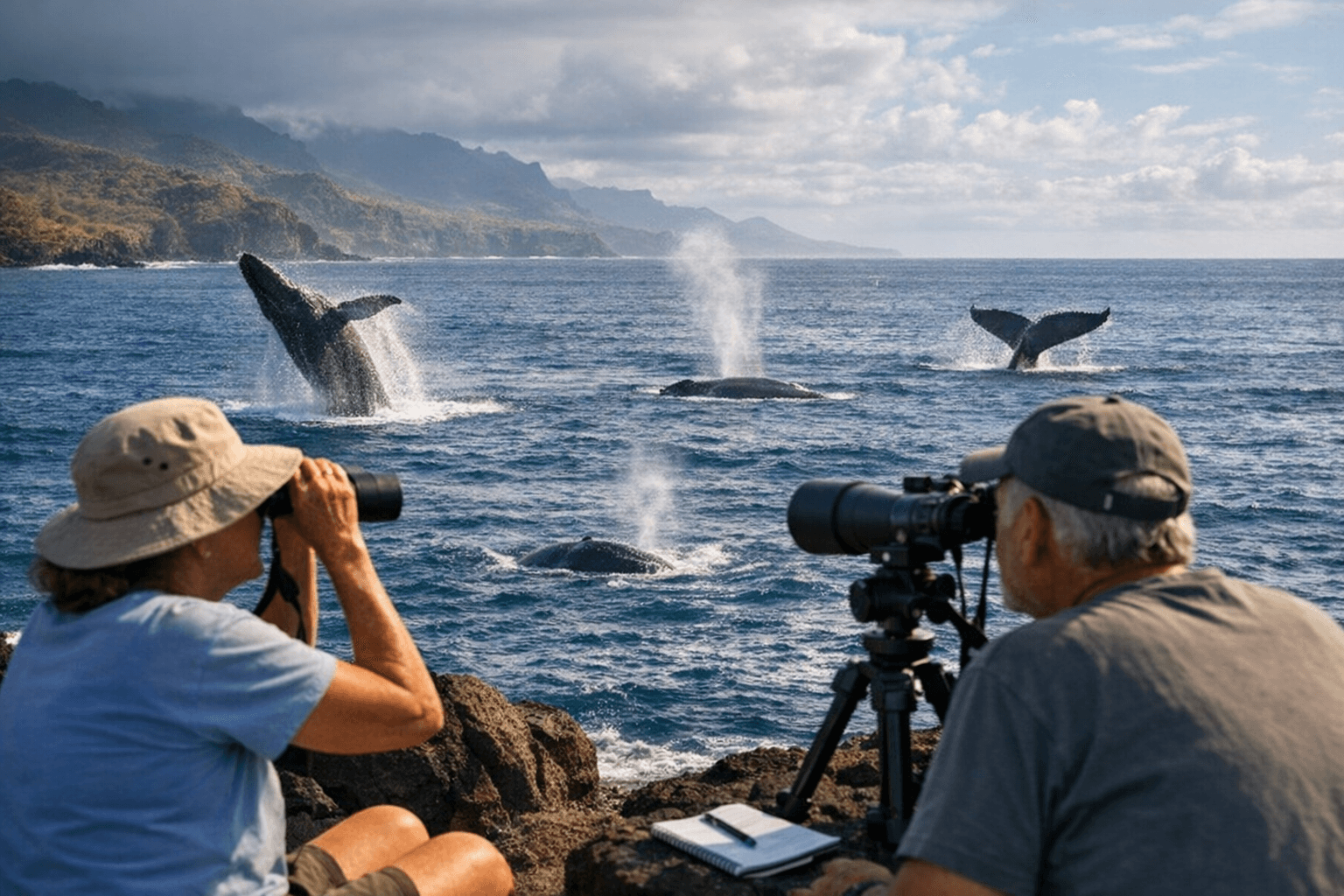
For Kauaʻi's whale-watching economy, 169 humpbacks logged in late March signals that the species remained active in nearshore waters heading into April, extending the viable booking window for commercial boat tours. Operators such as Capt Andy's and Captain J's run dedicated whale-watching routes from the island's south and west shores through the end of winter season, and a strong late-season count is a proxy for the continued sightings that drive reservations. That same nearshore presence draws shoreline crowds at popular vantage points, making responsible viewing guidance more relevant now than at any point since peak season.
WHAT YOU CAN DO THIS WEEK
Three Kauaʻi shoreline spots offer strong land-based views without entering any restricted zones: the cliffs at Kīlauea Point National Wildlife Refuge on the North Shore, the Po'ipū coastline along the south shore, and Ahukini Landing in Līhuʻe, which produced the count's top single-interval tally on March 28. All three provide elevation and open ocean sightlines.
To report a sighting or log a potential harassment violation, contact the Hawaiian Islands Humpback Whale National Marine Sanctuary through the sanctuary's official website.
Federal rules generate three violations that consistently result in citations in Hawaiian waters. Approaching any humpback whale within 100 yards by any means on or in the water, including kayaks, paddleboards, canoes, and drones, is prohibited under sanctuary regulations year-round. Operating any aircraft, including recreational drones, within 1,000 feet of a whale is a separate federal offense. And positioning a vessel or object so that a whale approaches within the restricted distance qualifies as interception and carries the same civil penalties as a direct approach. Shore-based watching from established vantage points carries none of those legal exposures, which is exactly what the Ocean Count models every March.
This article was produced by Prism’s automated news system from verified source data, official records, and press releases, then run through automated quality and moderation checks before publishing. The system is built and supervised by the people who set the standards it runs under. Read our full AI policy.
Did this article answer your question?