Hā‘ena fishing area helps preserve Kaua‘i marine resources, report says
A decade after Hā‘ena’s CBSFA took effect, state and University of Hawaii monitoring found it was still helping preserve Kauai’s North Shore marine resources.
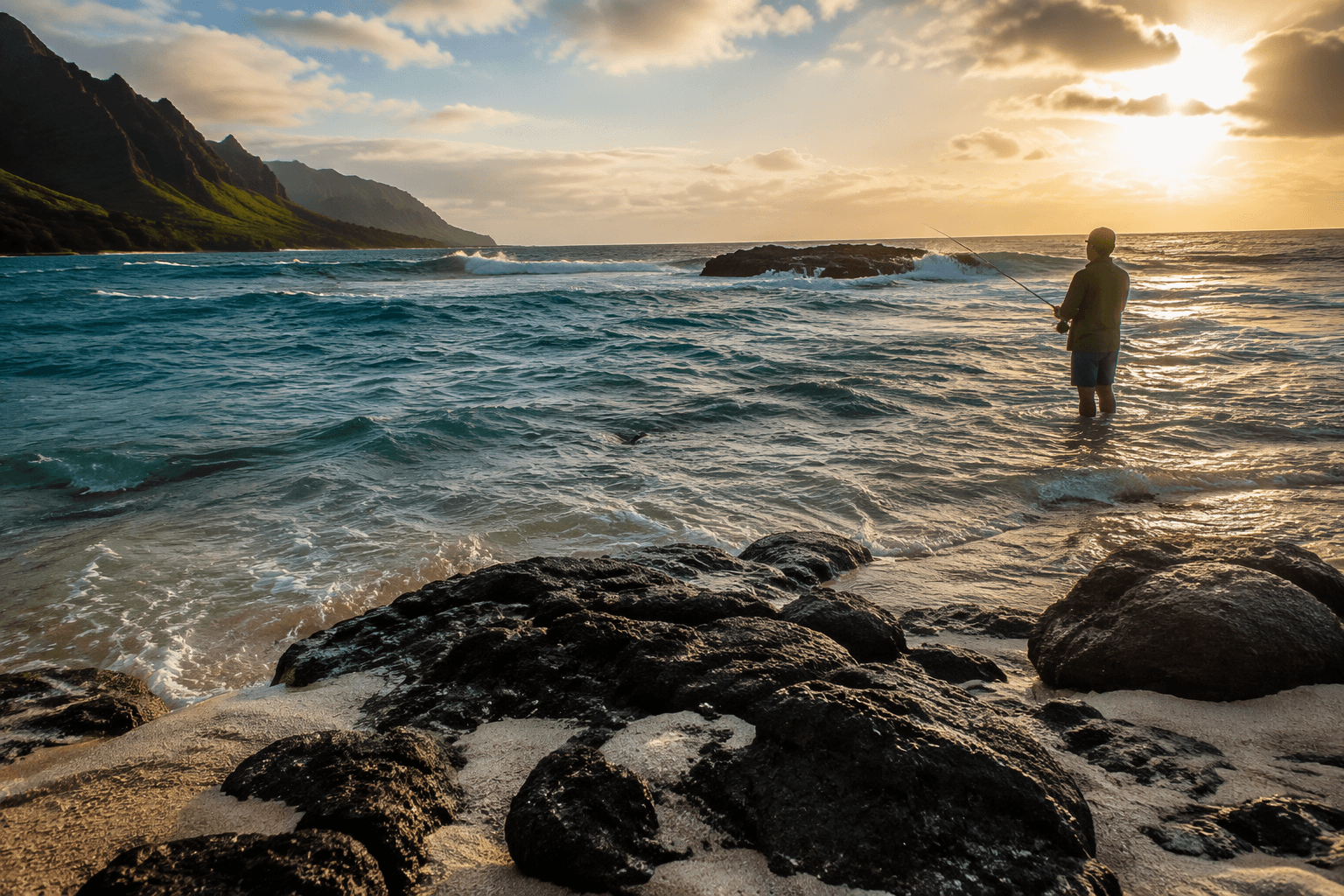
State monitoring and University of Hawaii studies found Hā‘ena’s community fishing rules were still helping preserve Kauai’s North Shore marine resources a decade after the area became Hawaii’s first CBSFA. The findings come from the Department of Land and Natural Resources and researchers at the University of Hawaii at Mānoa’s Hawaii Institute of Marine Biology, the two entities that can verify whether the area’s rules are delivering the gains promised at the start.
Governor David Ige signed the Hā‘ena Community-Based Subsistence Fishing Area rules into law in August 2015, and they took effect that same day. DLNR says the area is governed under HRS 188-22.9 and HAR 13-60.8, a legal framework built to preserve and protect fishing practices while restoring nearshore resources on Kauai’s North Shore.
The strongest evidence to date sits in two state-backed efficacy studies. A 2019 long-term monitoring and assessment report, published in August 2020, documented Year 4 of the CBSFA effort and listed Ku‘ulei Rodgers as principal investigator, alongside Andrew Graham, Justin Han, Matt Stefanak, Yuko Stender, Anita Tsang, Kostantinos Stamoulis and Jade Delevaux. A separate 2016-2020 five-year efficacy study was completed in May 2021 and added Rebecca Weible and Kosta Stamoulis to the research team. Together, those reports give state regulators and local residents a way to track whether Hā‘ena’s rules are doing what the community intended.
The Hā‘ena model was not built in isolation. The management planning process brought together Hui Maka‘āinana o Makana, Limahuli Garden and Preserve of the National Tropical Botanical Gardens, the Hanalei to Hā‘ena Community Association, Hawaii Community Stewardship Network/KUA, the Office of Hawaiian Affairs, Harold K. L. Castle Foundation and the University of Hawaii at Mānoa. DLNR later launched the Holomua Marine Initiative in 2016 to respond to the critical condition of Hawaii’s nearshore coastal ecosystems, placing Hā‘ena inside a broader state push for community-based management.
For fishermen like Kelii Alapai, the rules are tied to culture as much as conservation. He said, "These rules are about feeding our family, and about the ability to pass on our traditions to our children and grandchildren."
Hā‘ena now sits on DLNR’s list of Kauai regulated fishing areas, and later community-managed fishing efforts in Milolii and Kīpahulu show how the North Shore experiment became a precedent. For Kauai policymakers, the record offers a benchmark: future rules on the island’s coastlines will be measured against Hā‘ena’s mix of local control, scientific monitoring and public accountability.
This article was produced by Prism’s automated news system from verified source data, official records, and press releases, then run through automated quality and moderation checks before publishing. The system is built and supervised by the people who set the standards it runs under. Read our full AI policy.
Did this article answer your question?