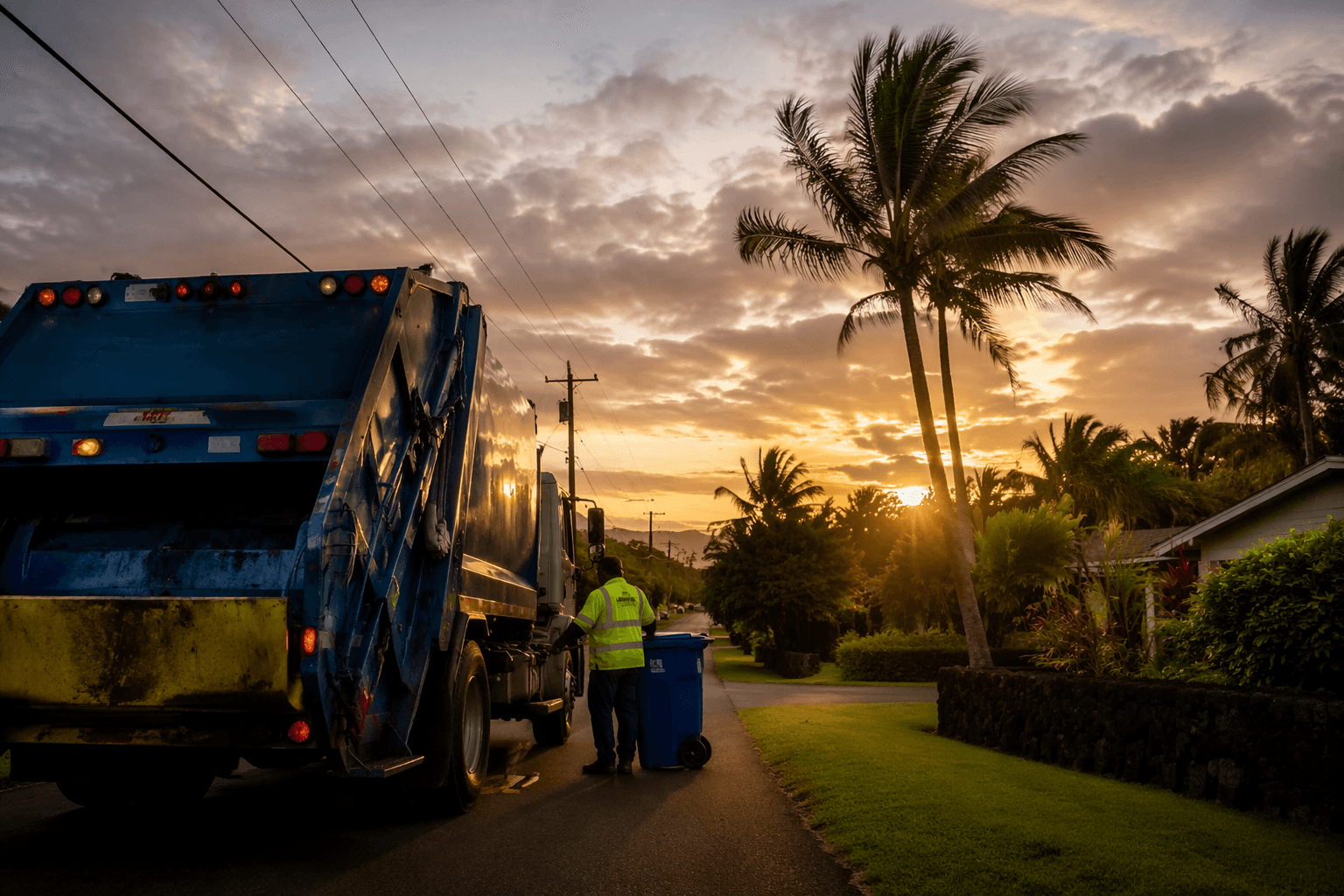
Kauai delays trash pickup in Kapaʻa, Wailua Homesteads, Kalāheo
Trash pickup fell behind in Kapaʻa, Wailua Homesteads and Kalāheo, and the county told residents to leave bins out for crews through April 14.
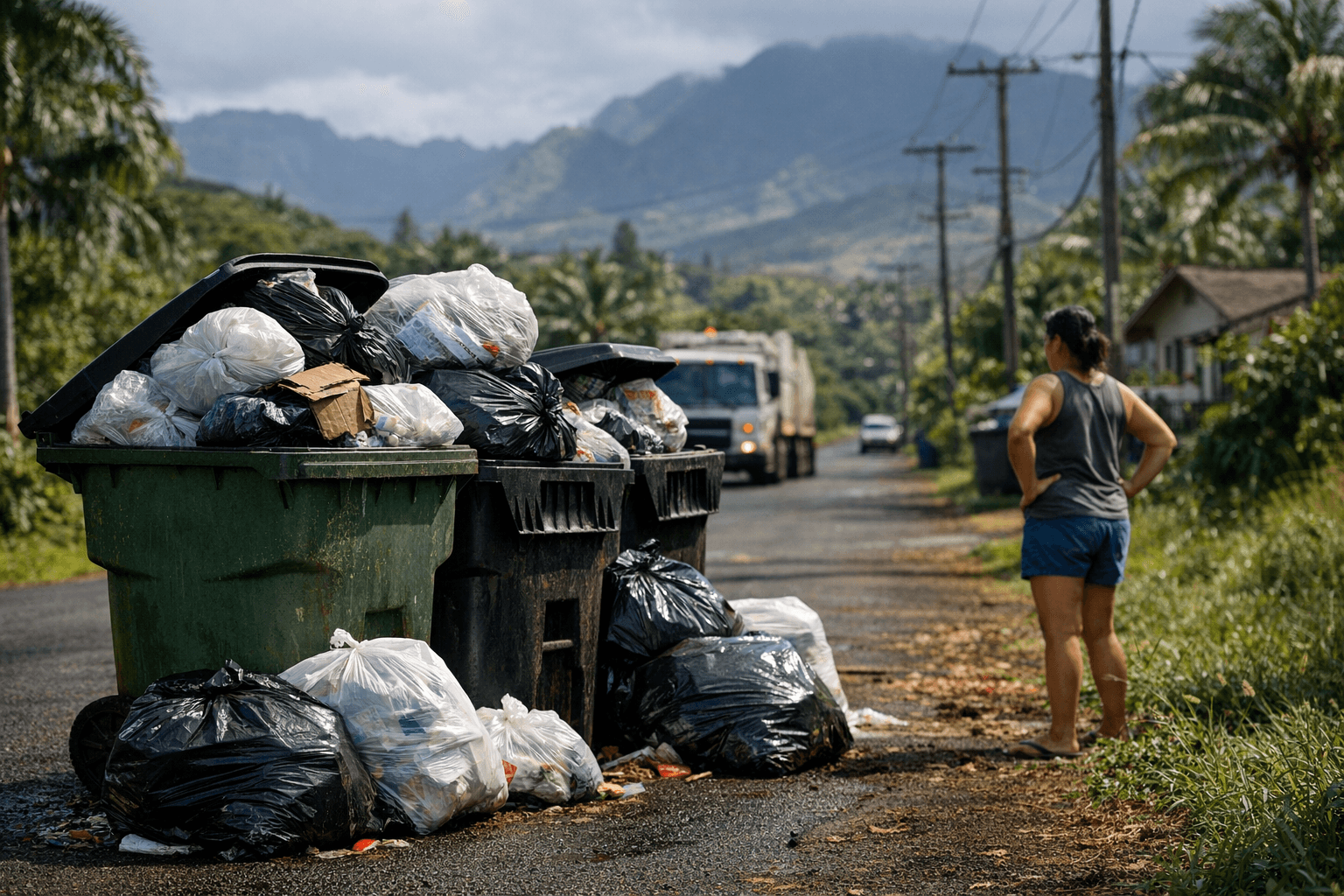
Trash bins in Kapaʻa, Wailua Homesteads and Kalāheo were left on the curb longer than usual after the County of Kauaʻi delayed residential pickup because of staffing issues. Residents whose containers had not been serviced by 3:30 p.m. on April 13 were told to leave them out for the rest of the route, with the county expecting to finish collection across the area on April 14.
That short delay carries real household consequences in neighborhoods built around a weekly collection rhythm. A missed pickup can quickly mean odors, overflowing carts and extra clutter at the curb, especially when bins are already full and the next scheduled service is a day away. For families, property managers and small businesses that rely on predictable trash service, even a one-day slide changes how quickly waste piles up.
The county did not spell out the staffing problem in detail, but its notice made clear the disruption was being handled as an active public service issue rather than a routine missed stop. Officials asked residents to keep their bins accessible so crews could complete the remaining route work, a sign that collection was still moving, just later than normal. The message also showed how limited staffing on an island route can affect several communities at once, with Kapaʻa, Wailua Homesteads and Kalāheo all caught in the same delay.
For residents, the practical instruction was straightforward: keep the container out, watch for the truck and expect pickup to run behind schedule into April 14. The county’s handling of the delay underscored how dependent basic services are on available crews and how quickly a staffing shortage can spill into everyday life at the curb. In Kauaʻi County, a delay in trash collection is not just an inconvenience; it is a reminder that even the most ordinary government functions depend on enough workers to keep the routes moving.
This article was produced by Prism’s automated news system from verified source data, official records, and press releases, then run through automated quality and moderation checks before publishing. The system is built and supervised by the people who set the standards it runs under. Read our full AI policy.
Did this article answer your question?