State to survey Hanapēpē cemetery, preserve Kauai burial sites
Survey crews reached Hanapēpē Cemetery Monday, the first step toward fencing and repairs at one of Kauai’s most neglected burial sites.
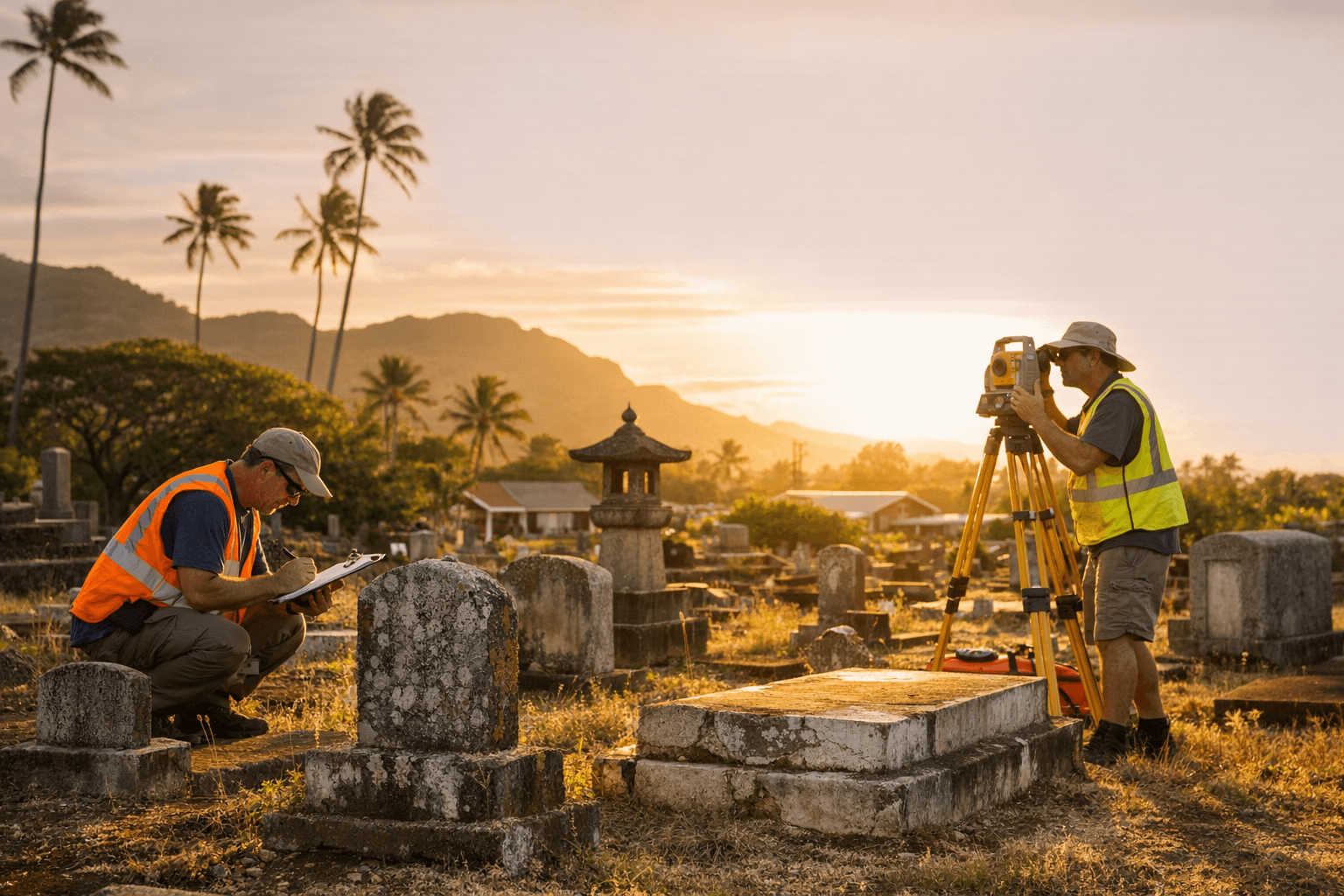
Crews began surveying Hanapēpē Cemetery on Monday, April 20, starting a state effort that officials say is meant to turn long-neglected burial grounds into clearly defined, protected sites again. At Hanapēpē, drones will be used to capture aerial images so surveyors can reestablish land boundaries that have been lost over time, a basic step the state says must come before fencing and rehabilitation.
The work is part of a new Cemetery Office inside the Department of Accounting and General Services’ Central Services Division, operating under Hawaii Revised Statutes §110-1. DAGS said the survey contract cost $98,999 and was awarded to AJAW, LLC with Mana Surveying as a subcontractor. The agency said the full survey job should take about 10 weeks and covers eight state-owned burial sites on three islands.
Together, the eight cemeteries span 27 acres of state land and contain more than 5,900 interments, a figure that underscores how many families and descendants are tied to the project. DAGS Director and Comptroller Keith Regan has asked the Legislature for $2.3 million over two fiscal years to maintain the aging sites, arguing that the condition of the cemeteries is not acceptable for places that hold so many graves and so much history. The survey work is the first visible piece of that larger maintenance push.
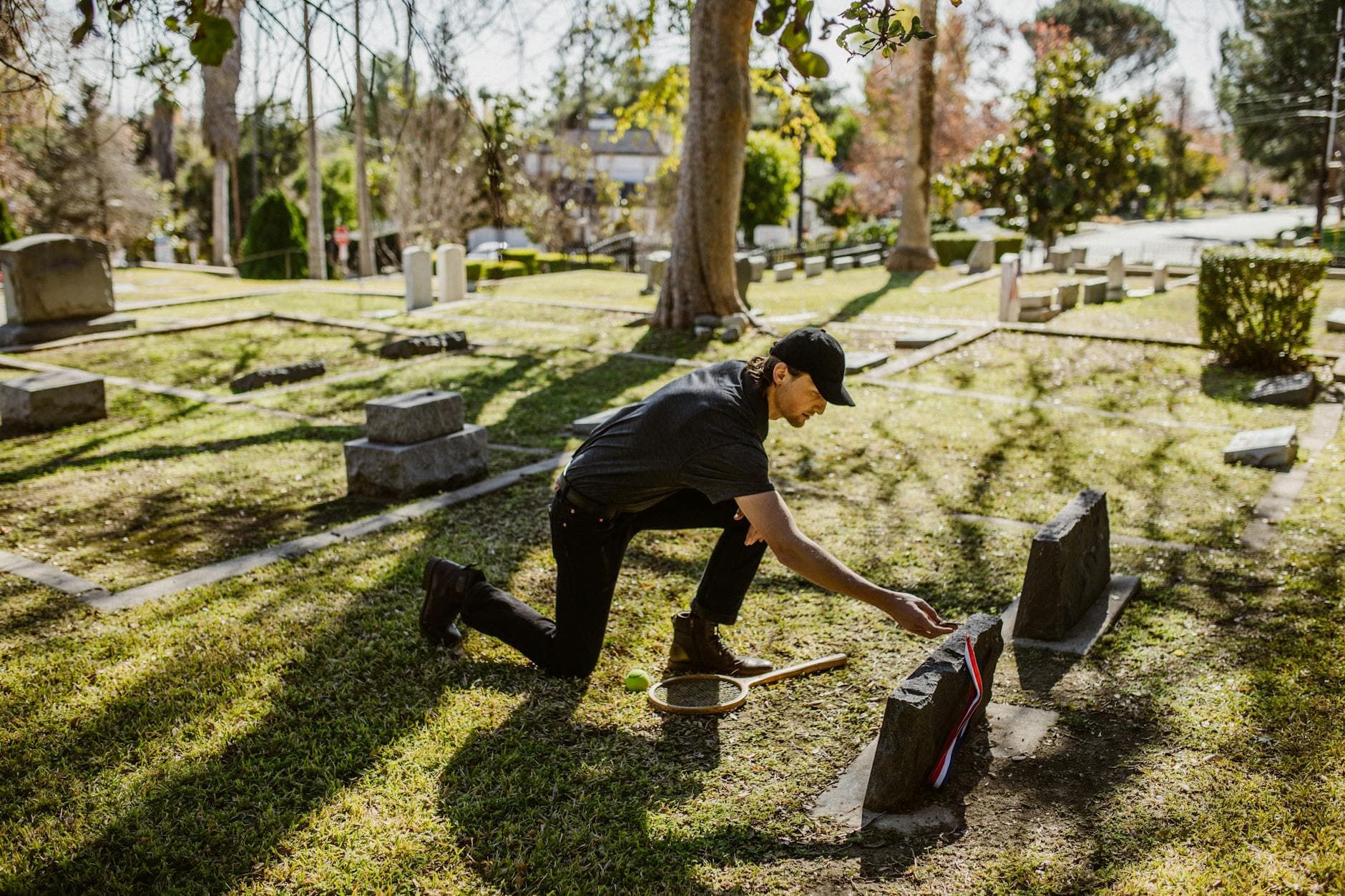
Hanapēpē matters beyond the bureaucracy because it is identified in legislative records as the Hanapēpē Chinese, Filipino, and Portuguese Cemetery on an unencumbered state-owned parcel at Tax Map Key (4) 1-8-001:018, under the control of the Department of Land and Natural Resources. The records say it has been in use for more than 50 years. For Kauai, that makes the site more than a parcel to be measured. It is a burial ground where Chinese, Filipino and Portuguese family histories overlap with the island’s plantation-era past and the generations that followed.
The restoration effort also arrives as the state faces wider criticism over neglect at government cemeteries, where past conditions have included vandalism, overgrowth, broken water systems and disturbed graves. Community cleanups have at times become the response when graves were left to deteriorate. At Hanapēpē, the stakes are even sharper because a permanent memorial for the 1924 Hanapēpē Massacre is planned at the front of the neighboring Hanapēpē Filipino Cemetery, linking the burial ground to one of Hawaii’s most painful labor-era events. The survey marks the beginning of making that landscape readable, protected and worthy of the families who still come looking for it.
This article was produced by Prism’s automated news system from verified source data, official records, and press releases, then run through automated quality and moderation checks before publishing. The system is built and supervised by the people who set the standards it runs under. Read our full AI policy.
Did this article answer your question?