Waioli Mission House offers a window into Kauai’s mission era
Waioli Mission House in Hanalei traces Kauai’s mission era from an 1834 scouting trip to an 1837 home. Its preservation record maps who shaped the North Shore.
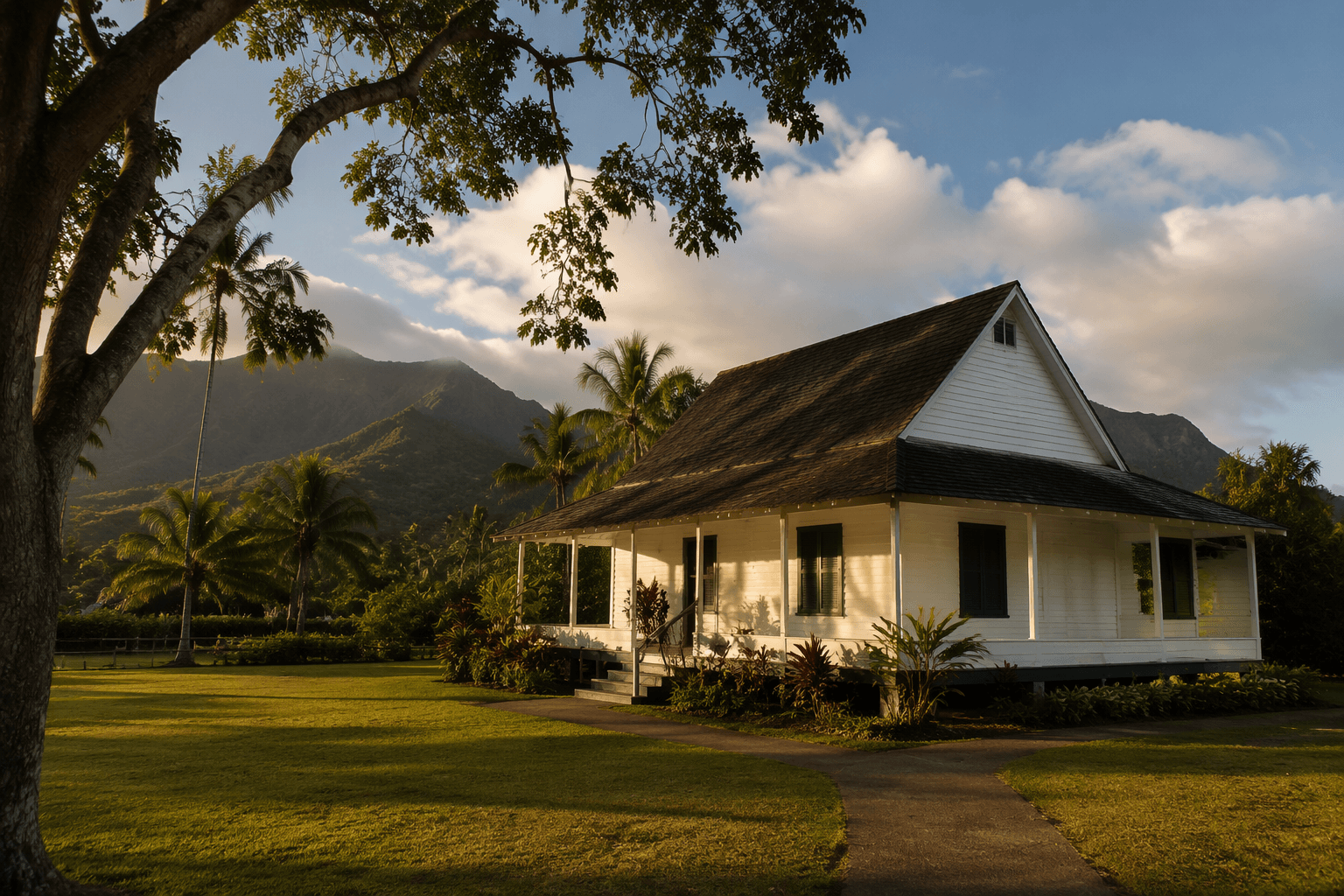
Waioli Mission House in Hanalei is more than a preserved old home. The two-story wooden frame building links the North Shore’s mission era to the families, institutions, and climate pressures that shaped Kauai in the 1800s. Seen that way, the house becomes a clear place to read how religion, education, preservation, and community change all converged on one site.
Why Waioli Mission House still matters in Hanalei
The house sits in Hanalei on Kauai’s North Shore, where Waioli & Nuhou Corporation presents it as part of a larger effort to preserve Kauai’s legacy through guided tours and interactive educational experiences. Its public description frames the building as a historic mission station and home, offering a look at 19th-century education and 20th-century preservation. That mix matters because it keeps the site from becoming scenery alone; it remains a place where the island’s social history can be read in the structure, the district around it, and the way it is interpreted today.
The National Trust for Historic Preservation has placed Waioli Mission House among its Distinctive Destinations, a sign that its importance reaches beyond Hanalei. For Kauai, that wider recognition reinforces what local stewards already know: the house is one of the few surviving links to the way mission-era institutions took root on the North Shore and then shaped later generations of community life.
How the mission station took shape
The deeper backstory begins in 1820 at Waimea, where Kauai’s first Hawaiian mission station was established. By 1834, the American Board of Commissioners for Foreign Missions had sent William P. Alexander to scout the north coast of Kauai for a second station, a move that shows how quickly the mission network was expanding across the island. Before the permanent house went up, Hawaiians built a pole-and-thatch meetinghouse, which places local labor and participation at the center of the site’s earliest phase.
A Library of Congress Historic American Buildings Survey sheet says Reverend William Patterson Alexander built the two-story wooden frame house during 1836 and 1837. The Society of Architectural Historians’ Archipedia entry adds that the original house was completed by April 1837. It also notes that the Alexanders later relocated to Lahainaluna on Maui because the damp windward climate raised health concerns, a reminder that the North Shore environment shaped settlement choices as much as religious ambition did.
Those details make the building useful far beyond architecture. The house can be read as evidence of how mission stations were planned, how buildings were adapted to local conditions, and how a religious outpost became part of Hanalei’s built landscape. Its survival gives readers a concrete way to think about the movement of people, the spread of institutions, and the limits imposed by climate on 19th-century life.
The family history layered into the site
Waioli’s own history materials push the story beyond one missionary household. The organization says three generations of the Wilcox family are deeply interwoven into local history, which turns the house into a family-and-place record rather than a stand-alone monument. The same materials link the site to an interactive timeline about how sugarcane came to flourish on Kauai across different generations and cultures, placing the mission house inside the broader economic and social changes that followed the mission era.
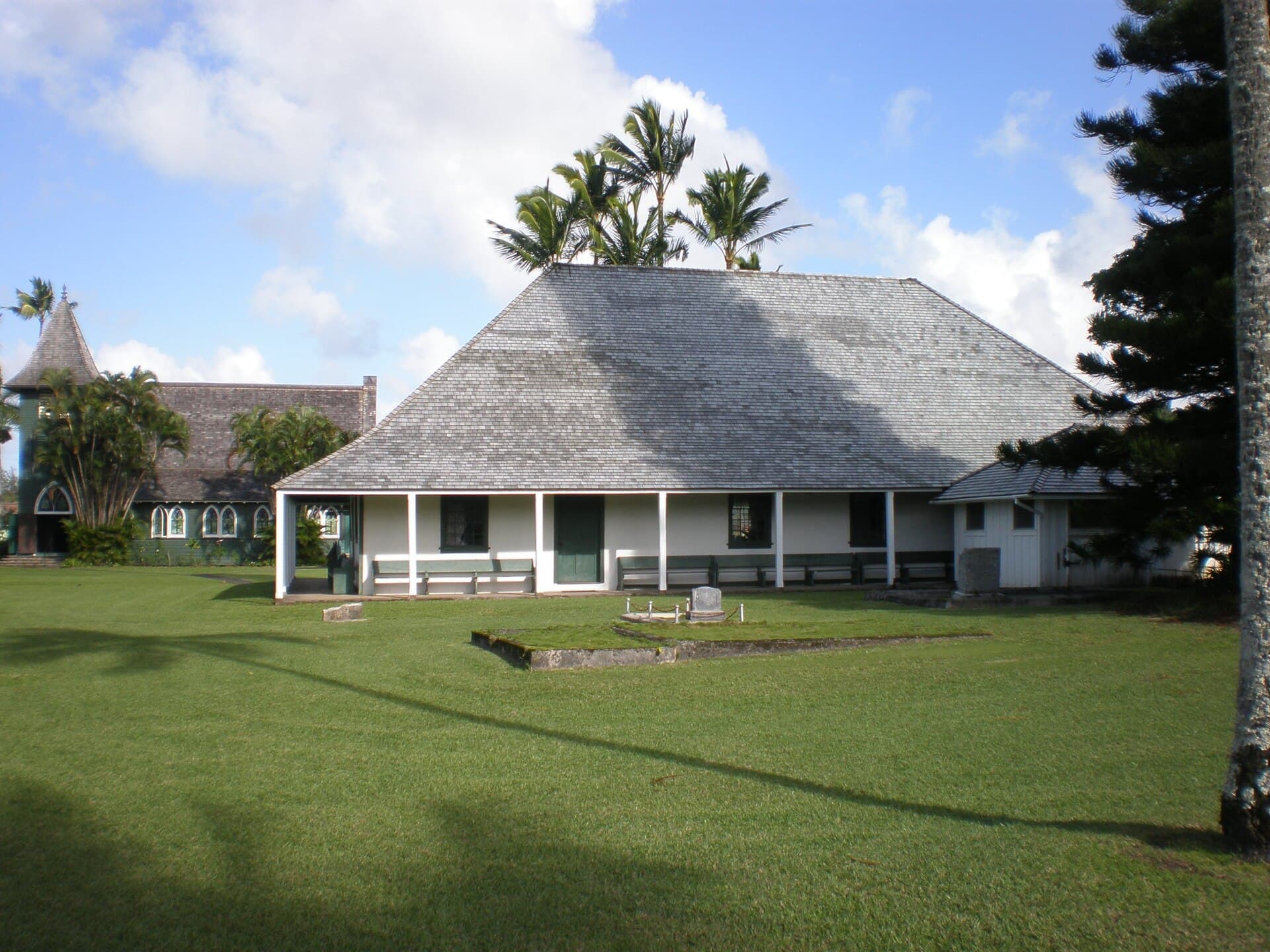
That broader framing matters in Hanalei, where history is often flattened into views and landmarks. Waioli Mission House reminds visitors that the North Shore was shaped by more than scenery. It was shaped by families who stayed, families who moved, and institutions that left records behind, then were reinterpreted by later preservation work. The house is one of the few places where those layers remain visible in one setting.
What the preservation record tells you
The site’s preservation history is itself a part of the story. A Historic Hawaii Foundation nomination document identifies Waioli Mission as a National Register of Historic Places inventory nomination form dated July 1969, which places the house within a formal preservation district rather than treating it as an isolated attraction. That district status matters because it shows that the house is part of a larger protected landscape, one that includes the mission site’s historical and architectural context.
Taken together, the records from the Library of Congress, the Society of Architectural Historians, the National Trust, and Waioli’s own materials show why the house still holds value. It preserves a specific building, a specific date range, and a specific mission station history, but it also keeps alive the record of who lived there, who built before it, and how Hanalei’s North Shore changed after the mission era. If those sites are treated as backdrop instead of civic memory, Kauai loses the ability to see how its communities were formed in the first place.
How to read the site on the ground
When you stand at Waioli Mission House, the key details are not abstract. Look for the house as a two-story wooden frame structure from 1836 to 1837, not just a charming old residence.
- Read the timeline from Waimea in 1820 to Alexander’s 1834 scouting trip for a second station on Kauai’s north coast.
- Notice that Hawaiians built a pole-and-thatch meetinghouse before the permanent house, which places local participation at the start of the story.
- Keep the April 1837 completion date in mind, because it anchors the building to the early missionary period with unusual precision.
- Treat the Wilcox family history and sugarcane timeline as part of the site’s meaning, not an add-on, since they show how the house links mission-era religion to later community change.
Waioli Mission House endures because it ties those pieces together in one place. It is a mission house, a family record, a preservation site, and a reminder that Hanalei’s past was built through institutions, labor, and decisions that still shape what Kauai chooses to remember.
This article was produced by Prism’s automated news system from verified source data, official records, and press releases, then run through automated quality and moderation checks before publishing. The system is built and supervised by the people who set the standards it runs under. Read our full AI policy.
Did this article answer your question?