Coeur d’Alene father faces eviction after caregiver aid ends
An eviction notice has turned Damian Cartiglia’s caregiving work in Coeur d’Alene into a housing crisis after Idaho ended a program that paid parents to care for disabled children.

An eviction notice has turned Damian Cartiglia’s caregiving work in Coeur d’Alene into a housing crisis, with the father of 7-year-old Luca Cartiglia trying to cover rent and basic bills by taking gig work, including Uber Eats, after Idaho ended its Parents as Caregivers program.
Cartiglia’s situation shows how quickly the loss of paid family care can spill into every part of a household budget. He is trying to stay in North Idaho, but he has also weighed moving to Spokane, Washington, where he believes support for his son’s autism-related needs could be easier to find. For now, the family is leaning on a GoFundMe as Cartiglia tries to keep pace with rent, caregiving, and the instability that comes when a parent is forced to become both provider and full-time aide.
The program at the center of the fight, Idaho’s Family and Personal Care Services benefit, had been federally approved during the pandemic to reduce COVID spread and ease a shortage of disability caregivers. In November 2024, the Idaho Department of Health and Welfare said it would seek to end the program, citing suspected and confirmed fraud and abuse, growth that outpaced budget projections, and not enough staff for oversight. The department later said it aimed to terminate the program effective January 31, 2025, and nearly 1,200 Idaho children were enrolled in October 2024. The federal waiver that allowed the program to run was set to expire in March 2025, but the Centers for Medicare and Medicaid Services extended it in April 2025 while reviewing Idaho’s request to shut the program down.
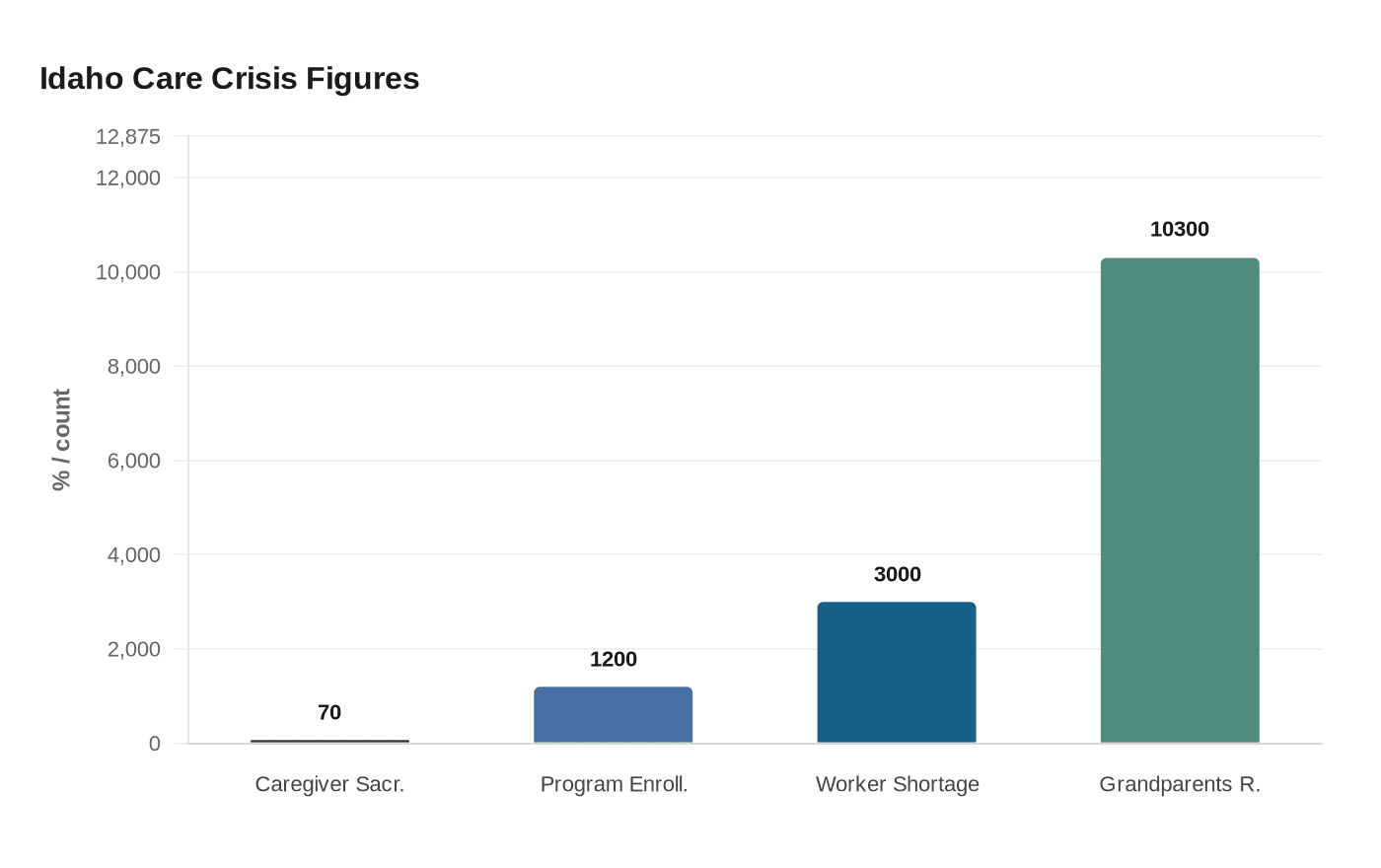
The fallout has reached far beyond Cartiglia’s family. A Health and Welfare survey found that 70 percent of caregivers had to make sacrifices in their careers, underscoring how many families were already balancing lost wages, limited respite and round-the-clock care before the program disappeared. Idaho also faces a wider direct-care shortage, with the Idaho Office of Performance Evaluations saying the state needs at least 3,000 more direct care workers. The department says Idaho has tens of thousands of kinship caregivers and 10,300 grandparents raising grandchildren under 18, and that for every child raised by kin in foster care, 19 more are being raised by relatives outside foster care. In other words, much of Idaho’s disability and child-care system already depends on unpaid family labor.
Lawmakers tried to bring the benefit back this year. In March 2026, Rep. Ilana Rubel and Rep. Marco Erickson introduced a bill that would have restored the program with a cap of 1,000 participants and a limit of 25 paid caregiving hours per week. House Health and Welfare Committee chair Rep. John Vander Woude said it had no chance that year, saying it could cost about $30 million and that the Legislature was in a tight budget year. Fair Care Idaho, the nonprofit formed by families pushing for reinstatement, has become the organizing point for that fight. For Cartiglia, though, the issue is no longer abstract: it is rent due, care to provide, and a decision about whether Coeur d’Alene can still be home.
This article was produced by Prism’s automated news system from verified source data, official records, and press releases, then run through automated quality and moderation checks before publishing. The system is built and supervised by the people who set the standards it runs under. Read our full AI policy.
Did this article answer your question?


