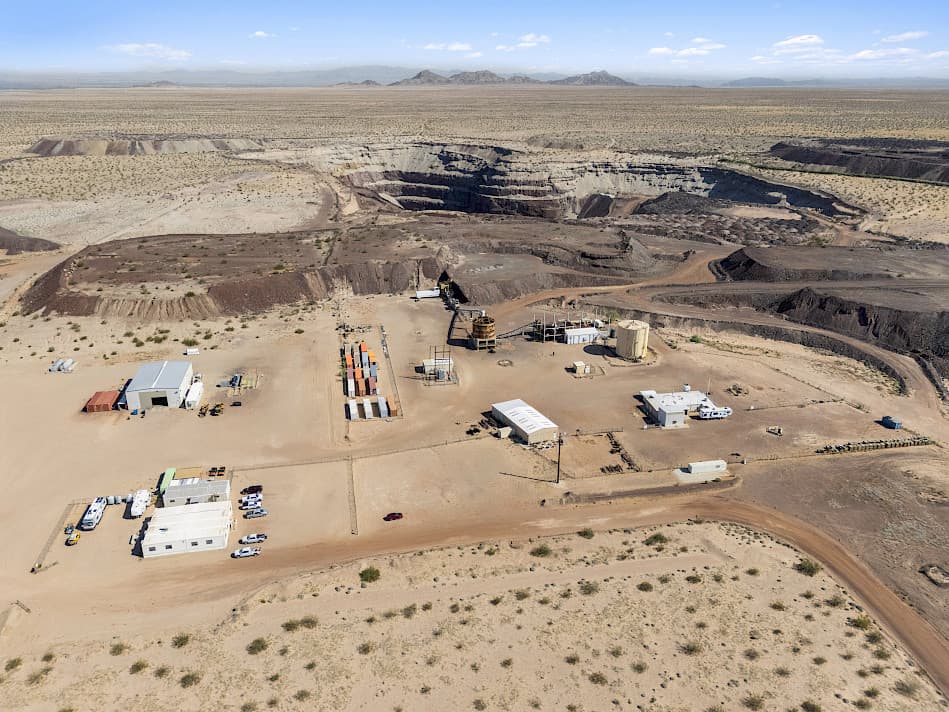
CRIT spotlights Poston Monument, a key Parker-area tourism site
CRIT is turning Poston Monument into more than a memorial, using it to steer Parker-area tourism, education and the story of the incarceration camp.

Poston Monument puts tribal stewardship at the center of Parker-area tourism
Colorado River Indian Tribes is putting Poston Monument back in the spotlight, and that matters because the site is not just a stop along the river corridor. It marks the place where the Poston War Relocation Center confined 17,867 people of Japanese ancestry during World War II, and it sits on land that remains central to how the Parker area tells its own story.
That framing is important in La Paz County because Poston is both a memorial and a control point for local historical narrative. When CRIT highlights the site as one of its top tourist attractions, it is also asserting that the monument belongs in a broader conversation about tribal stewardship, public memory and the way Parker presents itself to visitors.
A site that carries national history into La Paz County
Poston was the largest of the 10 War Relocation Authority camps by area, spread across about 71,000 acres on the Colorado River Indian Reservation. The first arrivals reached the camp on May 8, 1942, and the site did not close until November 28, 1945. At its peak, the population reached 17,814 on September 2, 1942, according to the National Park Service.
The location itself deepens the local significance. During the war, Poston was in Yuma County; today it lies in La Paz County, about 12 miles south of Parker. That means the incarceration-site legacy is not an abstract national story imported into western Arizona. It is part of the county’s geography, its public land history and the memory landscape around the Colorado River.
What visitors actually see at the monument
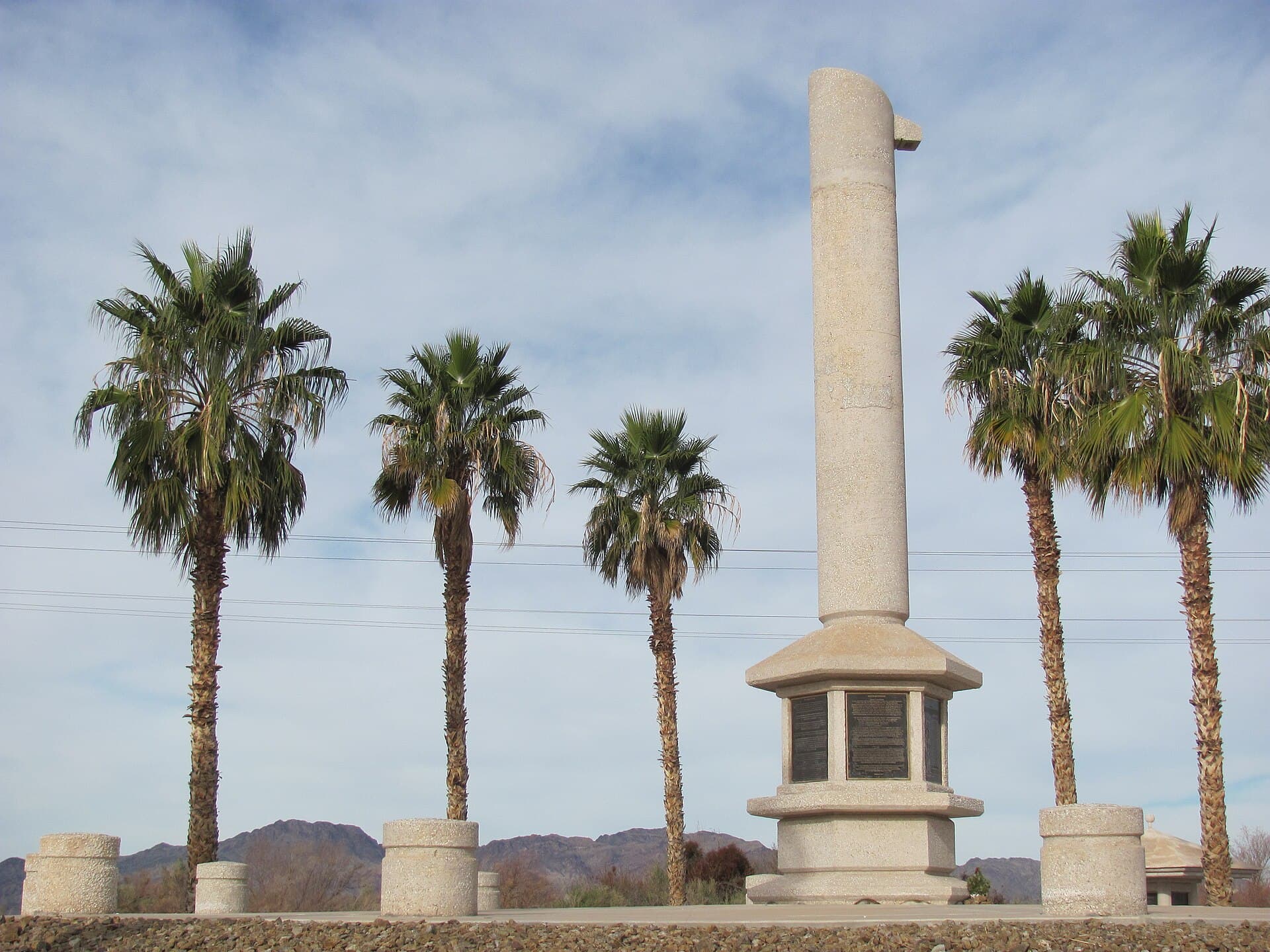
The monument is more than a marker on a map. The National Park Service describes Poston Memorial Monument as a 30-foot-high concrete column with a 7-foot-wide hexagonal base shaped like a Japanese stone lantern. The memorial was dedicated in 1992, and a kiosk was added in 1995 to help explain the site.
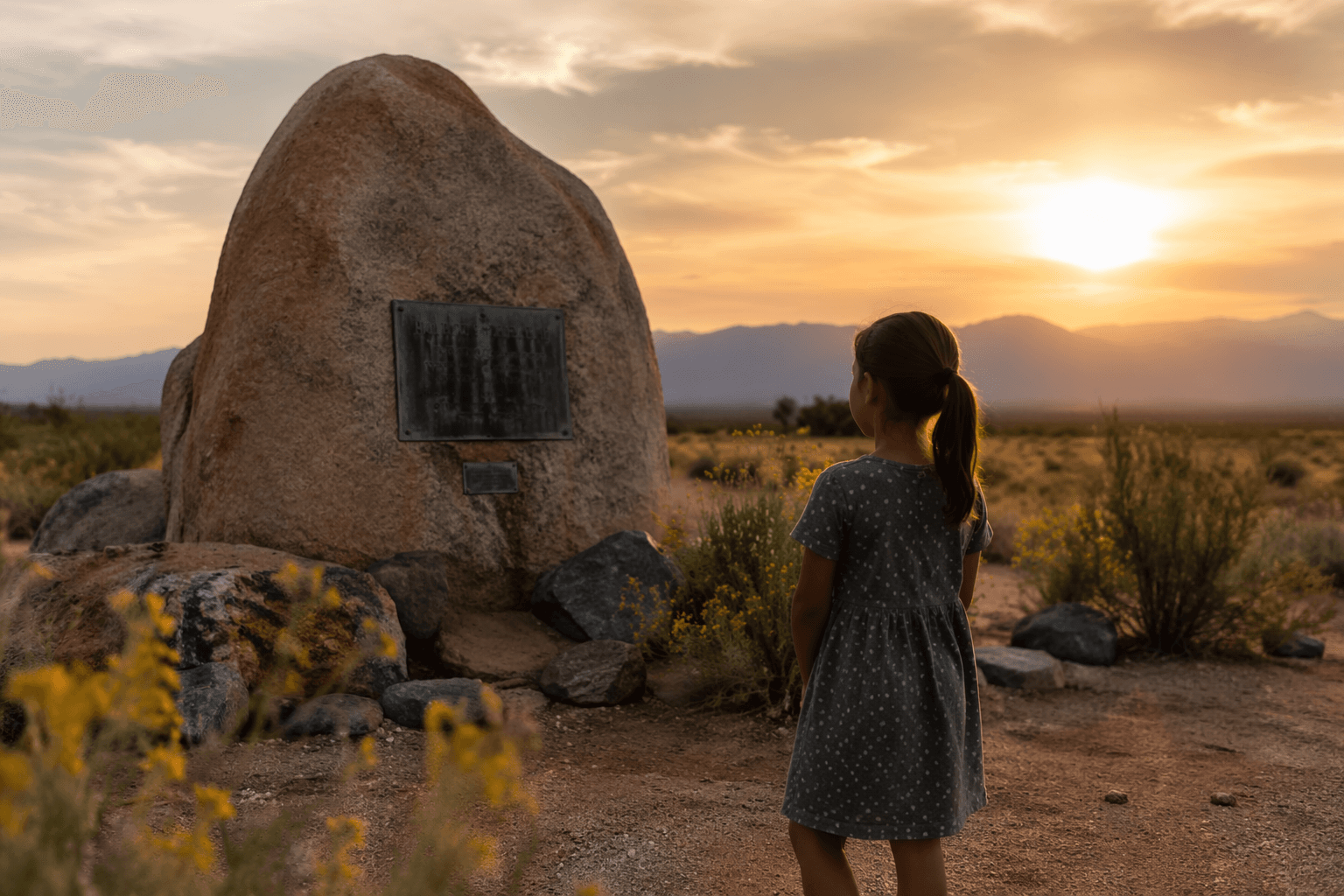
Those interpretive elements matter because they turn the site into an educational stop, not simply a roadside point of interest. The signage helps visitors understand relocation history, Japanese American military service and the Colorado River Indian Tribe’s role in the site’s story. In practical terms, that makes the monument useful to teachers, student groups and travelers who want context, not just scenery.
Why the tribal perspective changes the story
The most important thing about Poston is that it was built on tribal land, and that history has never been neutral. Sources say the Colorado River Indian Reservation Tribal Council opposed using its land for a relocation center, arguing it did not want to help impose on others the kind of injustice its own people had suffered. The Army and the Bureau of Indian Affairs overruled that opposition.
That detail changes the way the site should be understood today. The monument is not only a commemoration of Japanese American incarceration, it is also evidence of how federal wartime policy overrode Indigenous land stewardship. CRIT’s current tourism emphasis places that fact where it belongs, at the center of the Parker-area narrative rather than at the margins.
For La Paz County, that approach can shape how visitors read the region. The Parker area is often associated with the river, recreation and cross-border travel, but Poston adds a deeper layer: a place where civil liberties, wartime policy and tribal sovereignty all intersect. A stronger public understanding of that history can broaden the county’s appeal to heritage travelers and school programs that value documented, place-based history.
Poston Community Alliance keeps the history active
The Poston Community Alliance gives the site a living preservation framework. Its mission is to preserve Poston’s incarceration history and support social justice, while keeping alive the multicultural history that involves Japanese Americans and Native Americans.
The organization grew out of a 2003 strategic visioning session, received 501(c)(3) nonprofit status in 2007, and held the first Poston pilgrimage in 2018. The Colorado River Indian Tribal Council also passed a resolution dedicating 40 acres, underscoring that preservation is not just symbolic, it is tied to land and stewardship.
Recent coverage says the annual pilgrimage now draws hundreds of people and includes ceremonies, education and cultural activities. That makes the site more than a one-day memorial visit. It has become a recurring gathering point where remembrance, teaching and tribal participation all meet on the same ground.
What a stronger spotlight could mean for Parker and La Paz County
A more visible Poston Monument can have real local effects. Heritage travelers tend to spend differently from casual pass-through visitors, especially when a site offers interpretation, a defined history and a reason to stay longer in town. That can help nearby Parker businesses, from fuel stops to restaurants, while also giving schools and community groups a locally rooted field site for history education.
The larger payoff is public understanding. Poston is one of the clearest reminders in western Arizona that the county’s history is not only about river access and development, but also about confinement, sovereignty and memory. By centering the monument, CRIT is shaping how the Parker area is seen, and that influence reaches well beyond tourism marketing.
In La Paz County, the Poston story now stands as a test of who gets to define place. With CRIT, the Poston Community Alliance and the annual pilgrimage all keeping attention on the site, the monument is becoming a focal point for both visitation and accountability, anchored in tribal stewardship and the county’s own historical landscape.
This article was produced by Prism’s automated news system from verified source data, official records, and press releases, then run through automated quality and moderation checks before publishing. The system is built and supervised by the people who set the standards it runs under. Read our full AI policy.
Know something we missed? Have a correction or additional information?
Submit a Tip