Quartzsite’s winter visitors drive tourism and retail economy
Quartzsite’s winter crowds still power the town’s retail strip, RV parks and gem shows. The catch is that so much of the economy lives in a short desert season.
Quartzsite’s winter engine
Quartzsite’s economy turns on a simple fact: when the desert fills up, money starts moving through a small town that sits at the junction of Interstate 10 and U.S. 95, near the Colorado River. The Arizona Commerce Authority says tourism is the major contributor to the town’s economy, and that the gem and mineral shows and swap meets together draw about 1.5 million people a year.
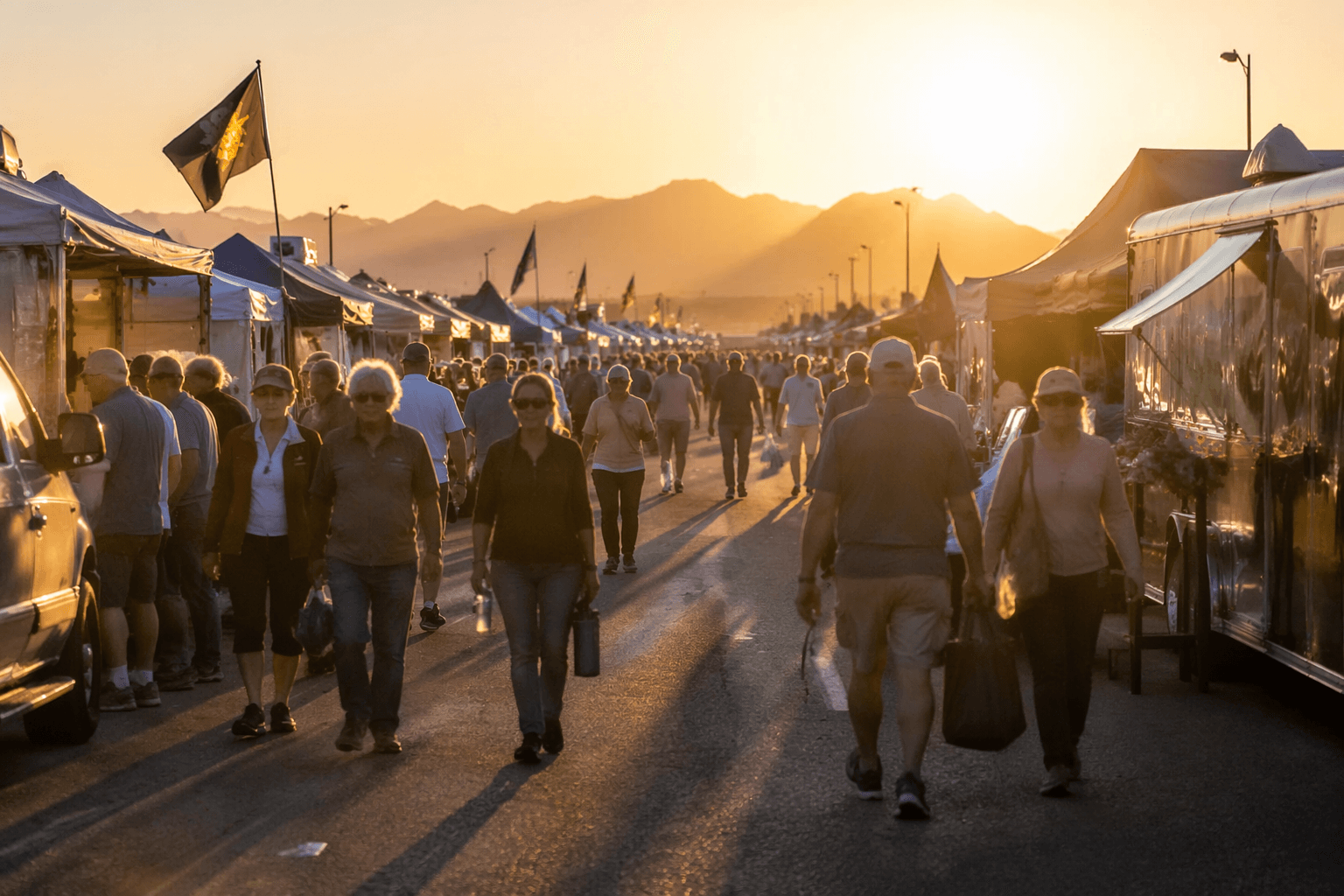
That visitor flow is what gives Quartzsite its outsized reputation in La Paz County. The town’s winter identity is built around RV parks, trailer parks, vendor lots, small retailers, and service businesses that can capture spending from people who stay only long enough to shop, browse, refuel, and move on. In practical terms, that means the town’s busiest months create the most opportunity for local businesses, while the rest of the year forces many operators to work with a much thinner customer base.
Where the money lands
Quartzsite’s winter economy is not driven by one anchor employer or one big attraction. It depends on a cluster of small businesses that benefit when the desert fills with visitors: RV parks, mobile home and trailer parks, fuel stations, diners, convenience stores, repair shops, gem vendors, swap-meet sellers, and other retail and service operators. The Arizona Commerce Authority says visitors typically stay in nearby mobile home and trailer parks between October and March, which puts lodging, propane, groceries, and everyday errands at the center of local spending.
That seasonal concentration is also what makes the town unusually dependent on the winter calendar. When traffic surges, local roads, parking areas, and public services feel the strain. When the season fades, the downside becomes clear, because many businesses are built around a short window when travelers are passing through and spending heavily. Quartzsite’s commercial rhythm is therefore less like a year-round metro area and more like a concentrated market that has to make its numbers in a few crowded months.
For the local economy, that means the biggest winners are the businesses that can scale quickly for the season. Vendors who set up for the shows, park operators who fill their sites, and retailers that sell to RV owners all depend on the same winter pulse. If attendance dips or visitors spend less per stop, the effect is immediate because so much of the town’s retail activity is tied to those temporary peaks.
The winter calendar that drives the town
Quartzsite’s season is anchored by a string of events that keep the name in front of travelers across the desert Southwest. The Quartzsite Sports, Vacation & RV Show says it has been running for more than 30 years and typically draws more than 150,000 RV enthusiasts. That matters because RV traffic is not just tourism, it is the customer base for fuel, repairs, accessories, campsites, food, and the kinds of last-minute purchases that happen when thousands of rigs converge in one place.
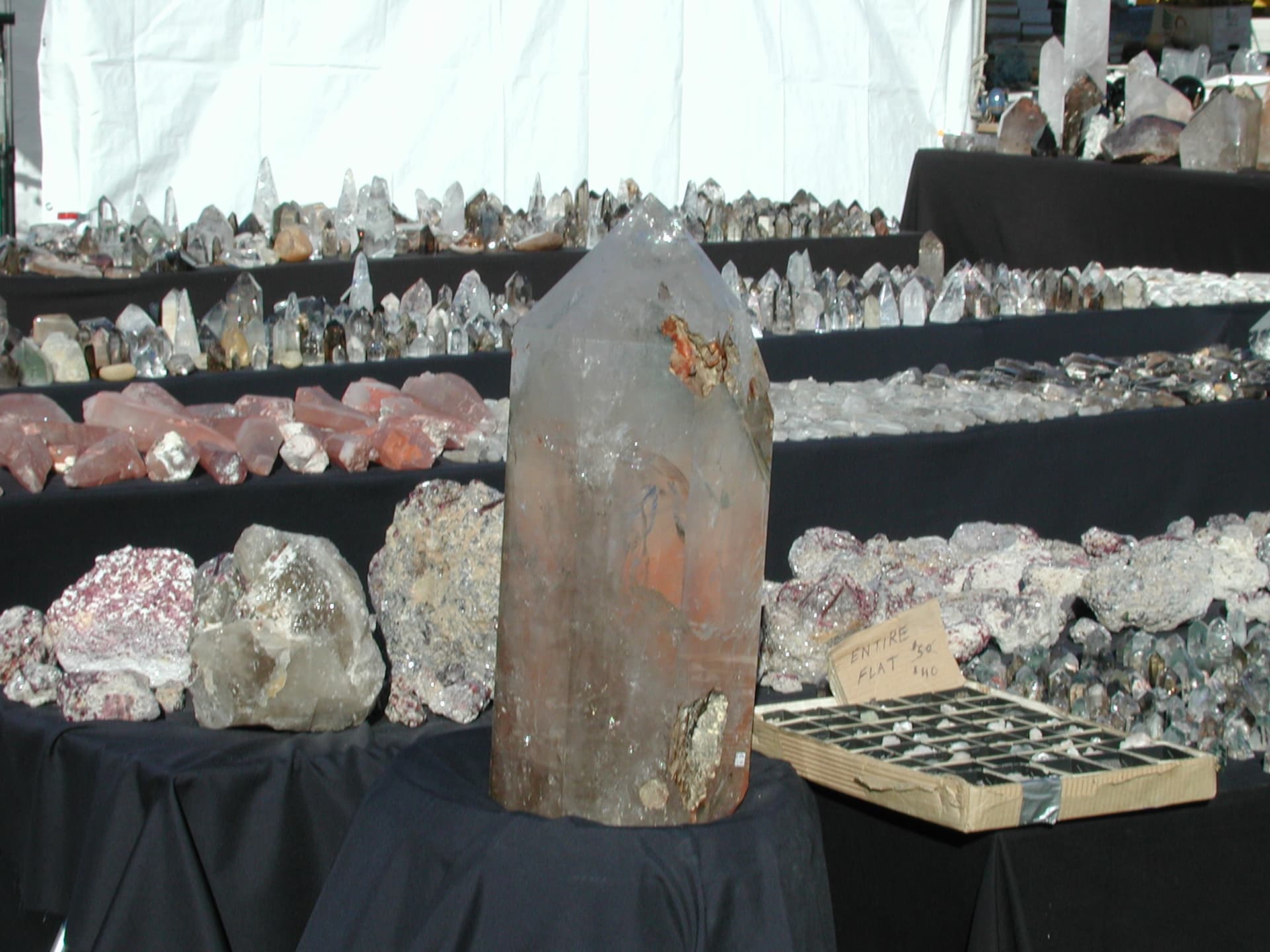
The gem and mineral shows add even more weight to that winter cycle. The Quartzsite Gem & Mineral Showcase runs from January 1 to February 28, 2026. The Desert Gardens Annual International Rock, Gem and Mineral Show runs from January 6 to February 28, 2026, with hours from 9:00 a.m. to 5:00 p.m. During those weeks, Quartzsite becomes a retail corridor as much as a destination, with vendors, collectors, and casual visitors all feeding the same seasonal market.
Taken together, those events help explain why Quartzsite’s image travels far beyond western Arizona. The town is not simply a stopover on the way to somewhere else. It is a destination that combines shopping, gathering, and desert camping in a way few other places in La Paz County can match, and that concentration of activity is what gives local businesses a chance to earn the bulk of their annual revenue in a relatively short stretch.
A frontier history that still shapes the brand
Quartzsite’s modern tourism economy sits on top of a much older story. The Arizona Commerce Authority says the town was established in 1867 on the site of old Fort Tyson, which was built in 1856 by Charles Tyson for protection against raids. Long before winter visitors arrived with RVs and folding chairs, the place was already a waypoint in the desert system that linked the river country with the interior.
Visit Arizona says the original adobe stage station was built in 1866 by Charley Tyson and served as an important way station on the California-Arizona line. Miners and freighters moving between Ehrenberg and Prescott stopped there because the site offered water and grass for horses, two resources that mattered enormously in the desert. That stage-station history still gives Quartzsite a frontier identity that complements its modern role as a gathering place for travelers.
The Quartzsite Museum, also known as the Tysons Well Stage Station Museum, keeps that story visible. So does the Hi Jolly Monument, which honors Hadji Ali, the Arab camel driver tied to the U.S. War Department’s 1850s camel experiment in the desert. These landmarks matter economically as well as historically because they deepen the town’s brand. Quartzsite sells more than shopping; it sells a sense of place rooted in travel, survival, and movement across the desert.
Why the model is both strong and fragile
Quartzsite’s strength is that its identity is clear. People know why they are going there, and businesses know what season matters most. The town’s gem shows, swap meets, RV events, and desert heritage create a recognizably local economy that keeps drawing visitors back year after year.
Its weakness is that so much of that economy is compressed into a short period. A La Paz County broadband project narrative says Quartzsite has broadband service of 67.6 percent and average speeds of about 10 Mbps, and that La Paz County is the third least connected county in Arizona. That kind of infrastructure gap matters in a place where businesses rely on communication, marketing, payment systems, and coordination during the busiest weeks of the year.
The larger risk is not only slower internet or seasonal traffic jams. It is what happens if visitor numbers, vendor spending, or travel patterns change. Quartzsite’s economy depends on people choosing to stop, stay, and spend in a town that has turned winter migration into an economic strategy. For now, that strategy still works because the desert season keeps delivering crowds, and the crowds keep delivering cash to the businesses built around them.
This article was produced by Prism’s automated news system from verified source data, official records, and press releases, then run through automated quality and moderation checks before publishing. The system is built and supervised by the people who set the standards it runs under. Read our full AI policy.
Know something we missed? Have a correction or additional information?
Submit a Tip