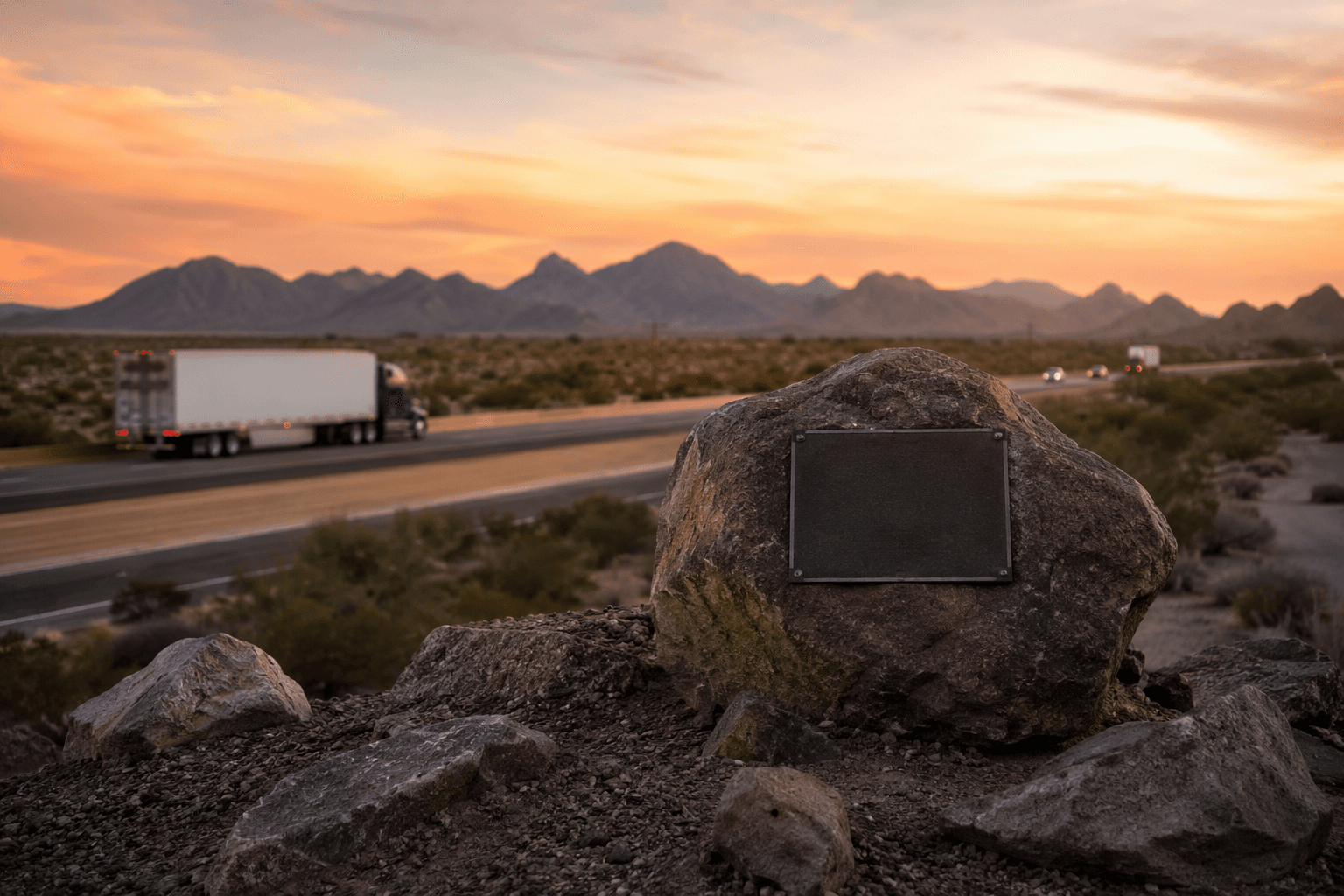
Indian Hills Airpark blends homes and runways in Salome
Indian Hills Airpark is a private residential runway community in Salome, where 70 residents live on 93 home sites under HOA rules and airport-manager access controls.
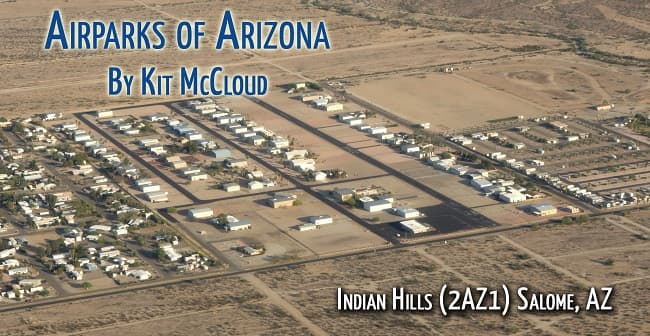
Indian Hills Airpark is where a neighborhood and a runway share the same map. In Salome, the private residential airpark known as 2AZ1 holds 70 residents on 93 home sites, and visitors are told to check in with the airport manager and read the public notice before they fly in or stop by.
A residential airpark built into Salome’s geography
Indian Hills sits about 100 miles west of Phoenix Sky Harbor on Highway 60, midway between the I-10/60 junction and Aguila, where Eagle Roost Airpark is another familiar aviation landmark. That location matters in La Paz County because long stretches of highway, open desert, and low-density land use make aviation a practical part of daily life for some households rather than a novelty.
The airpark’s footprint shows how unusual this kind of community is: it is not a subdivision with an airport nearby, but a place where runway access is part of the residential design. In a county where distance is built into everyday errands, that makes Indian Hills a mobility choice as much as a housing choice.
How the community is governed
Indian Hills Airpark Association, Inc. lists its physical address as 66957 Indian Hills Way, Salome, AZ 85348-1113, with a mailing address at PO Box 1113, Salome, AZ 85348. The association’s contact page names Tim Steier as HOA president and gives a phone number for the association, which shows that day-to-day control runs through an organized homeowners’ structure rather than a loose collection of owners.
That matters for anyone considering a home there. A private airpark depends on clear internal rules: who may enter, how flying visits are handled, and what steps a pilot should take before landing or touring the property. The association’s instruction to contact the airport manager and read the public notice is the clearest sign that access is managed, not open-ended.
What daily life looks like on and around the runway
The Indian Hills Airpark Association points residents and visitors toward fly outs, social events, and EAA Chapter 1144, which suggests that the runway is not just infrastructure but a social center. The association also says there are close to 40 runways within a 30-mile radius of Salome, both dirt and paved, placing Indian Hills inside a broader backcountry aviation network rather than an isolated strip.
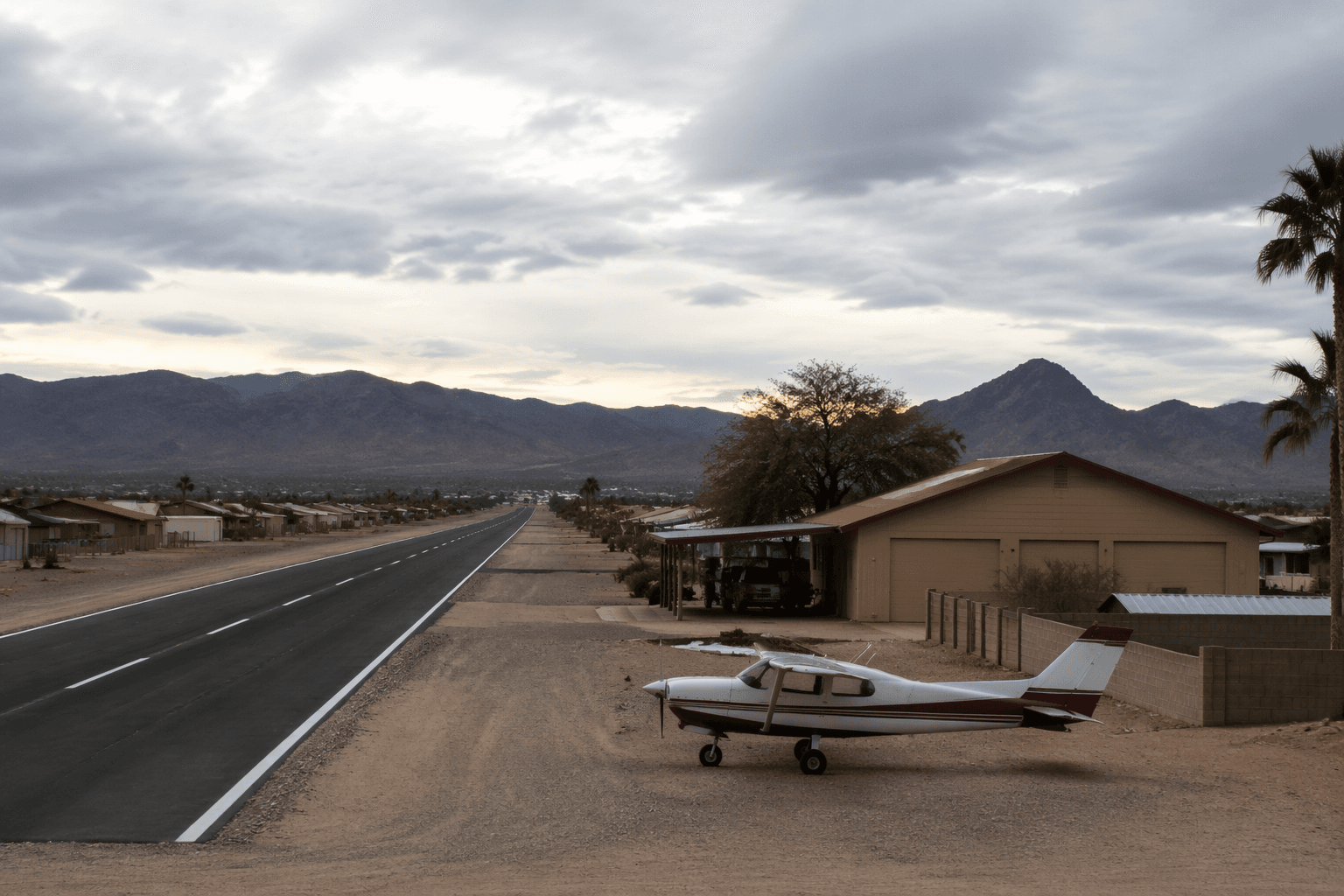
That regional context helps explain why airpark living persists in western Arizona. Pilots can move among nearby strips, while homeowners who value aircraft access gain a built-in community of people who understand aviation schedules, maintenance, and the realities of living near takeoffs and landings. In a place like Salome, the normal sounds of a rural neighborhood can include prop wash, taxiing, and the rhythm of fly outs.
Why buyers look at a place like Indian Hills
Indian Hills Development Company presents the project as “where aviation meets community,” and says it was developed by Tom Washburn, described there as a private pilot and visionary real estate developer. The same page calls the community “cozy, affordable, and neighborly,” language that helps explain the appeal: buyers are not just shopping for land, they are buying into an aviation-centered way of living.
For households considering a move, that changes the value proposition. The draw is not a standard subdivision amenity package, but the ability to live on a home site tied directly to a runway community. That also means expectations are different from those in a conventional neighborhood: aircraft activity is part of the setting, access is structured, and the social culture is built around flying.
What county oversight still means here
Even a private airpark sits inside La Paz County’s land-use system. County planning and zoning records show that formal land-use governance has long been part of the county’s process, with La Paz County Planning and Zoning Commission minutes dated March 7, 2001 and a public notice and agenda packet dated January 7, 2009.
For a community like Indian Hills, that framework matters because homes, runways, drive access, and neighborhood rules all sit within county zoning and development oversight. The county may not run the airpark’s daily operations, but it shapes the legal and planning environment around it, from how land is approved to how a rural aviation subdivision fits into the county’s broader growth pattern.
How Indian Hills fits the larger Salome aviation picture
The Arizona Pilots Association’s airparks directory places Indian Hills alongside other aviation communities in Arizona, including Eagle Roost Airpark in Aguila, which is listed with 85/115 homes and sites. That comparison shows Indian Hills is part of a statewide pattern: homes built around aviation access, often in rural settings where land is available and pilots can keep a plane close to home.
For Salome, that identity gives Indian Hills a particular place in local life. It is part housing, part airfield, and part club culture, with the association, airport manager, and county land-use system each playing a role in how it functions. The result is a community that works only because the runway, the homes, and the rules are all designed to fit together.
This article was produced by Prism’s automated news system from verified source data, official records, and press releases, then run through automated quality and moderation checks before publishing. The system is built and supervised by the people who set the standards it runs under. Read our full AI policy.
Did this article answer your question?