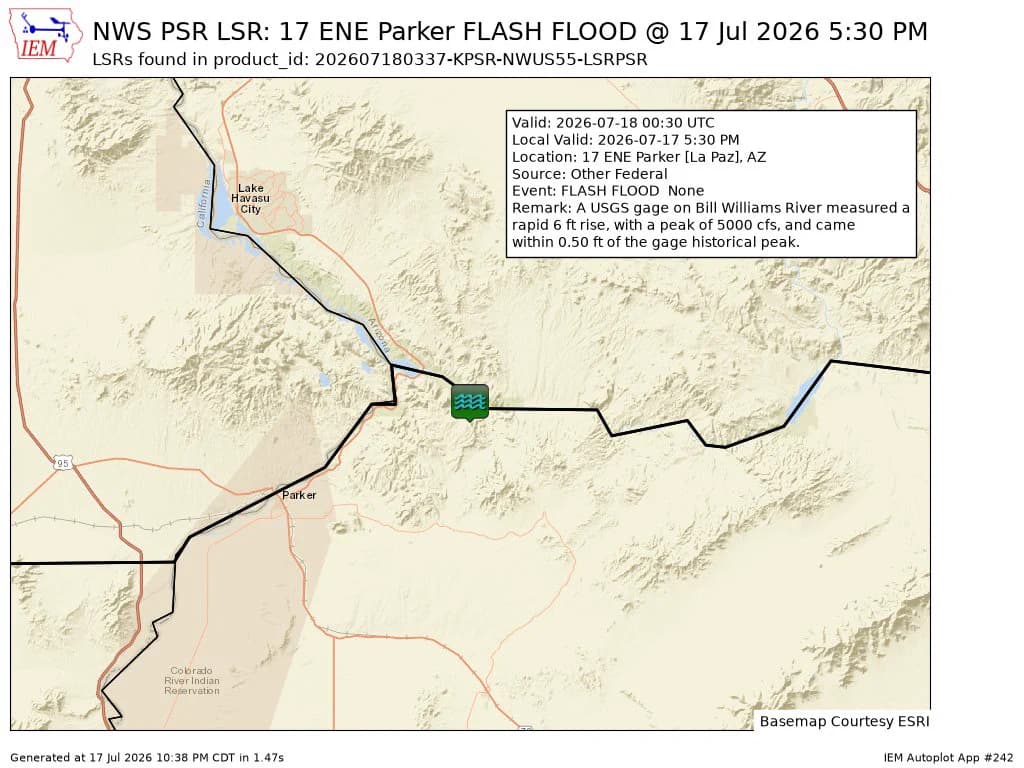
La Paz County under weather alert as storms bring wind, lightning, flood risk
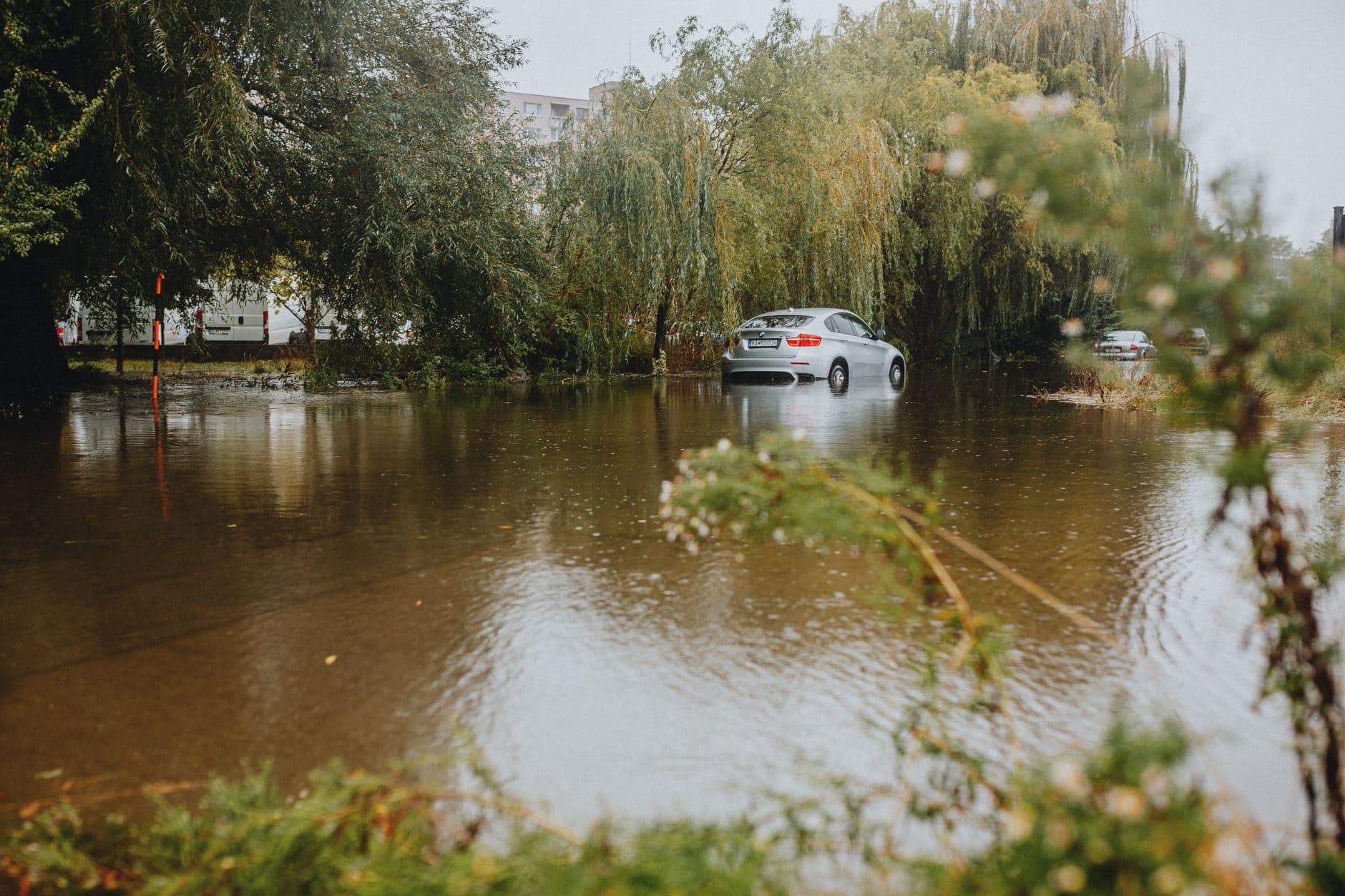
Storms were bringing 50 mph gusts and lightning to La Paz County, while some cells could drop 2 inches of rain and trigger flash flooding.

The National Weather Service kept La Paz County under a special weather statement through 6:30 p.m. MST on July 16, with active showers and storms bringing lightning risk and gusts up to 50 mph. A Flood Watch also covered south-central Arizona from Thursday afternoon through late Thursday night, with widespread rainfall of 0.50 to 1.00 inch expected and locally higher totals of 2 inches or more.
NWS Phoenix said the strongest cells could produce rain rates of 2 to 3 inches an hour, a pace that can overwhelm washes, low-water crossings and drainage ditches in a hurry. Damaging winds near 60 mph were the main threat, and some areas could also see dense blowing dust from storm outflows.
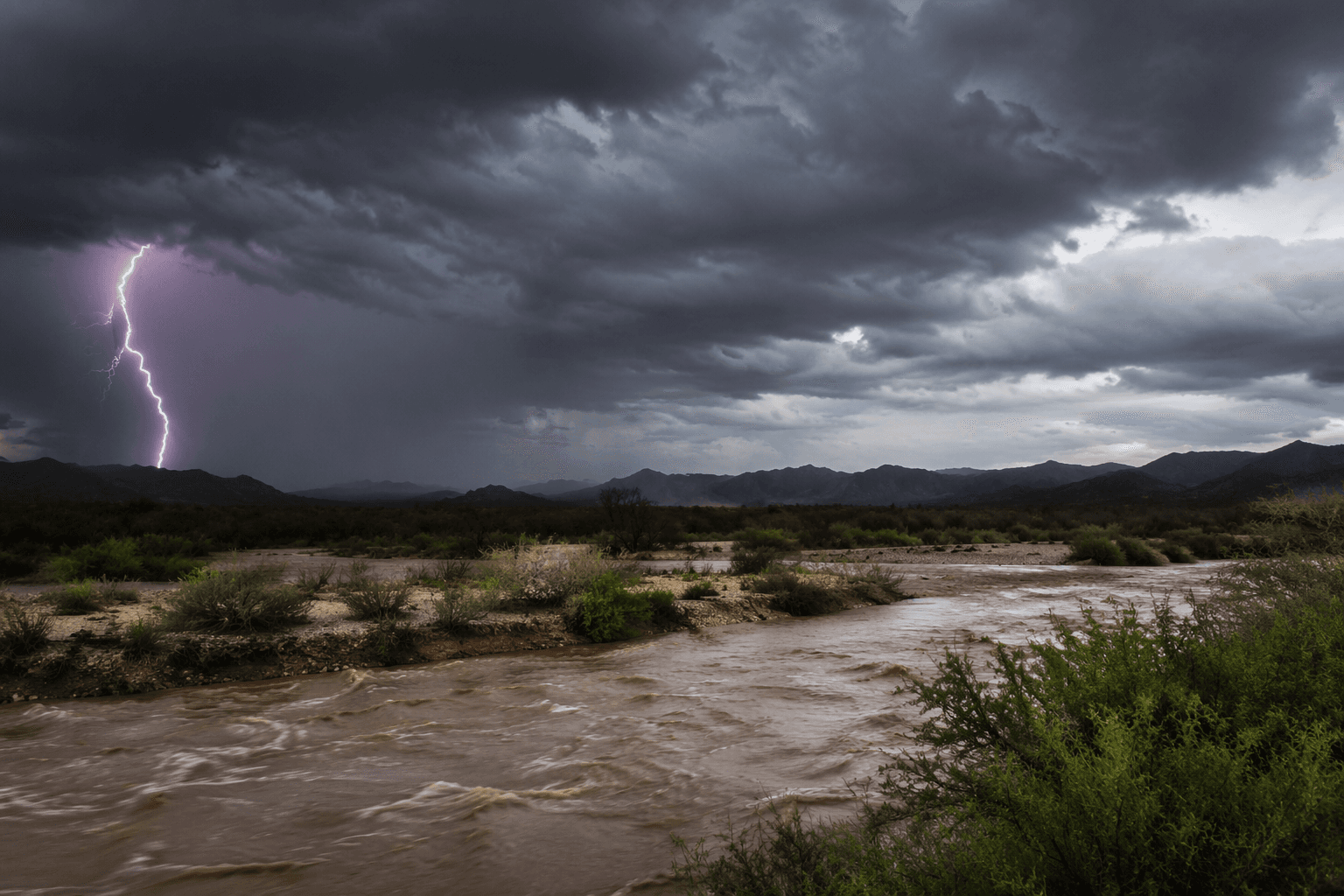
That combination is especially dangerous on long stretches between Parker, Bouse and Roll, where visibility can drop suddenly when a dust wall develops. National Weather Service monsoon guidance puts thunderstorm wind gusts in the Southwest at almost always above 40 mph and sometimes above 100 mph, with damage that can rival a tornado. The same guidance warns that dust storms with visibility of a quarter-mile or less can form quickly, and drivers should pull off the road immediately rather than try to outrun the cloud.
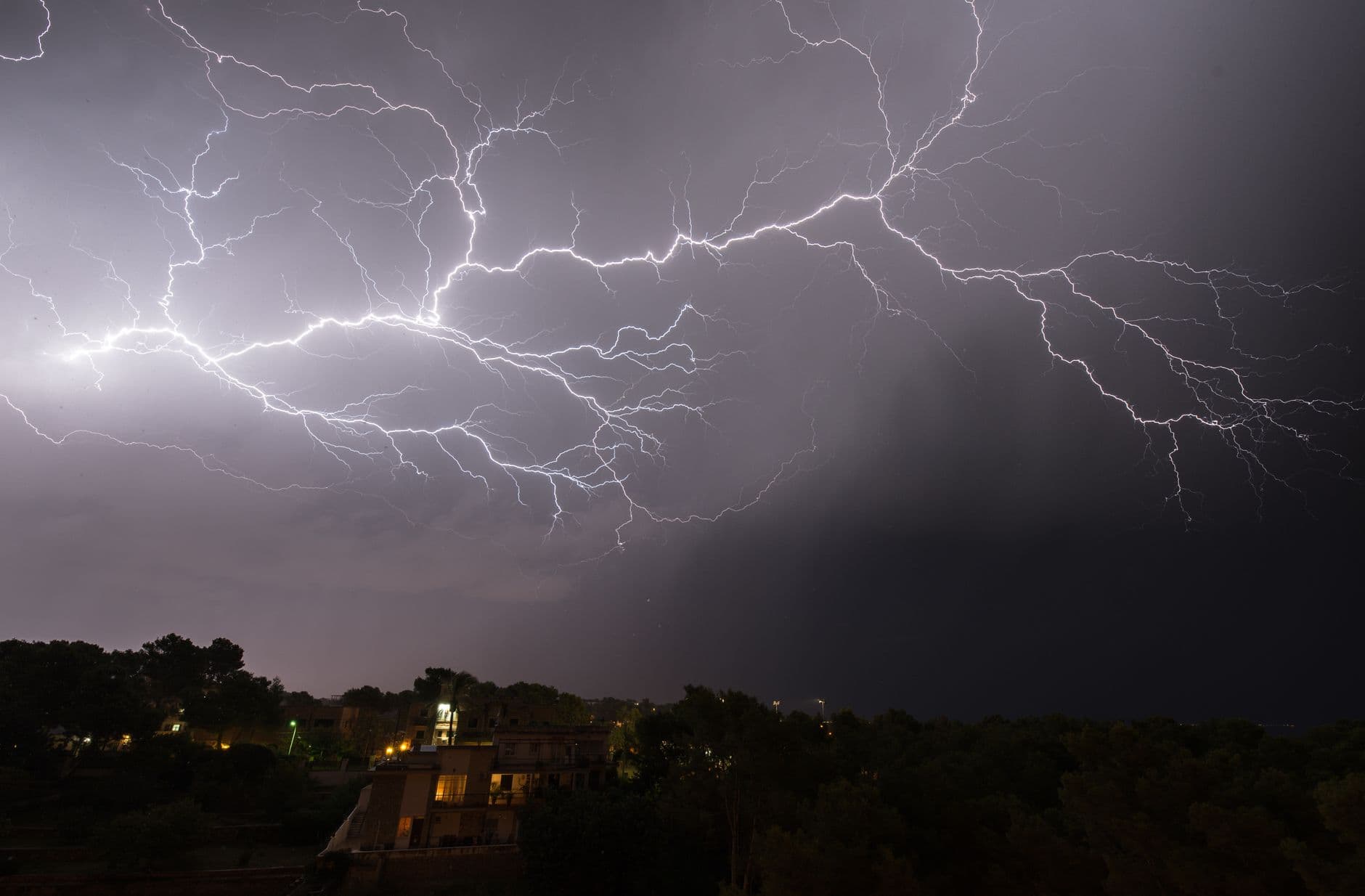
On Sept. 1, 2019, the most intense weather in a Southwest Arizona event hit the county, affecting Bouse and Parker and prompting 11 Severe Thunderstorm Warnings and 7 Flash Flood Warnings. On July 15, 1981, Roll had an 80 mph thunderstorm that damaged farm machinery, sheds, three crop-dusting planes, a hangar, houses and power lines.
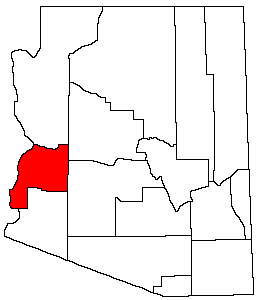
NWS Phoenix relies on the Skywarn spotter network when significant weather develops across its warning area, using timely reports to track storms as they intensify and move across La Paz County.
This article was produced by Prism’s automated news system from verified source data, official records, and press releases, then run through automated quality and moderation checks before publishing. The system is built and supervised by the people who set the standards it runs under. Read our full AI policy.
Did this article answer your question?