Quartzsite museum tells story of frontier stage station roots
Tyson’s Well compresses Quartzsite’s frontier story into one stop, linking a hand-dug well, stage routes, mining freight and the town’s earliest growth.
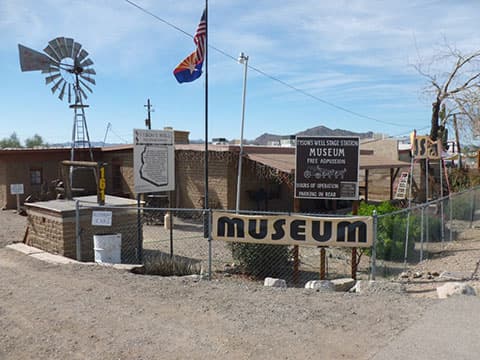
Tyson’s Well Museum is the quickest way to understand why Quartzsite exists where it does. The site ties together a hand-dug well, a stage station, mining freight and the hard practical problem that shaped every desert crossing: water.
The museum at 161 W. Main St. preserves that history in place, not behind glass alone. Its original adobe stage station was built by Charley Tyson at the same location, and the Quartzsite Historical Society opened the museum in February 1980 after restoration work. For anyone tracing La Paz County history, this is the rare stop where one building explains the town’s origin story, its travel routes and the logistics that kept people moving through the western Arizona desert.
How the town began
Quartzsite’s roots reach back to 1856, when Charles Tyson established a stage station and dug several wells for teamsters hauling freight between Prescott and Ehrenberg. That detail matters because it shows Quartzsite was never just a pass-through settlement. It sat inside a working corridor that linked river transport at Ehrenberg with the territorial center at Prescott, and it served the people carrying supplies, equipment and messages across that route.
A historical marker deepens that picture. It says Tyson dug the original well by hand around 1864, and that the 40-foot-deep well marked the spot around which Quartzsite grew. Another marker places Tyson’s Well on a stage stop between Ehrenberg and Wickenburg and notes that travelers in the 1870s and 1880s made their first stop there on eastward journeys from the Colorado River. That is the geography behind the town: water first, then travel, then settlement.
What the museum preserves inside and out
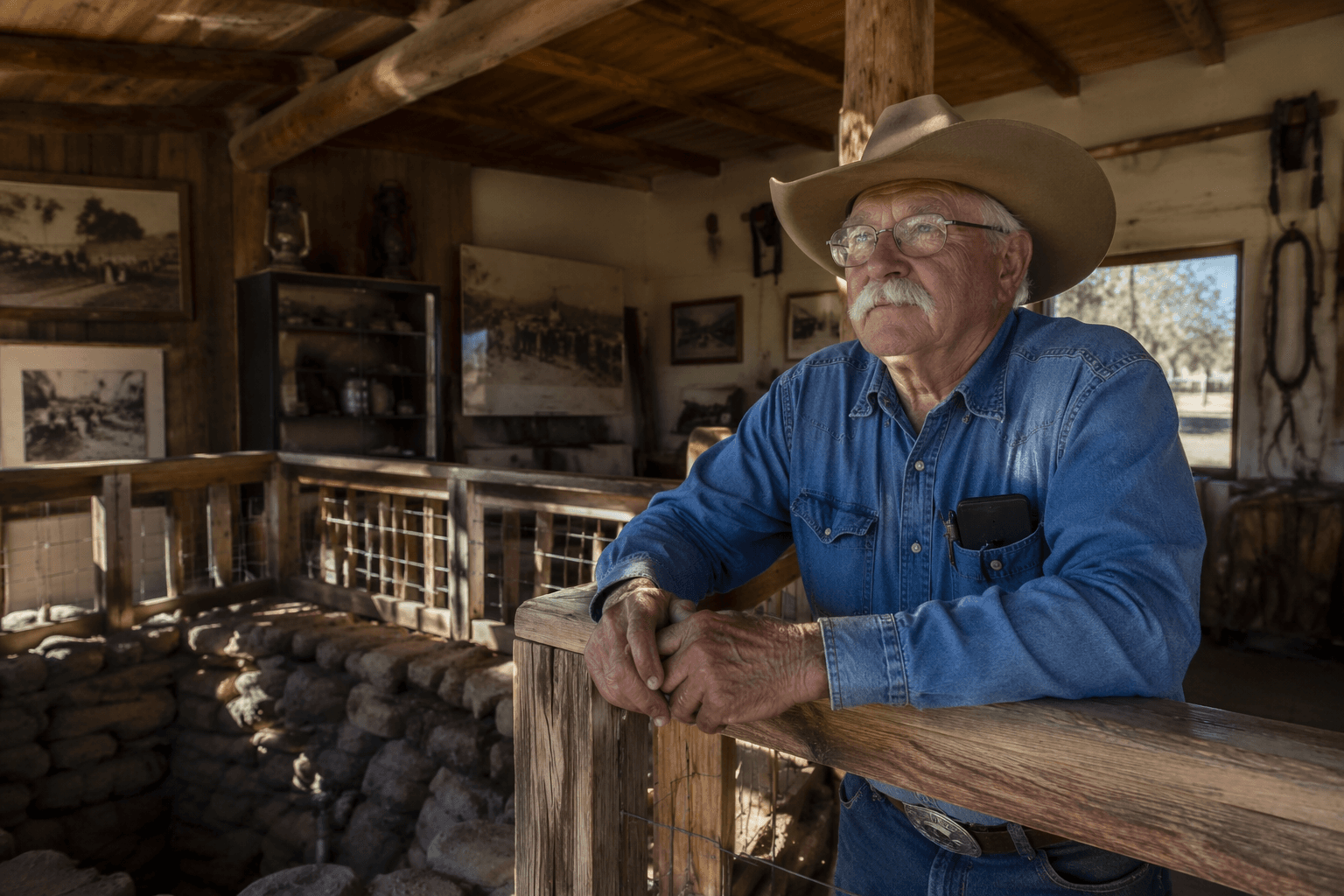
The value of Tyson’s Well Museum is that it still shows how the place worked. The restoration kept the original structurally sound walls and built a stabilizing adobe shell around them for protection. That choice preserves the feel of a frontier structure while keeping the building standing for future visitors.
Inside, the details are the real lesson. One room still has a dirt floor, the main room’s ceiling is made from saguaro ribs, and the original fireplace remains in use during winter. Those features are not decoration. They are a direct reminder of how people adapted to building in the desert with local materials and simple, durable methods.
Outside, the museum yard extends the story into Quartzsite’s mining past. Visitors can see the original assay shack from the Mariquita Mine, old mining equipment, the cement-and-stone village created by Walter Barrett during retirement, and a black-light display of fluorescent minerals common to the area. Together, those pieces show how the town’s identity stretched from stage travel into extraction and mineral discovery.
Why this stop helps decode Quartzsite today
If you know Quartzsite mainly as a winter travel stop, the museum gives that modern image a deeper foundation. The town’s present-day role in seasonal movement is easy to see, but Tyson’s Well shows that Quartzsite was already built around movement long before RVs filled the desert. The same practical advantages that mattered in the stage era, especially reliable water and a usable stopping point, also explain why the town took shape at all.
That makes the museum a useful first stop before driving around town. The 40-foot well marks the center of early Quartzsite growth. The stage-station story helps explain why the town sits where it does on old routes toward Ehrenberg, Prescott and Wickenburg. The mining artifacts connect that travel history to the ore, equipment and labor that flowed through western Arizona. Even the cactus ribs in the ceiling and the dirt floor help decode the wider landscape outside, where survival depended on making the most of local materials.
How to use the museum as a self-guided history stop
A visit works best if you treat the museum as a map to the town rather than a single exhibit hall. Start with the original stage-station site, then use the artifacts to read the landscape around you.
- Look for the well story first. It explains why this point on the desert route became a stop in the first place.
- Study the stage-travel references next. They connect Quartzsite to Ehrenberg, Prescott and Wickenburg, which were part of the freight and passenger network across territorial Arizona.
- Pay attention to the mining material outside. The assay shack and mining tools show how the town’s economy expanded beyond travel into extraction.
- Notice the building itself. The dirt floor, saguaro-rib ceiling and preserved fireplace show how desert construction worked with the materials at hand.
- Use the museum before exploring the rest of town. The history here helps make sense of why Quartzsite still feels like a place defined by wayfinding, stopping and resupply.
Visitor basics
The museum’s current listing places it at 161 W. Main St. in Quartzsite. Summer hours are Thursdays from 10 a.m. to 12 p.m. from April 1 to October 31. Those are the most practical hours to know if you are planning a weekday stop during the warmer months.
The site also sits within a broader preservation tradition recognized nationally. The National Park Service says the National Register of Historic Places is the official list of the nation’s historic places worthy of preservation, authorized by the National Historic Preservation Act of 1966. Tyson’s Well fits that framework as a preserved stage station tied to transportation, settlement and mining in the American West.
Tyson’s Well Museum does more than preserve an old building. It keeps the town’s founding logic visible: water made the stop possible, stage routes made it useful and mining made it part of the region’s wider economy. For Quartzsite, that is the whole frontier story in one place.
This article was produced by Prism’s automated news system from verified source data, official records, and press releases, then run through automated quality and moderation checks before publishing. The system is built and supervised by the people who set the standards it runs under. Read our full AI policy.
Did this article answer your question?