Lafayette County counts 48 Mississippi Landmarks, and the list keeps growing
Lafayette County’s official landmark list is a planning tool, not just a museum map. With 48 countywide sites and 44 in Oxford, it shapes buying, renovation, preservation, and tourism decisions.

Lafayette County’s historic map is bigger than the Oxford Square, and the numbers are the first clue. The Mississippi Department of Archives and History county report lists 48 Mississippi Landmarks in Lafayette County, and when you filter the same report to Oxford, it still shows 44. That means the county’s preserved places are concentrated in town, but not confined to it.
What the count tells you
The count matters because it is an official state inventory, not a tourism brochure. It gives homeowners, buyers, developers, teachers, and visitors a searchable record of what Mississippi has already recognized as historically significant in Lafayette County. Just as important, the list keeps growing: Carrier Hall at the University of Mississippi appears in the report with a designation date of Sept. 16, 2025, and a recorded date of Nov. 12, 2025.
That newer entry is a reminder that landmark status is not frozen in one era. Lafayette County’s catalog includes well-known places, but it also spreads across different kinds of properties, including campus buildings, historic houses, civic sites, and churches. The gap between the county total and Oxford’s total, just four sites, also shows how heavily the city anchors the county’s preservation footprint.
What Mississippi Landmark status means
Mississippi Landmark designation comes with a formal process under state rules. Under 16 Miss. Code. R. 3-1.4, the Board may designate publicly owned sites of historical or architectural significance as Mississippi Landmarks without the owner’s consent. Privately owned sites can be designated only at the written request of the owner.
For property owners, that distinction is the key practical takeaway. Publicly owned places can be added to the state record as part of the Board’s preservation authority, while private owners must opt in in writing. That makes the designation more than a label: it is a state recognition that can affect how a property is understood, marketed, studied, and planned for in the future.
If you are buying, renovating, or developing in Lafayette County, the useful move is to check the MDAH inventory before drawing up assumptions about a site. The landmark report is searchable and gives you a public record of how the state has categorized a property, which matters when you are weighing long-term investment, possible preservation expectations, and the history attached to the address.
The sites that show how the system works
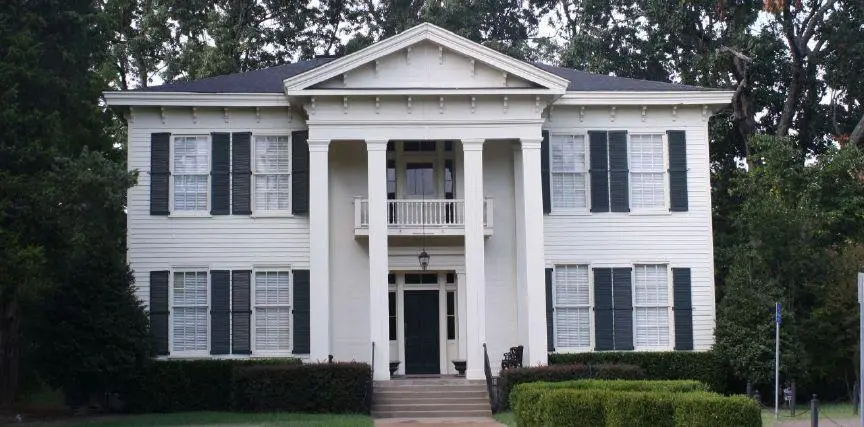
Cedar Oaks is one of the clearest examples of how a landmark becomes part of Lafayette County’s civic memory. The house was designated a Mississippi Landmark on Dec. 8, 2005, and recorded on Jan. 10, 2006. Its own history reaches back to 1859, when William Turner built it as his personal residence, and the house’s Greek revival form has helped make it one of Oxford’s best-known preserved properties.
Cedar Oaks also shows why preservation here is often a story of people as much as architecture. The Cedar Oaks site says Molly Turner Orr organized a fire brigade to save the house in 1864 after occupying Union troops set it aflame. Later, Mary Alice Tate rallied Oxford’s women’s clubs to keep it from commercial development. That history explains why landmark listings matter: they protect a record of local action, not just a pretty facade.
The broader inventory points to the same pattern. The county list includes the University of Mississippi, where campus buildings sit beside older houses and other historic properties, and that mix gives Lafayette County a preservation profile that runs from institutional history to neighborhood-scale architecture. In practice, that means the county’s landmark system reaches into places where students live, where people work, and where everyday commercial life still unfolds around historic structures.
Why the list matters for investment and tourism
The landmark report is useful because it helps local decision-making before a project becomes a problem. A buyer considering a house in Oxford, a developer evaluating a site near campus, or a business owner looking at a property with a long architectural history can all use the state list to see whether a place already sits inside Mississippi’s preservation framework. That can shape timelines, budgets, and the level of care a site deserves before work starts.
The county’s preservation culture is not accidental. The Oxford-Lafayette County Heritage Foundation says it began in 1996, when three Oxford citizens saw historic buildings being demolished and decided to do something about it. That local response fits a larger statewide pattern described in The Mississippi Encyclopedia, which notes that preservation in Mississippi has deep roots and today depends on stewardship by both individuals and the public sector.
Oxford’s own history helps explain why the county has such a dense landmark catalog. The Advisory Council on Historic Preservation describes Oxford as a college town and history-rich southern junction, and says it was incorporated in 1837. With the University of Mississippi, Oxford Square, and a long list of protected properties, the county’s built environment functions as a living archive that still shapes what people choose to preserve, buy, study, and visit.
That public-facing value showed up again in a March 18, 2024 Oxford Eagle story on historical markers in Lafayette County, which framed them as celebrations of architecture and sites from the past. Taken together, the 48 landmarks countywide and the 44 within Oxford offer more than a count: they give Lafayette County a working map for preservation, investment, and heritage tourism that keeps expanding as new places enter the record.
This article was produced by Prism’s automated news system from verified source data, official records, and press releases, then run through automated quality and moderation checks before publishing. The system is built and supervised by the people who set the standards it runs under. Read our full AI policy.
Did this article answer your question?