Thomas Dudley Isom helped found early Oxford, Lafayette County
Thomas Dudley Isom’s cabin and later practice helped set Oxford’s center in motion. His footprint still runs through the Square, Isom Place, and Lafayette County’s civic core.
Thomas Dudley Isom helped shape the ground beneath today’s Oxford Square before Oxford was a town with a courthouse identity, a university reputation, or a downtown business district. Born in Maury County, Tennessee, on April 5, 1816, he came to the Ridge in 1835 and built a three-room log cabin at the site that now anchors Lafayette County’s best-known public space. From that cabin, he also established a medical practice that made the spot more than a settlement point, turning it into an early center of work, trade, and daily life.
The cabin at today’s Oxford Square
The most important thing to understand about Isom’s role is that it was practical, not ceremonial. He arrived in the Ridge at the request of Chisolm, Martin, and Craig, the Pontotoc trading firm that was looking for new trading venues with the Chickasaw, and he settled where people would naturally gather, trade, and seek help. The square that residents cross today began as a place where one doctor’s cabin and practice helped pull a frontier community into a stable center.
That early footprint still matters because the present-day Oxford Square sits on top of it. The square’s present concentration of storefronts, foot traffic, and public life reflects the same central logic that made Isom’s site valuable in the 1830s: it was where people met, where business happened, and where the town’s functions started to cluster.
How Lafayette County and Oxford took shape
Lafayette County was founded in 1836, shortly after treaties forced most of the native Chickasaw population from the area, and it was named for the Marquis de Lafayette. Oxford followed in 1837, and the county accepted a donation of fifty acres in the geographical center of the new county for the courthouse square, which became the civic core of the city. That decision still defines downtown Oxford, because the Square remains the place where commerce and government, history and daily routines, continue to overlap.
The Mississippi Hills National Heritage Area describes Oxford Square as the cultural and economic hub of the city since incorporation. That is not just a romantic label. The Square is home to a mix of shops and boutiques, including the South’s oldest department store and one of the nation’s most-renowned independent bookstores, a retail pattern that shows how the center of town has kept its gravity even as Oxford has grown far beyond its 19th-century footprint.
Isom Place on Jefferson Avenue
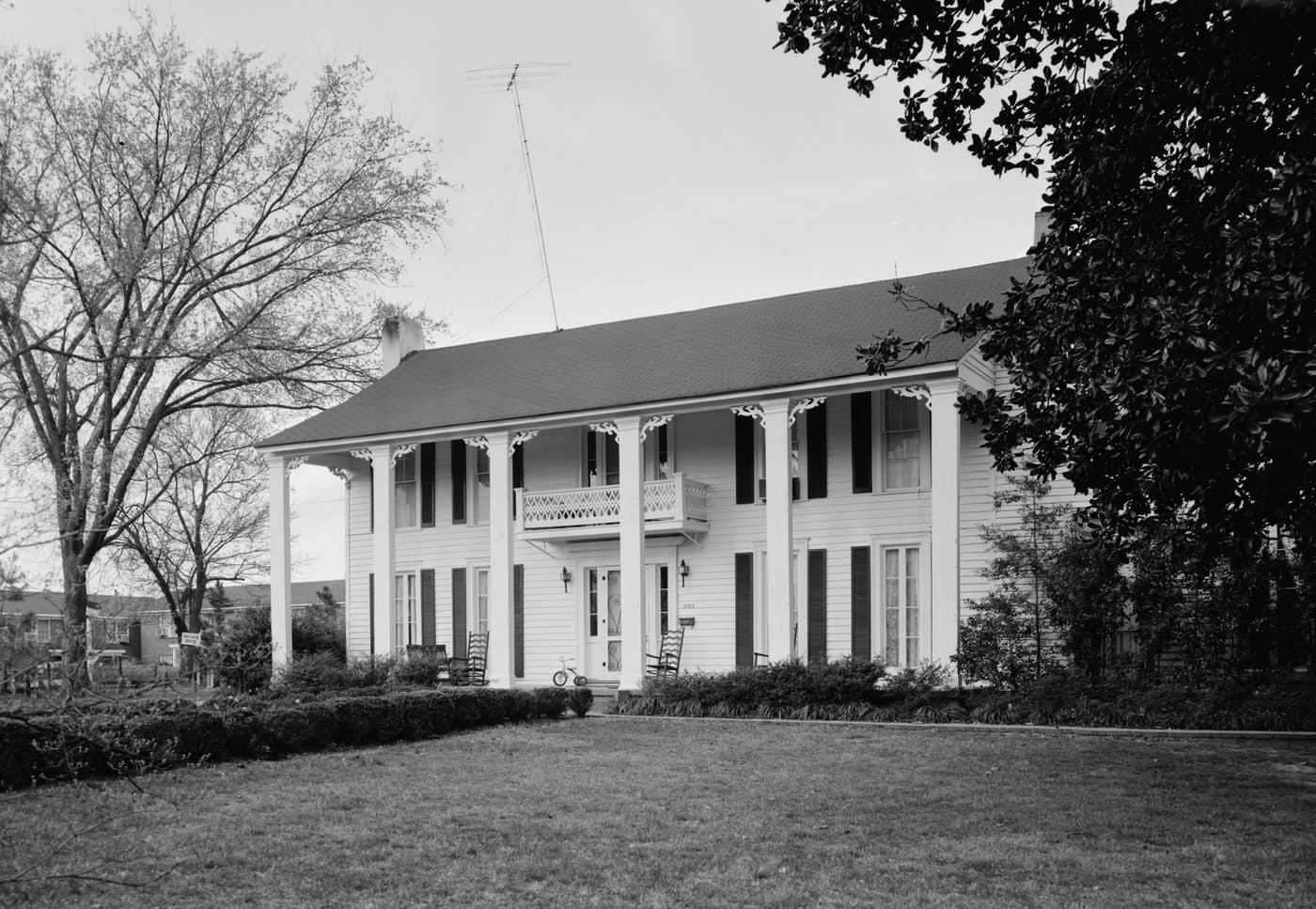
Isom’s later home makes the history even more tangible. In 1847, he purchased Isom Place at 1003 Jefferson Avenue and used it as his home, office, and apothecary. The property is widely described as one of Oxford’s oldest homes, and today it serves as an event venue, keeping the site active in the city’s contemporary social life.
The house also carries layered construction history. Clio describes the Greek-revival home as having been built in the 1840s by Samuel Carothers, with a log structure inside thought to predate the mansion. National Register documentation, however, identifies Isom Place as constructed by Thomas Dudley Isom and calls him the first white settler at the present site of Oxford, Mississippi, who came from Tennessee. The two accounts point to the same deeper truth: the building sits on a site whose history reaches back before the formal townscape around it fully took shape.
The National Register of Historic Places listed Isom Place in 1975, which helped fix its place in Oxford’s architectural and civic memory. That designation matters because the house is not just a preserved object on Jefferson Avenue. It is part of the chain of decisions that connected a medical practice, a residence, and a growing commercial center around the same downtown core.
Why the story still begins at the Square
Isom was not a political figure or a battlefield name. He was a settler and doctor whose work helped anchor a new community at a moment when Lafayette County was still being organized after the Chickasaw Cession, and that makes his story unusually useful for understanding present-day Oxford. The square-centered downtown, the courthouse focus, and the historic buildings along Jefferson Avenue all reflect choices made when the county was young and the town was still forming.
Thomas Dudley Isom died in 1902, but the places tied to him still structure how Oxford reads on a map. The Square remains the county’s visual and civic center, and Isom Place still ties one of Lafayette County’s oldest residential sites to the earliest chapter of the city’s development.
This article was produced by Prism’s automated news system from verified source data, official records, and press releases, then run through automated quality and moderation checks before publishing. The system is built and supervised by the people who set the standards it runs under. Read our full AI policy.
Did this article answer your question?