Knife River Heritage Center prepares to dedicate Legacy Tree memorial phase
Seventeen Legacy Trees now line the Knife River Heritage & Cultural Center, where memorial names are set to be marked by a map and pedestal display.
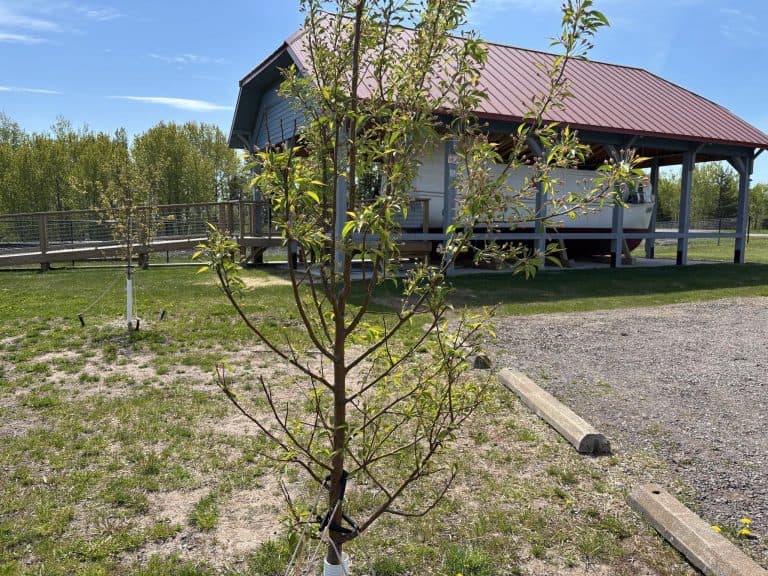
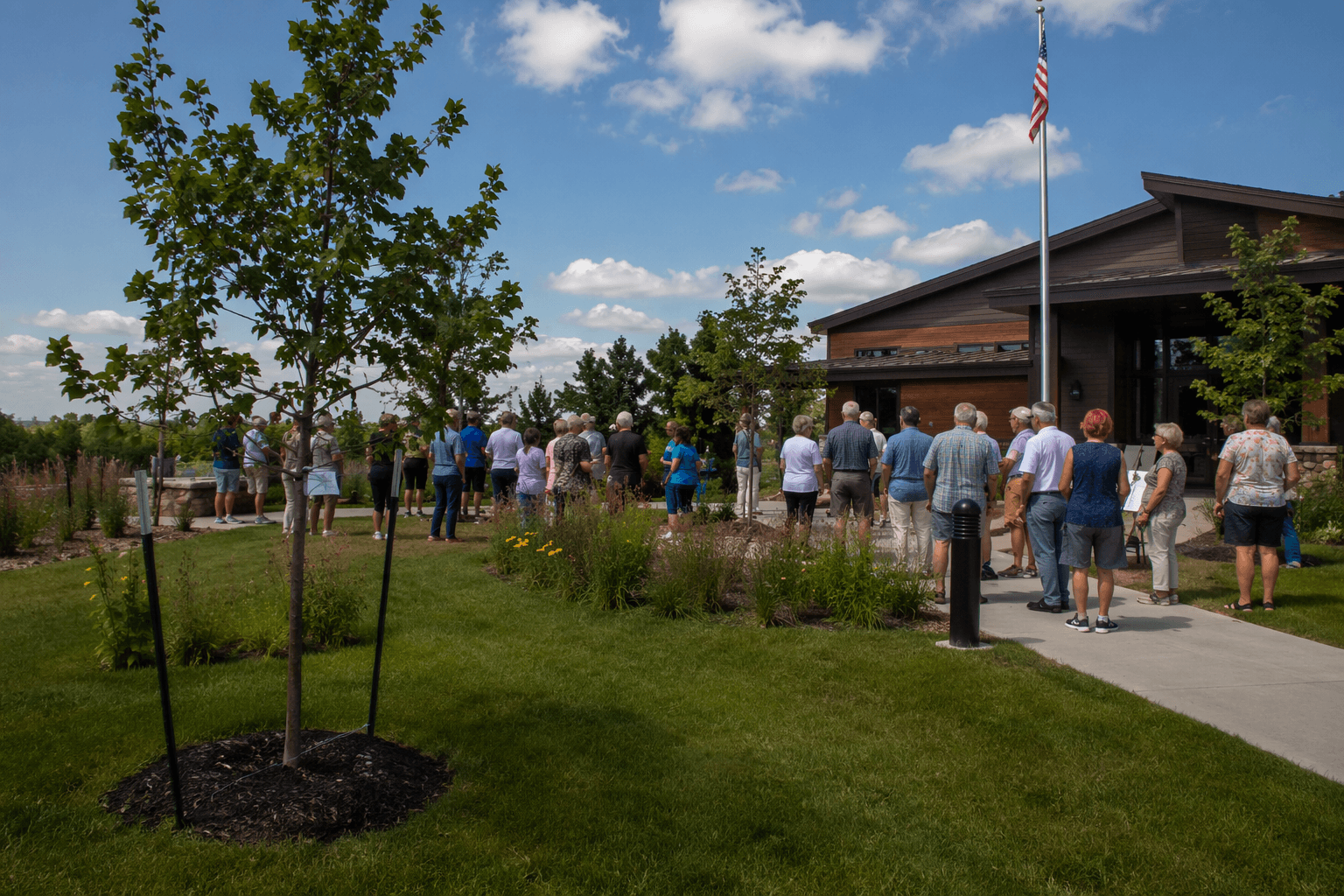
Seventeen Legacy Trees now frame the Knife River Heritage & Cultural Center, turning memorial names into a living landscape between the depot and the CRUSADER II shelter. The newest phase of the project was dedicated Sunday, June 14, 2026, with a service led by Todd Monger.
The trees honor loved ones through a program built around northern hardwoods chosen for their spring and fall color. KRHCC said the plan includes a visible map and pedestal display identifying the trees, species, sponsors and honorees, so visitors can connect each planting to the people remembered there.
The memorial effort grew out of a landscape plan that began in the summer of 2023 after a swale along the north property line prompted the center to think about runoff, borders and public green space. What started as a practical site fix expanded into a project that now defines the property’s edges, the parking lot and the outdoor interpretive space around the depot.
KRHCC said the Legacy Tree initiative had already far exceeded expectations by June 2025, when 24 loved ones had been memorialized or honored through 15 trees and 43 tree sponsors or co-sponsors. The trees were planted in stages, with four set in early fall 2024 and the rest planted in June 2025. Species included Bur Oak, St. Croix Elm, Hot Wings Maples, Starlite Crabs, Red Splendor Crabs and Sweet Street Lindens, with Anderson’s Greenhouse in Two Harbors helping select the trees and committing to care for them through the end of the 2025 growing season.
The Legacy Trees also extend a larger preservation effort at the Knife River depot site. KRHCC was established as a nonprofit in July 2018 at the former train depot, and the group says thousands of dollars in donations and hundreds of volunteer hours have gone into restoring the building to its 1900 appearance. The center’s mission is to engage the public in preserving, presenting and valuing Knife River history, while helping visitors make a personal and emotional connection to the past through exhibits and programming.
That history reaches back far beyond the railroad era. KRHCC says Native Americans were present at Knife River for thousands of years, with a seasonal village at Granite Point dating to at least 1769. The North Shore remained Native American land until the Treaty of La Pointe in 1854, Buchanan rose and faded in the 1850s, and the community later became known as Millie before taking the name Knife River in 1903. A construction train reached the site on Oct. 23, 1886, the Lester Park depot was moved there in December 1899, and passenger service ended on July 15, 1961. Today, the North Shore Scenic Railroad still brings picnic, fall-color, Christmas Tree and Julebyen Express trains to Knife River, keeping the site tied to the seasonal life of Lake County.
This article was produced by Prism’s automated news system from verified source data, official records, and press releases, then run through automated quality and moderation checks before publishing. The system is built and supervised by the people who set the standards it runs under. Read our full AI policy.
Know something we missed? Have a correction or additional information?
Submit a Tip