MDH Updates Fish Consumption Guidelines for Northeast Minnesota to Limit Mercury, PFAS
New MDH guidelines limit how often Lake County anglers should eat locally caught walleye, pike and perch, with stricter caps for children and families.
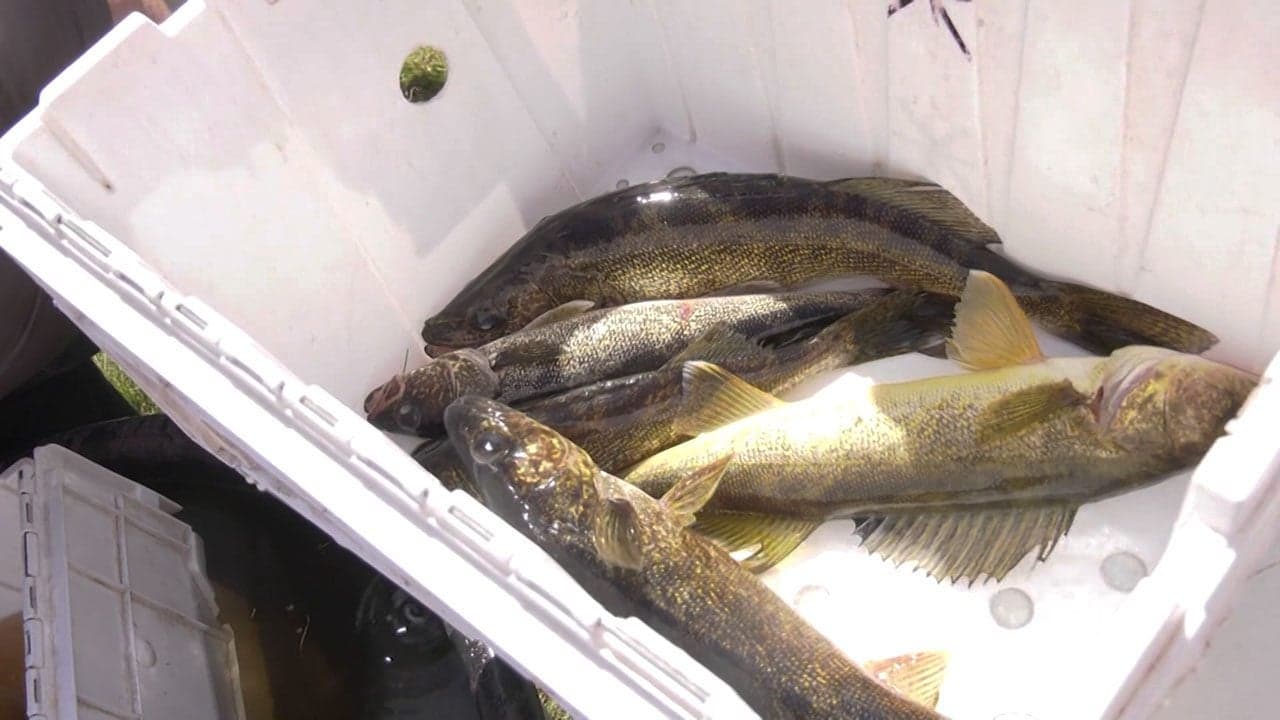
The Minnesota Department of Health told Lake County anglers last week that the walleye in their cooler may carry more mercury than they realized, and what they do with that fish now has specific, size-dependent rules attached.
MDH released updated fish consumption guidelines on March 24, covering Cook, Lake and St. Louis counties under a more protective Northeast Minnesota framework. The practical upshot for families and fishing guides is immediate: children under 15 and people planning pregnancy should limit walleye to one serving per month, and only fish shorter than 18 inches at that. Northern pike under 26 inches carries the same one-serving-per-month cap for those sensitive groups. For the general population across Northeast Minnesota, crappie and sunfish are capped at two servings per week, while yellow perch comes in at one.
"Generally speaking, fish are a good part of a healthy diet," said Angela Preimesberger, MDH's fish consumption guidance program lead. "Fish can be a source of important omega-3 fatty acids, which help with heart health and brain function. However, based on our analyses, we advise limiting how many servings of certain fish you eat from certain locations."
The shift to length-based guidance reflects how mercury moves through the food chain. Larger walleye and northern pike accumulate more of the metal over their lifespans, making a 24-inch walleye a meaningfully different health calculation than a 15-inch one. The updated Northeast guidelines deviate from statewide baselines on five species where average mercury levels in select waterbodies across the three counties ran higher.
Preimesberger was direct about what drove the revision. "It has been known for many years that fish in the northeast tend to have higher levels of mercury concentrations than other parts of the state," she said, adding that the change reflects improved analysis, not a sudden contamination spike. MDH scientists reanalyzed mercury monitoring data stretching back to 1967 using updated methods, the agency's first comprehensive mercury review since 2020.

Mercury enters the region's waters through industrial processes, including burning coal and processing taconite, before building up through the food chain. Regular consumption of contaminated fish can damage the kidneys, liver and nervous system, and may impair learning in young children. Several Cook County waterbodies already sit on the Minnesota Pollution Control Agency's impaired waters list for mercury, including the Brule River, Devil Track Lake, and lakes Two Island, Greenwood, Pine and Elbow.
The 2026 update also expands MDH's PFAS advisory list. Per- and polyfluoroalkyl substances, human-made chemicals used in nonstick cookware and waterproof clothing that do not break down in the environment, were detected in fish tissue from the Vermillion River, which runs from headwater streams in Scott and Dakota counties to the Hastings Dam. To keep pace with expanding monitoring demands, MDH used Clean Water Fund resources to bring PFAS tissue testing in-house after previously outsourcing that work to a laboratory in Canada. The MDH Public Health Lab now processes approximately 500 fish tissue samples annually.
"We're doing our best to help people keep fish in their diet in a way that benefits their health," Preimesberger said.
For anglers, guides and tourism operators who market locally caught fish to visitors, the most practical next step is checking waterbody-specific guidance before the season advances. Not every lake in the region has been tested for contaminants. MDH directs anglers to its waterbody-specific maps and guidance pages; for individual lakes, the Minnesota DNR's LakeFinder tool lists any applicable advisories. MDH's Fish Consumption Guidance program can be reached directly for questions about specific waters.
This article was produced by Prism’s automated news system from verified source data, official records, and press releases, then run through automated quality and moderation checks before publishing. The system is built and supervised by the people who set the standards it runs under. Read our full AI policy.
Did this article answer your question?