BLM Plan to Boost Oregon Logging Draws Scrutiny From Lane County Officials
Lane County commissioners unanimously joined a federal logging review Monday but clashed over who should speak for the county as BLM eyes quadrupling timber harvest on O&C lands.

Lane County Commissioner Heather Buch pushed Monday for county policy staff to hold a direct seat in federal timber planning talks, warning that outside representatives might not prioritize the county's specific concerns as the Bureau of Land Management moves to dramatically expand logging across western Oregon.
"I have concerns that if we give it to another entity, they won't always be looking out for Lane County-specific issues," Buch said during the March 17 commissioners' meeting. "The issues from Lane County may differ from other counties and I want to see Lane County's issues at the top of the table."
The debate over representation followed a unanimous commission vote to join the BLM's planning process as a cooperating agency, the same role Lane County played when the agency last updated its forest management plan in 2016. Some commissioners, described in coverage as the more liberal members of the board, backed designating county policy staff as the county's representatives rather than delegating that role to another entity.
The BLM's proposal would rewrite the resource management plan governing roughly 2.46 million acres of O&C lands across 18 western Oregon counties, a landscape shaped by the Oregon and California Revested Railroad Lands Act of 1937. Of that total, only 585 acres fall within Lane County. About 23 percent of the 2.46 million acres are excluded from the project, including areas with low tree density and land adjacent to streams, leaving approximately 1.9 million acres potentially open to harvest.
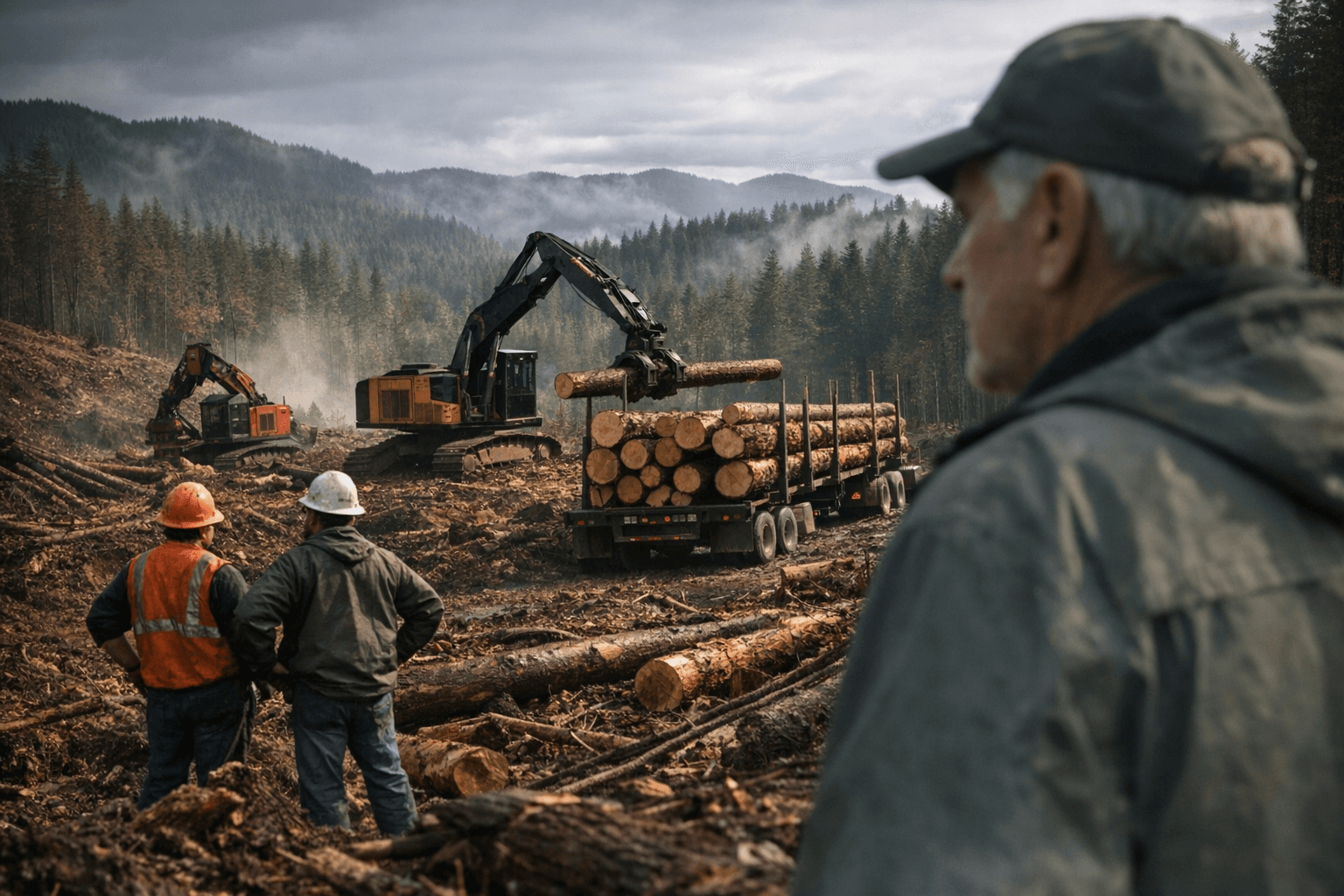
The scale of what the agency is contemplating is significant: BLM is seeking to increase its sustained yield timber harvest to around 1 billion board feet annually, a level not seen since before conservation restrictions took hold in the 1990s. Logging on those same lands yielded roughly 250 million board feet last year, meaning the proposal would effectively quadruple current output. About three-quarters of the federal O&C forests in western Oregon are currently protected from regular logging.
The agency cited wildfire risk, barred owl management, reduced revenue, and a Trump administration executive order directing federal agencies to increase timber production as reasons for the revision.
Travis Joseph, president of the American Forest Resource Council, a timber-industry association, welcomed the potential new plan. "It would mean thousands of more private sector jobs," Joseph said. "It would mean millions of dollars of revenue for county governments to support mental health services, roads, schools — essential public services." Joseph also argued that the BLM currently allows only 20 percent of annual timber growth to be logged, which he said defies the O&C Act's mandate to harvest as much timber as grows annually. "We're adding a lot of biomass to these fire-prone forests in Western Oregon every single year," he said.
Conservation advocates pushed back, with critics warning that increased logging paired with the replanting of dense timber plantations would worsen wildfire risk rather than reduce it. One statement reported by Gearjunkie framed the stakes in terms of recreation and water: "The proposed plan to quadruple logging levels is a threat to the very things that make Oregon Oregon: Forests with clear rivers and streams that provide water for thousands of rural residents and critical habitat for fish and wildlife. Rafting, hiking, mountain biking, hunting, fishing, and other incredible recreation opportunities that Oregonians enjoy and that draw the visitors that rural economies depend on."
The BLM is not yet drafting the plan. The agency is currently soliciting public comment on the scope of its analysis, potential alternatives, and relevant studies, as well as which Areas of Critical Environmental Concern to consider. The BLM stated it does not plan to hold any public meetings before releasing its proposal, though it will consult with Tribal Nations as required by law.
Public comments can be submitted at eplanning.blm.gov under project number DOI-BLM-ORWA-0000-2026-0001-RMP-EIS. March 23 is the final day to weigh in. The BLM plans to publish a draft plan on June 12 and a final plan on November 6.
This article was produced by Prism’s automated news system from verified source data, official records, and press releases, then run through automated quality and moderation checks before publishing. The system is built and supervised by the people who set the standards it runs under. Read our full AI policy.
Did this article answer your question?