City Club Forum: Fahey and Prozanski Preview Oregon’s 2026 Short Session
Speaker Julie Fahey and Sen. Floyd Prozanski outlined priorities and limits for Oregon’s 35-day short session, highlighting budget tweaks, housing, wildfire readiness and local impacts for Lane County.

Speaker Julie Fahey and Senator Floyd Prozanski presented a focused roadmap for Oregon’s constitutionally limited 35-day short session, stressing that the compressed schedule will shape what lawmakers can accomplish for Lane County communities.
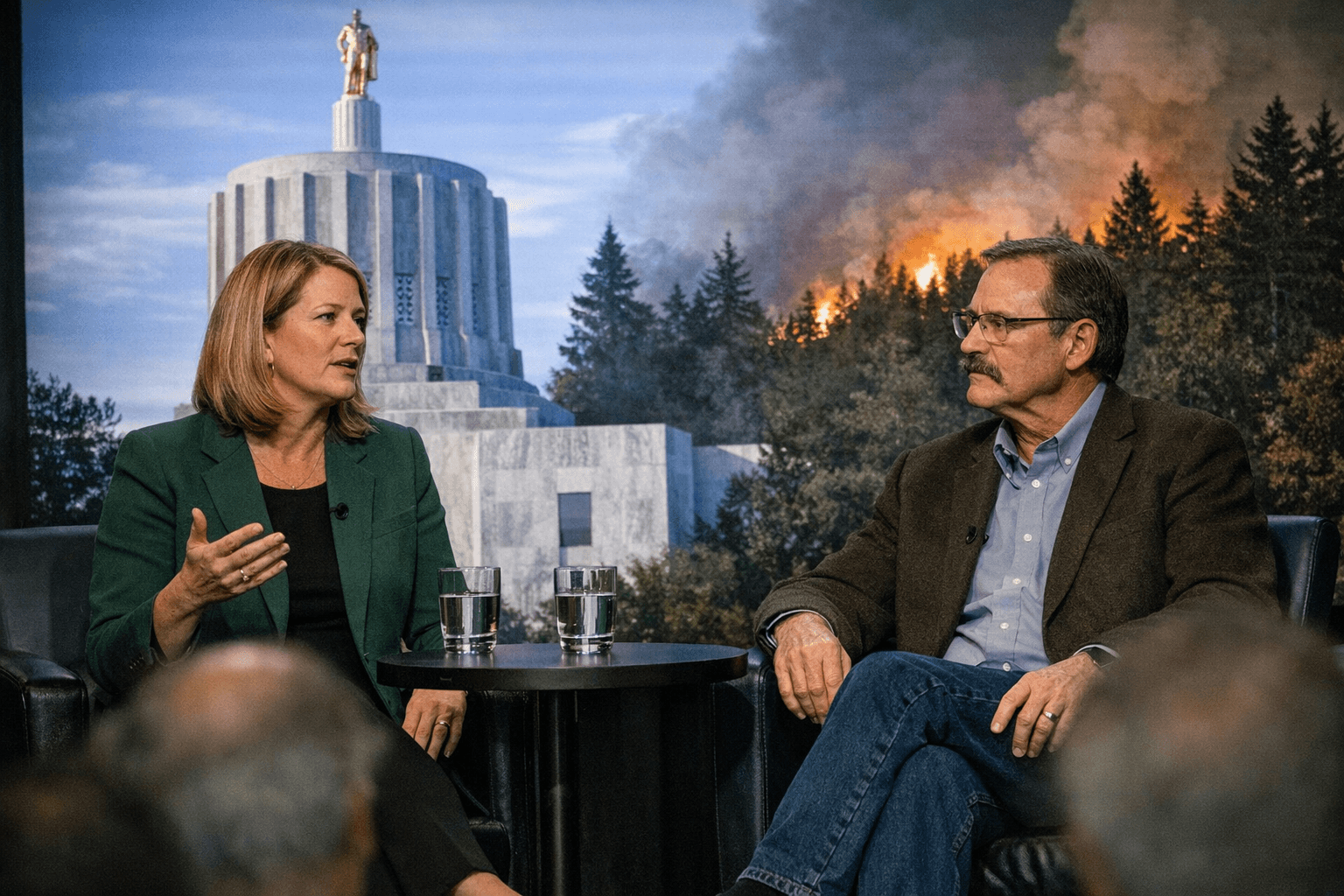
The City Club of Eugene hosted the public forum, moderated by KLCC’s Rebecca Hansen-White. The session was recorded Jan. 23 and aired Jan. 26, 2026. Julie Fahey, Speaker of the Oregon House of Representatives, and Floyd Prozanski, who represents Senate District 4 in Eugene, laid out how legislative leaders are preparing to triage state priorities when lawmakers convene in February.
Fahey and Prozanski framed the short session as a time for targeted, time-sensitive action rather than sweeping policy change. The Legislature’s 35-day limit requires leadership to prioritize budget adjustments informed by updated revenue forecasts, address pressing public safety concerns, and respond to emergencies. Anticipated topics named at the forum included housing and homelessness, wildfire preparedness, infrastructure maintenance, and other urgent matters that could directly affect Eugene, Springfield and surrounding Lane County communities.
Institutionally, the short session emphasizes fiscal reconciliation and narrow fixes. Leadership choices will determine which proposals receive floor time and which are deferred to the longer 2027 session. The compressed timeline creates both constraints and opportunities: lawmakers can move quickly on emergency funding and technical corrections, but ambitious policy expansions face steep procedural hurdles. Fahey’s role as Speaker and Prozanski’s position on local issues position them as key gatekeepers for what advances from committee to chamber votes.
For Lane County residents, the stakes are practical and immediate. Budget adjustments tied to new revenue numbers will influence state support for public health services, behavioral health programs and K-12 funding that flow to local governments and school districts. Housing and homelessness proposals could affect shelter capacity and funding for affordable housing projects in Eugene and Springfield. Wildfire preparedness measures will determine allocation for defensible space, emergency response grants and infrastructure hardening in high-risk areas. Infrastructure discussions may affect transportation projects and maintenance priorities that impact daily commutes and local commerce.
As lawmakers prepare to convene, monitor bill introductions and committee assignments closely. Contact your state representatives to signal local priorities and track motions that could alter funding streams and policy outcomes for Lane County. The short session’s compressed tempo means decisions will come fast; residents and local officials who engage early will have the best chance to shape which measures move forward.
This article was produced by Prism’s automated news system from verified source data, official records, and press releases, then run through automated quality and moderation checks before publishing. The system is built and supervised by the people who set the standards it runs under. Read our full AI policy.
Did this article answer your question?