Timber leaders, county officials meet in Cottage Grove after federal changes to O&C funding
Federal funding changes that could boost some O&C counties' timber revenue by roughly 50% drew timber leaders and county officials to Starfire Lumber in Cottage Grove last week.
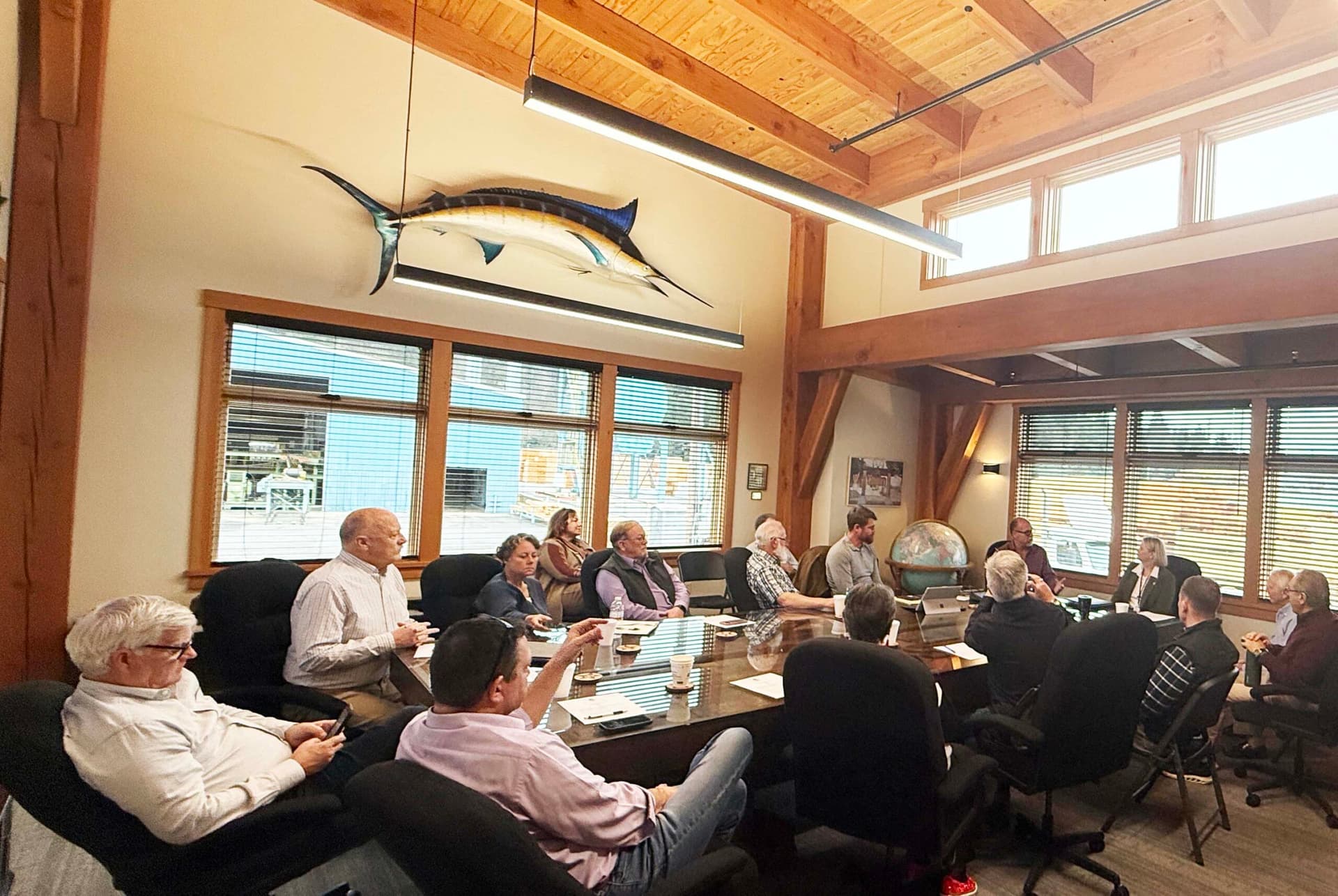
Timber industry leaders, county commissioners and federal officials converged on Starfire Lumber in Cottage Grove for a quarterly Association of O&C Counties meeting hosted by Douglas County Commissioner Tim Freeman, the AOCC's president, following two federal actions poised to reshape how rural counties across western Oregon fund public services.
The meeting arrived on the heels of twin federal developments. In January, Congress passed the FY26 Interior Appropriations Bill reinstating O&C counties' historical share of timber receipts, a change that could increase annual revenue for some counties by roughly 50 percent. Shortly after, the U.S. Department of the Interior issued a Notice of Intent to revise the Bureau of Land Management's Resource Management Plan, the document governing harvest rules, habitat protections and long-term management of roughly 2.5 million acres of O&C timberlands across 18 counties in western Oregon.
The Cottage Grove gathering drew AOCC board members and county commissioners alongside Kim Prill, the Acting State Director for the BLM in Oregon and Washington, who attended as a special guest. Before the policy discussions began, attendees toured Starfire Lumber's new timber-built administration building, log yard, planning facilities and its longtime mill operation.
Central to those discussions was Douglas County's formal role in the BLM's upcoming planning process. The county's invitation to serve as a cooperating agency on the RMP revision was reaffirmed at the meeting. Douglas County has historically held that status in BLM planning, and it was the first county granted cooperating agency designation for this particular revision. In that capacity, the AOCC will represent its member counties throughout the process. The first RMP revision cooperators meeting had already taken place March 18, 2026.

The fiscal stakes extend well beyond timber contracts. County departments relying on O&C timber receipts include those overseeing public safety, veteran services, senior services and infrastructure. The restored revenue arrives as counties face compounding budget pressure from inflation, rising costs and shrinking alternative revenue sources. Taken together, reinstating historic timber receipts, initiating the RMP revision and securing cooperating agency status give the 18 O&C counties a stronger foothold in shaping federal forest policy while shoring up the budgets that underpin day-to-day services.
That foothold comes with significant complexity. Balancing timber production against conservation requirements, endangered species protections, recreation demands and tribal interests has historically made RMP revisions contentious. Counties and industry stakeholders are expected to develop technical positions and formal comments as the BLM moves toward public meetings and official comment periods. With Douglas County already seated as a cooperating agency and the AOCC coordinating its member counties behind a unified voice, the Cottage Grove meeting signaled that local governments intend to be organized, active participants in a planning process that will define management of these federal forests for years ahead.
This article was produced by Prism’s automated news system from verified source data, official records, and press releases, then run through automated quality and moderation checks before publishing. The system is built and supervised by the people who set the standards it runs under. Read our full AI policy.
Did this article answer your question?