Helena’s Capitol Complex anchors state services for Lewis and Clark County
Helena’s Capitol Complex is where state payrolls, public records, and policy decisions meet daily life in Lewis and Clark County. Its buildings, workers, and meetings shape everything from local traffic to service access.

The Capitol Complex is Helena’s working government district
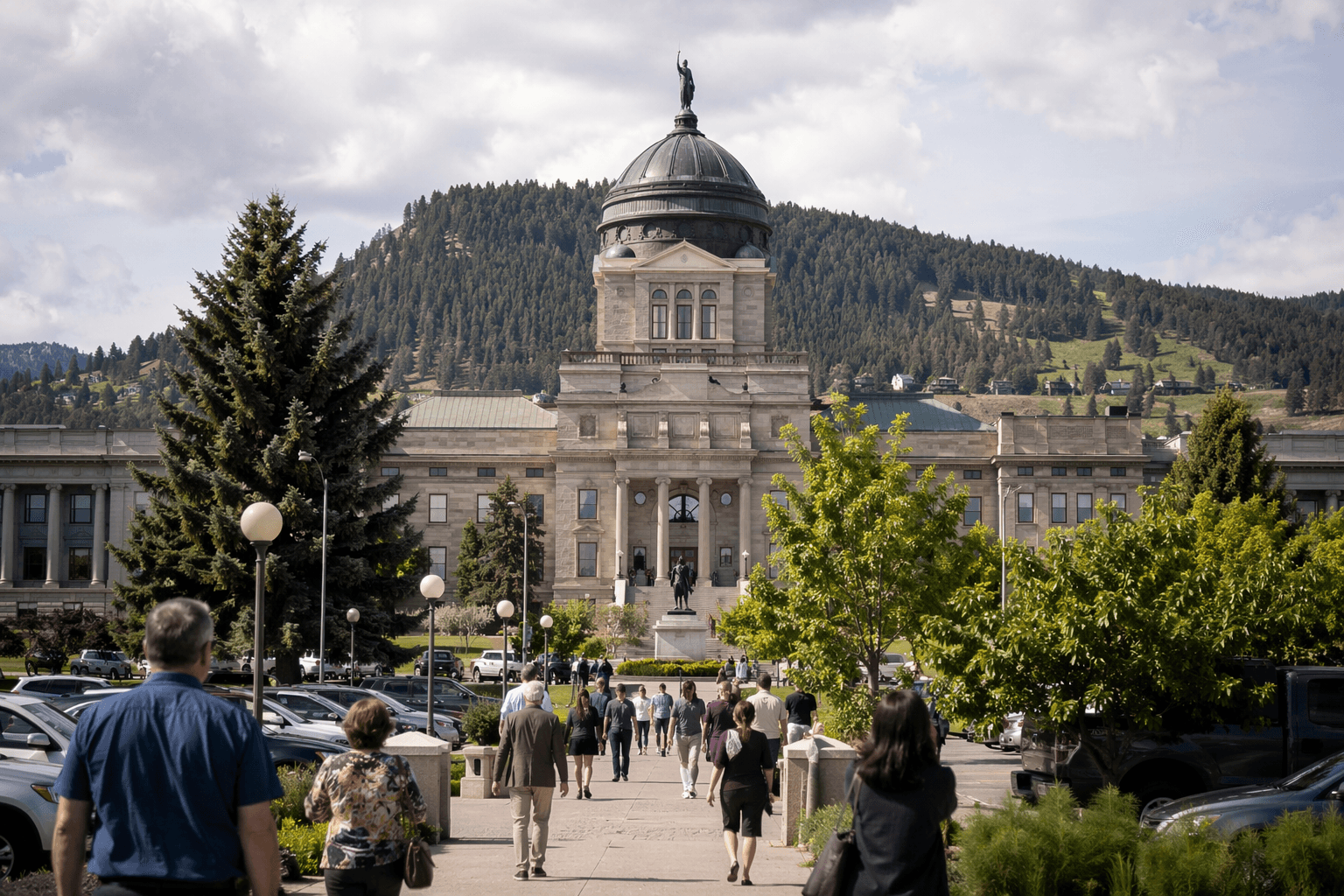
The Montana Capitol Complex is more than the dome on East 6th Avenue. It is the daily operating center for state services in Lewis and Clark County, where employees, contractors, legislators, and visitors move through a cluster of buildings that keeps Montana government running. State-owned offices in the complex generate payrolls, bring steady foot traffic to downtown Helena, and concentrate the decisions that shape transportation, public services, records access, recreation, and emergency planning across the county.
That is why the Capitol matters even when nothing dramatic is happening on the calendar. The complex is where state business becomes visible in ordinary life: a committee hearing, a maintenance response, a permit question, a public meeting, or a records request can all turn into real activity in Helena’s downtown core. The state’s own information portal points people toward city, county and state contacts, weather, road conditions, historical sites, the Montana Historical Society, the Montana Heritage Commission, agency phone listings, employee directories, representatives and the governor’s office, all of which reinforces how often residents and visitors start at the Capitol area when they need answers.
Why the complex matters to local jobs and services
The practical significance is broad. Capitol Facilities Management within the Montana Department of Administration says it serves state-owned buildings within a ten-mile radius of Helena, which makes the complex a service district as much as a ceremonial one. Its work includes security, identification cards, access control, facilities repair and maintenance, construction, utilities, energy consumption monitoring, disaster response and recovery, space allocation, janitorial services, pest control, grounds maintenance, recycling and solid waste collection.
That means the Capitol Complex supports more than policy. It supports the people who clean the buildings, maintain the grounds, control access, manage utilities, respond to disruptions, and keep state offices open. It also supports the nearby businesses that benefit when legislators are in session, when committees meet, when agency staff are on-site, and when the public comes downtown to do business with the state. In Lewis and Clark County, the statehouse is part of the local economy, not separate from it.
Montana.gov’s interactive Capitol Complex map adds another layer of usefulness. It shows the streets, buildings and agencies that make up the complex, which makes the district legible to people who need to find an office, attend a hearing, or understand how the campus fits together. For a government center that handles daily administration as well as high-profile lawmaking, that kind of navigation is part of the public service itself.
How Helena became the permanent capital
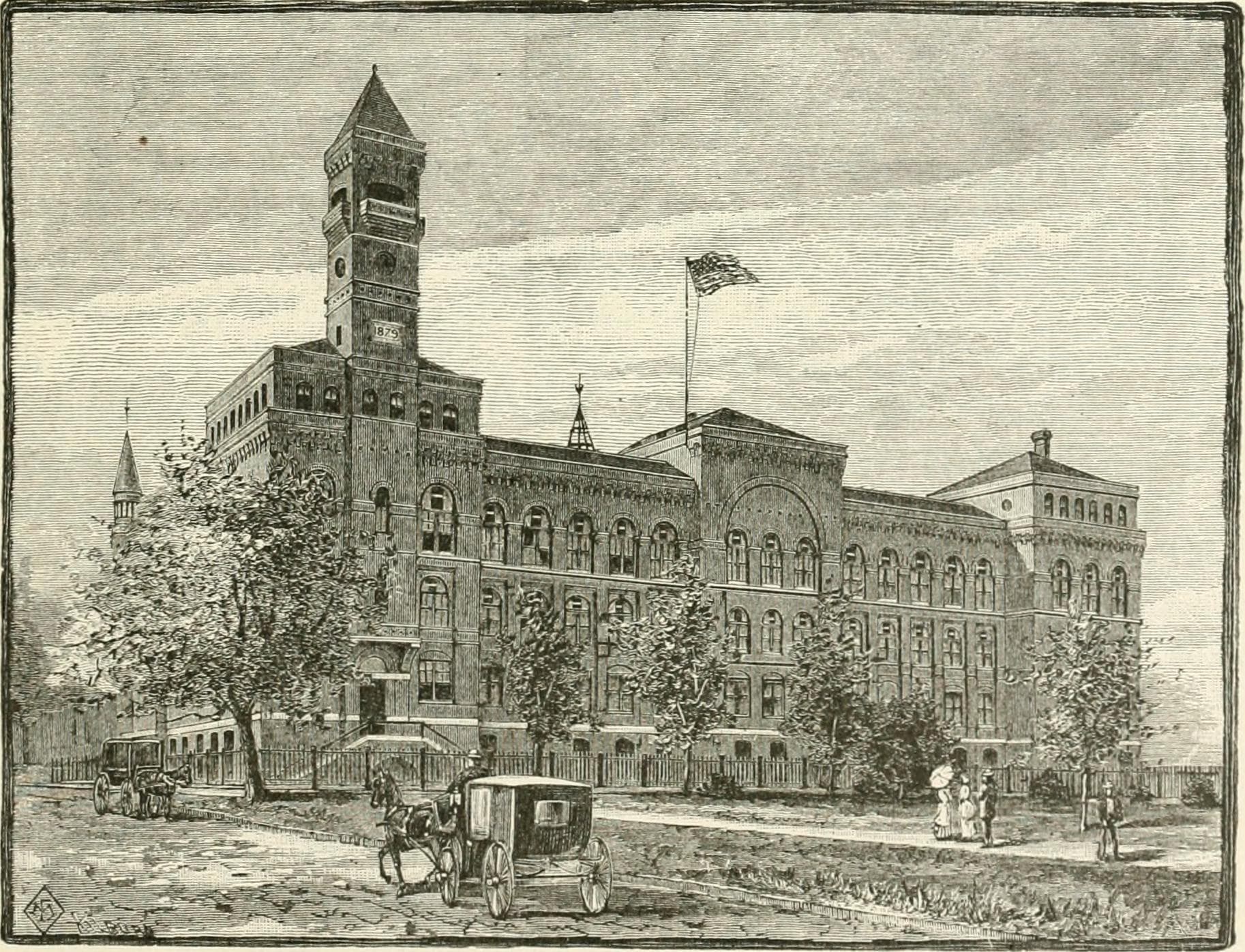
Helena’s role was not inevitable. Montana’s territorial capital moved from Bannack to Virginia City and then to Helena in 1875. After statehood in 1889, the question of where the capital should remain did not disappear; it became a political fight that reached a statewide vote in 1894, when Helena won a fiercely contested battle with Anaconda to become the permanent capital.
That decision set the stage for the Capitol Complex that Lewis and Clark County knows today. The present Montana State Capitol was authorized in 1894, groundbreaking followed in 1895, and the cornerstone was laid on July 4, 1898. Official historical sources differ slightly on the final milestone, with one Montana Historical Society timeline saying the Capitol was dedicated on July 4, 1901, while another official history page says the completed building was dedicated on July 4, 1902. Either way, the building emerged from a long political contest and a major construction effort that shaped the city’s identity for generations.
The larger historical arc reaches back even further. The Lewis and Clark County Courthouse survives as Montana’s only standing territorial-period capitol and served as the first state capitol from 1889 to 1902. That gives Helena an unusual continuity: the county has housed the seat of power across territorial, early state, and modern administrative eras. The capital’s survival is tied to railroad growth, political struggle and urban development, all of which helped lock in Helena’s place at the center of state government.
What the Capitol building itself offers
The Capitol at 1301 East 6th Ave. is still a public building with a defined rhythm of use. The Montana Historical Society says it is open Monday through Friday from 7:00 a.m. to 6:00 p.m. and on weekends from 9:00 a.m. to 3:00 p.m. Visitors can use guided tours, self-guiding booklets, a scavenger hunt for children and virtual tours, which makes the building accessible whether someone is there for civic business, school programming or a first look at the statehouse.
The structure itself carries the weight of that history. The dome rises 165 feet and is faced with copper, while the exterior uses sandstone from Stillwater County. The interior was designed by F. Pedretti’s Sons of Cincinnati, a detail that gives the building a regional and national architectural lineage. The east and west wings were added later, with one historical listing placing the work in 1909 to 1912 and another noting completion in 1912. Those additions reflect how the building expanded as state government grew around it.
The Capitol also remains an active venue for government work. The Montana Legislature uses the State Capitol for committee meetings and other official events, so the building continues to host the decisions that affect schools, roads, public safety, state budgeting and oversight. That steady use matters in Helena because every hearing, filing deadline and policy fight ripples outward into downtown traffic, hotel demand, business lunch hours and the daily work of local government.
What to watch for when the Capitol Complex affects daily life
For Lewis and Clark County, the Capitol Complex is most important when state government touches a local issue. That can mean transportation planning, emergency response, access to records, or the logistical side of public meetings. It can also mean the quieter parts of governance: who can get into a building, how a repair gets handled, where a committee meets, or how information reaches the public.
The complex’s value lies in its constant churn. State workers keep offices open. Legislators convene in the Capitol. The Department of Administration keeps the buildings functioning. Visitors use the complex to find agencies, maps and services. And Helena, by virtue of being the permanent capital, remains the place where Montana’s public business is most concentrated and most visible.
That is why the Capitol Complex is not just a landmark on the skyline. It is one of Lewis and Clark County’s most consequential institutions, shaping jobs, public access and government accountability every day of the year.
This article was produced by Prism’s automated news system from verified source data, official records, and press releases, then run through automated quality and moderation checks before publishing. The system is built and supervised by the people who set the standards it runs under. Read our full AI policy.
Know something we missed? Have a correction or additional information?
Submit a Tip