Reeder’s Alley preserves Helena’s oldest intact early settlement core
Reeder’s Alley is Helena’s oldest intact early settlement core, and it still draws visitors, foot traffic, and preservation attention in downtown Helena.
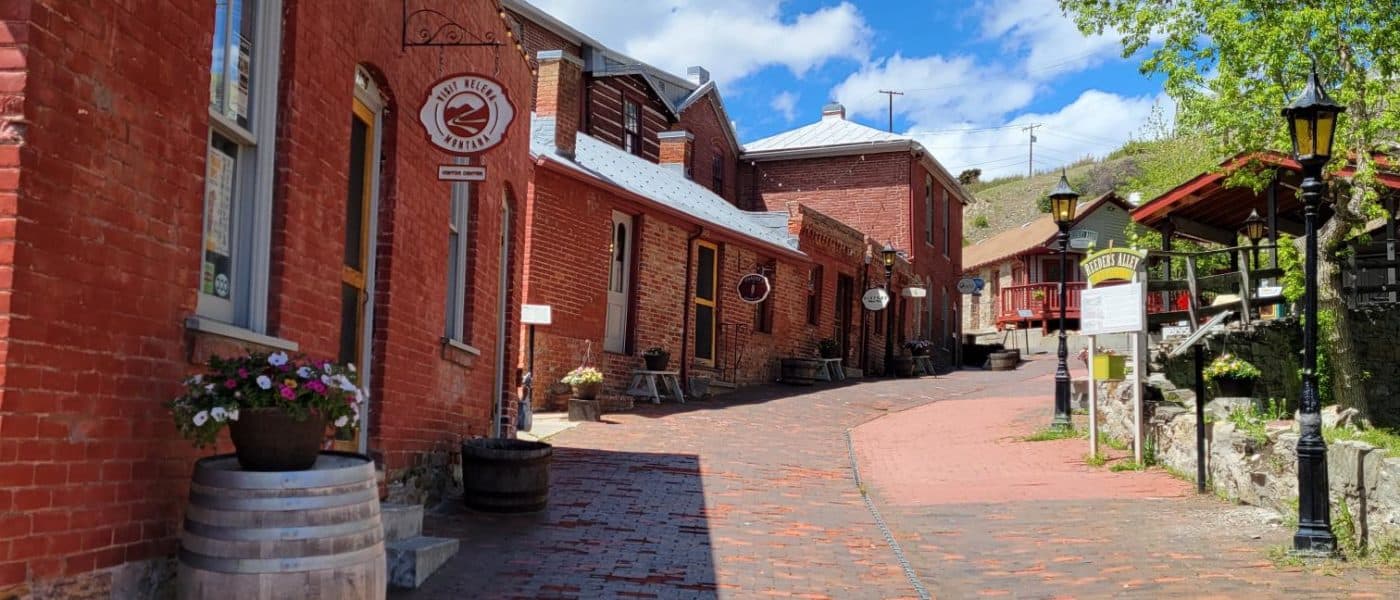
Reeder’s Alley is Helena’s oldest intact piece of early settlement, a surviving row of tiny apartments built by Pennsylvanian Louis Reeder for miners and single men after gold was discovered in 1864. Tucked in the southwest corner of downtown Helena near the base of Mount Helena, the alley still pulls people into the city’s earliest built core, where history and downtown commerce overlap in one narrow lane.
A surviving slice of Helena’s first boom
Helena began as a gold-rush town, and Reeder’s Alley shows what that boom looked like at street level. Visit Helena says Reeder built the alley’s row-house apartments to meet a basic need that grows with any mining camp turned town: housing for workers who arrived quickly and needed a place to sleep just as quickly. At one time, the alley held about 32 one-room apartments spread through several buildings, a compact arrangement that says as much about early labor and lodging as any monument does.
The details make the place feel less like a display and more like a working settlement. Rent could be paid in gold dust, which ties the alley directly to the economy that created Helena in the first place. Less than half of those original apartments remain today, a reminder that the site survives not as a recreated attraction but as a rare remnant of the city’s original built environment.
Why it still matters downtown
Reeder’s Alley matters now because it is not isolated from modern Helena. Its location near Last Chance Gulch and the southwest corner of downtown makes it part of the commercial district, not just a heritage stop on the edge of town. Visitors who come for the alley also move through nearby blocks, where foot traffic helps support the wider downtown economy and keeps the area tied together as a place to walk, browse, and linger.
That geography is part of its value. Visit Montana describes Reeder’s Alley as the oldest intact piece of early Helena, and that status gives downtown a visible link to the city’s founding story. For a place that competes with newer districts and suburban development, having a compact, walkable historic core helps shape Helena’s identity as a place where the past is still built into the present.
What to look for on foot
Reeder’s Alley is more than a single row of old buildings. Historic features tied to the site include the Morelli Bridge and the Stone House, which give the area the feel of a small preserved district rather than a lone landmark. Those pieces matter because they help explain how people moved, lived, and worked in the earliest version of Helena.
Nearby, the Pioneer Cabin adds another layer to the story. It was built when Wilson Butts, a veteran of the California gold rush, arrived at Last Chance Gulch with the first wave of miners in the summer of 1864. Together, these sites connect the alley to the larger settlement pattern that turned a frontier camp into a downtown.
For a short visit, the alley works well as a walking stop rather than a long outing. Visit Helena’s Rediscover Reeder’s Alley guided walking tour lasts about 45 minutes and covers roughly a quarter-mile. The route is described as easy, though there is some incline in the alley, so the walk feels accessible while still reflecting the terrain that shaped old Helena.
Preservation was a choice, not an accident
A 2013-2014 Montana legislative archive document says Reeder’s Alley would be gone today but for the preservation efforts of Jane Tobin, Patricia Beodecker, and Eileen Harper in 1961. That detail matters because it shows the alley’s survival was the result of action by local women who understood the value of the site before preservation became an easy talking point.
The Montana Department of Commerce and the Montana Heritage Commission have since promoted Reeder’s Alley through immersive historical experiences and seasonal celebrations, reinforcing its role as a public place as well as a preserved one. That mix is important in Helena, where a historic district has to do more than sit still. It has to remain visible, usable, and worth the effort of maintaining.
Reeder’s Alley keeps earning its place because it still does several jobs at once: it interprets Helena’s gold-rush origins, draws people into downtown, and anchors preservation conversations about what the city chooses to keep. In a downtown shaped by change, it remains one of the clearest reminders of how Helena began and why that beginning still has economic and civic weight today.
This article was produced by Prism’s automated news system from verified source data, official records, and press releases, then run through automated quality and moderation checks before publishing. The system is built and supervised by the people who set the standards it runs under. Read our full AI policy.
Did this article answer your question?