Historic downtown Sterling offers a self-guided walk through history
Downtown Sterling’s 88-building historic district turns a short walk into a lesson in brick-era growth, Carnegie philanthropy, and adaptive reuse.
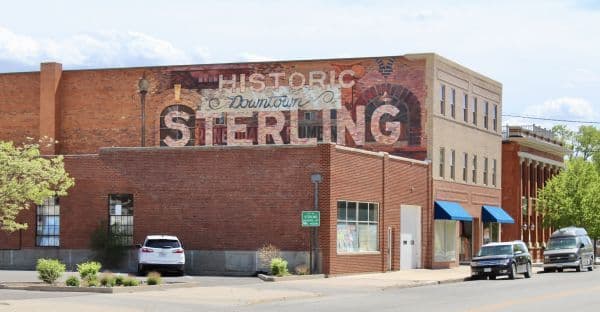
Sterling’s downtown core is not just the county’s commercial center. It is a documented historic district with 88 buildings, most of them brick structures built between 1910 and 1939, and that built environment still shows how a frontier settlement became Logan County’s civic and trade hub. A self-guided walk through those blocks turns ordinary sidewalks into a readable record of the town’s growth, one facade at a time.
A downtown built in brick
History Colorado’s listing places the Downtown Sterling Historic District in a clear historical frame: the district was listed in 2013, and its date range captures the years when Sterling was moving from an 1881 homesteader town along the South Platte River into a more established county seat. That matters because the district’s brick-and-masonry streetscape is not decorative backdrop. It is the physical evidence of when public confidence, commercial investment, and local institutions began to take root in Logan County.
The district’s architecture is also unusually intact for a Plains downtown. With 88 contributing buildings, the area preserves enough of its original form to let people read changes in use, materials, and scale without having to imagine what once stood there. That makes the district useful not only for preservation work, but for families, teachers, and visitors who want to understand how local decisions shaped the blocks that still anchor Sterling today.
Start with the buildings that changed with the town
Two stops on the self-guided tour show the district’s value especially well. The Grant Brown House, at S. 4th and Ash streets, was begun in 1909 and finished in 1911. It later served as Dr. Naugle’s office from 1937 to 1962 before being purchased by the Elks Lodge in 1962, a sequence that shows how a single downtown structure could move from residence to medical office to civic use as Sterling’s needs changed.
The Old Library, also at S. 4th and Ash, offers a different but equally instructive story. It opened in 1918 with help from Sterling women’s clubs and a generous grant from the Andrew Carnegie Foundation, and it began life with 2,000 volumes. That detail is easy to miss on a casual walk, but it says a great deal about how civic ambition and private philanthropy helped build public life in early 20th-century Sterling.
For a self-guided visit, those two buildings are among the strongest anchors because they let you compare two kinds of continuity. The Grant Brown House shows how a private building could be repurposed as the town matured. The Old Library shows how a public-minded project could outlive its original function and still remain central to downtown identity.
What the tour reveals about civic life
The most useful thing about the downtown walk is that it turns abstract history into concrete choices. Sterling was founded by homesteaders in 1881 and quickly developed into a commercial hub on Colorado’s eastern plains, so its downtown was never just a place to shop. It was where county-seat institutions, commercial ambition, and civic organizations met in the same few blocks.
That is why the Old Library matters so much to the story of Logan County. The building’s 1918 opening, backed by women’s clubs and the Carnegie Foundation, shows how local organizing could shape access to books and public knowledge long before digital catalogs or modern library systems existed. Its later remodeling as a bed and breakfast, and its current private ownership, show that preservation in Sterling has often meant reuse rather than freezing a building in time.
The more recent chapter at the Old Library adds another layer. A Sterling Journal-Advocate story in 2021 described the restored building as Old Library Mercantile, with eclectic collections and a cozy coffee shop. That kind of transformation matters to downtown because it keeps a landmark active while giving residents and visitors a reason to stop, look closer, and connect the building’s past to its present use.
Why the fine print matters on the street
The district’s documentation is still being maintained, which is why the details matter on the ground as much as in the archives. A History Colorado correction notice dated 11/2018, credited to E. Schmelzer, notes typos in the nomination’s description section and table site numbers and corrects entries for 122 N Street and 312 Main Street. Those fixes may look minor, but they show that the historic record is not static, and that precise addresses are part of how a district like this stays usable for preservation and public education.
That level of specificity is also what makes the walk practical. If you are using the tour with children, a class, or out-of-town guests, the value is in pointing to one building after another and asking what changed, what stayed, and why. The district gives you the evidence: the 1909 to 1911 construction date of the Grant Brown House, the 1918 opening of the Old Library, the 2,000 volumes that filled it at the start, and the later reuse that brought both structures into new eras without erasing their original stories.
Sterling’s downtown is still the county’s working center, but it is also a living lesson in how Logan County built its civic identity. The walk does not rely on plaques alone. It is written in brick, in reused storefronts, and in the small but durable decisions that kept the district recognizable more than a century after the town’s first homesteaders arrived.
This article was produced by Prism’s automated news system from verified source data, official records, and press releases, then run through automated quality and moderation checks before publishing. The system is built and supervised by the people who set the standards it runs under. Read our full AI policy.
Did this article answer your question?