Logan County driving tour traces sites of early sod schools
A self-guided drive maps eight early Logan County schools, showing how sod classrooms, monuments and surviving buildings still shape the county’s rural education story.
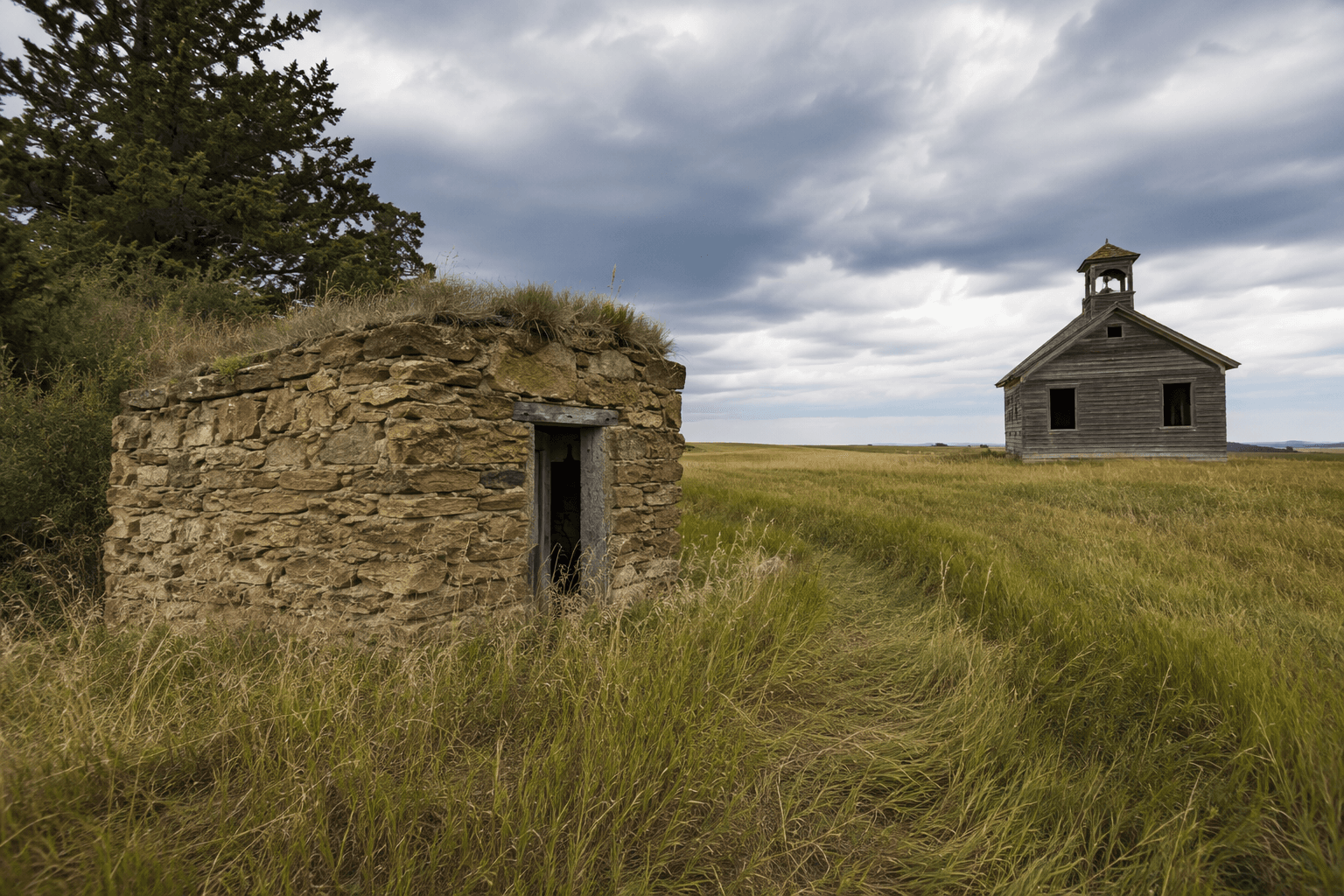
Logan County’s earliest country schools were built of sod, and a drive across the county still lets you see where eight of those classrooms stood. Some of the old school buildings survive, all of the sites are marked by monuments, and the route turns rural education into something you can still find on the ground.
How the tour works
Explore Sterling lays out the Logan County old-schools itinerary as a self-guided trip idea, with a downloadable PDF brochure and a simple purpose: help visitors trace school monuments placed by the Tri L C Club. That makes the drive more than a list of names on a map. It is a public route through the county’s settlement pattern, one that can be followed any time and does not depend on a festival, a season or a guided program.
The tour also fits the way Logan County has always had to move. Families lived far apart, transportation was limited, and a country school often served as the most practical gathering point a neighborhood had. In that setting, a one-room school was both classroom and community anchor, a place where children learned their lessons and rural life organized itself around the schoolhouse door.
What sod schools tell you about the county
The fact that Logan County’s first country schools were made of sod says a great deal about early life on the eastern plains of Colorado. Sod was available when lumber and finished building materials were scarce, so residents improvised quickly to create places for education. Those structures were practical, but they were also a sign of priority: even in a rough settlement landscape, families made room for school.
That history sits inside the larger story of Colorado statehood in 1876 and the state land board’s school-land trust system, which has existed since statehood. Rural education on the plains did not emerge in isolation. It grew alongside the state’s broader efforts to support schooling through land policy and the steady push to build communities where the ground itself had to be worked into classrooms, roads and towns.
A stop that still orients the story
One of the clearest points on the route is Sterling’s First Public School. The Historical Marker Database places the tablet on US-138 about 2 1/2 miles northeast of Sterling, and the marker commemorates the establishment of the first public school in the Sterling settlement in October 1875. The same marker says the sod schoolhouse stood 3,160 feet east of the tablet and the sod fort stood 4,200 feet southeast, a detail that gives the site its power as a landscape marker rather than just a name.
That distance language matters because it helps readers picture the early settlement in relation to what exists now. The marker does not just remember a school. It ties the school to the fort, to the Sterling settlement and to the open ground between them, showing how education, defense and daily life shared the same frontier geography. The tablet also identifies Carrie G. Ayres as the teacher, a reminder that the county’s education history was built by named people as well as by buildings and institutions.
Why the monuments still matter
The school sites are part of a larger commemorative landscape in Logan County. The Historical Marker Database lists 18 historical markers that match Logan County, Colorado, which places the school monuments in a county where roadside memory is already part of how history is read. Colorado Virtual Library describes historic markers as part of traveling Colorado’s highways and back roads, and that is exactly how this tour functions: as a way to read the county while moving through it.
Because the route is self-guided, it works for families, homeschool groups, teachers, genealogy researchers and history buffs looking for a low-cost outing. It also works as a quiet record of what has changed. Some school buildings still stand, but many places survive only through monuments, and that contrast helps show the shift from scattered country schools to more centralized schooling as transportation improved and county life reorganized around fewer, larger institutions.
Logan County’s school story in the present
The county’s broader history is still visible in the pattern of these schools. Explore Sterling frames Logan County as a place shaped by settlement on the eastern plains and by Sterling’s growth as the county seat, and the school tour fits that story neatly. It links the courthouse town to the far edges of the county, where children once traveled to a one-room school instead of a consolidated campus.
Interest in that past has lasted. The Sterling Journal-Advocate revisited Logan County’s early schools in a feature published Sept. 11, 2018, showing that the county’s school sites remain part of local memory rather than a forgotten chapter. Taken together, the monuments, the surviving buildings and the driving route give Logan County a living rural-education map, one that still connects the county’s roads, its settlement history and the identity of the places people know today.
This article was produced by Prism’s automated news system from verified source data, official records, and press releases, then run through automated quality and moderation checks before publishing. The system is built and supervised by the people who set the standards it runs under. Read our full AI policy.
Did this article answer your question?