Logan County Humane Society handles stray and dangerous animal calls
The Logan County Humane Society is more than a shelter. It is the county’s field response for stray, injured, lost, deceased, nuisance and dangerous animals, plus licensing and enforcement.
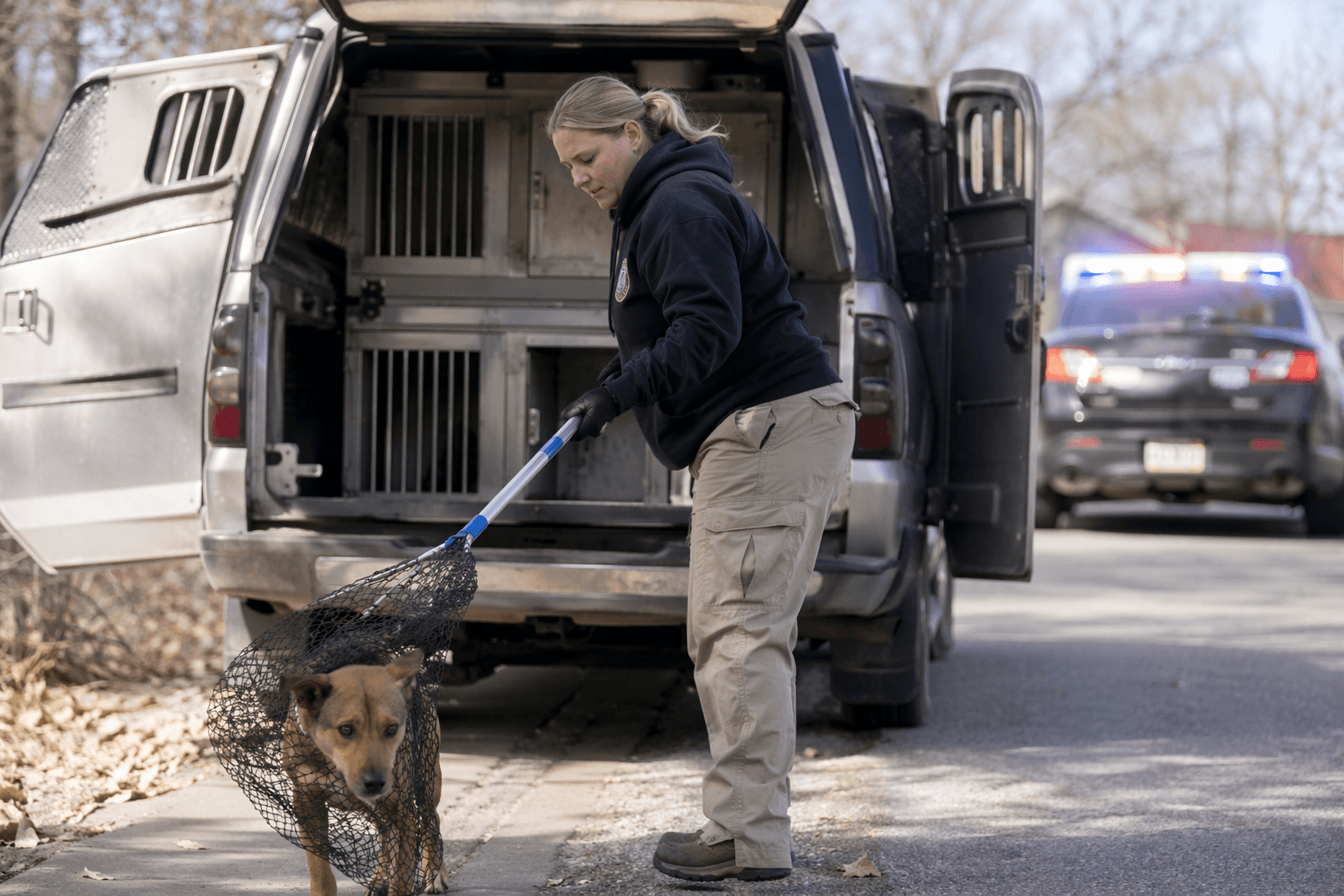
The Logan County Humane Society fills a public-safety role that many residents do not see until an animal is loose, hurt or threatening traffic. In Sterling and the surrounding area, its animal control services cover field work, licensing and enforcement of the laws that govern domestic animals, which makes it part of the county’s everyday safety net rather than just a place that houses pets.
What the Humane Society actually does
The organization’s animal control work reaches beyond kennels and adoption paperwork. Its service list includes responses to stray, injured, lost, deceased, nuisance and dangerous animals, which means the agency is built to handle both routine complaints and urgent calls that can’t wait. That range matters because a single animal problem can quickly become a public issue, especially when it involves a loose dog near traffic, a sick pet that needs attention, or an animal that is creating a repeat nuisance in a neighborhood.
Licensing is part of that same system. By handling licensing alongside field response and enforcement, the Humane Society operates as a local regulator as well as a responder. That combination gives Logan County a direct way to manage domestic animals in a consistent way instead of leaving each problem to individual households to sort out on their own.
When to call animal control
The clearest rule is that the Humane Society is the county’s practical contact point when an animal situation moves beyond a simple pet matter. The organization’s services include stray animals, lost animals and injured animals, so it is the place to call when a pet is missing, an unfamiliar animal is roaming, or an animal appears hurt and cannot safely be handled by a resident. The same goes for deceased animals, nuisance complaints and dangerous animals, all of which fall within the agency’s listed responsibilities.
That matters because not every animal issue is the same. A lost dog and an aggressive dog require different response strategies, and a dead animal on a roadside is a different problem from a pet that has wandered into a yard. The Humane Society’s service structure shows that Logan County expects one agency to triage those situations and respond in the field.
Residents also have a direct point of contact by phone, which is important in a county where animal issues can develop quickly. Instead of trying to manage a loose or dangerous animal alone, people have a county service they can reach when the problem affects a home, a road or a public space.
Why the county needs this kind of response
Logan County’s geography makes animal control more than a narrow welfare service. The county has city neighborhoods, rural properties, highways and open land, and that mix creates a wide range of animal-related risks. A stray animal can become a traffic hazard on a highway, a livestock concern on rural land or a neighborhood nuisance in town. An injured animal can raise health concerns, while a dangerous animal can turn into a public-safety issue in moments.
That is why the Humane Society’s field role matters countywide. It sits at the intersection of public safety, pet ownership and community responsibility, and it gives local government-like services a way to respond before a situation gets worse. In practice, that means the agency is not just reacting to complaints. It is helping manage the boundary between domestic animals and the public spaces where people live, drive and work.
The same is true for welfare emergencies. A stray or injured animal can be a problem for the animal itself and for the people around it. The agency’s ability to respond to both sick and hurt animals gives Logan County a system that treats animal control as part of neighborhood quality of life, not as an afterthought.
What residents should understand about the service
The Humane Society’s role is especially useful because it covers more than one point in the life of an animal. It helps with pet licensing, enforcement, lost-animal recovery and response to animals that are sick, hurt or dangerous. Those duties show that the organization is not confined to sheltering. It functions as part of the county’s field response when an animal issue spills into public space.
That distinction matters for expectations. People often think first of adoption, shelter space or pet placement when they hear “humane society.” In Logan County, the practical reality is broader. The organization also handles the day-to-day work that keeps stray animals from lingering, helps limit recurring nuisance complaints and gives officials a way to address dangerous situations with an established response.
For households, that can mean quicker help when a pet goes missing or a strange animal appears nearby. For road users, it can mean a safer response to animals on or near highways. For neighborhoods, it can mean a county service that is positioned to deal with the kinds of animal problems that affect comfort, safety and sanitation before they escalate.
A county service with visible consequences
The public value of the Logan County Humane Society shows up in small, immediate ways. A lost dog can become a search across town, a loose animal can create a traffic concern, and a nuisance complaint can affect an entire block. By handling field work, licensing and enforcement, the Humane Society gives Logan County a structured response to problems that would otherwise fall on residents alone.
That is what makes the agency one of the county’s most practical public-service organizations. It quietly supports daily life in Sterling and across the surrounding area, but when an animal is stray, injured or dangerous, the work becomes visible fast.
This article was produced by Prism’s automated news system from verified source data, official records, and press releases, then run through automated quality and moderation checks before publishing. The system is built and supervised by the people who set the standards it runs under. Read our full AI policy.
Did this article answer your question?