LANL Scientists Use AI to Predict Electroplating Microstructures, Speeding Materials Research
LANL scientist Alexander Scheinker's AI model predicts electroplating microstructures before physical samples are made, a potential shortcut for defense and aerospace materials development.
The corrosion-resistant coatings on aerospace connectors and the hardened surfaces of defense components begin with electroplating, a process so sensitive to variables like electrolyte chemistry, temperature, and electrical waveform that engineers have traditionally relied on time-consuming physical trial and error to get the microstructure right. Los Alamos National Laboratory scientist Alexander Scheinker's team published a method on March 25 that could change that calculus.
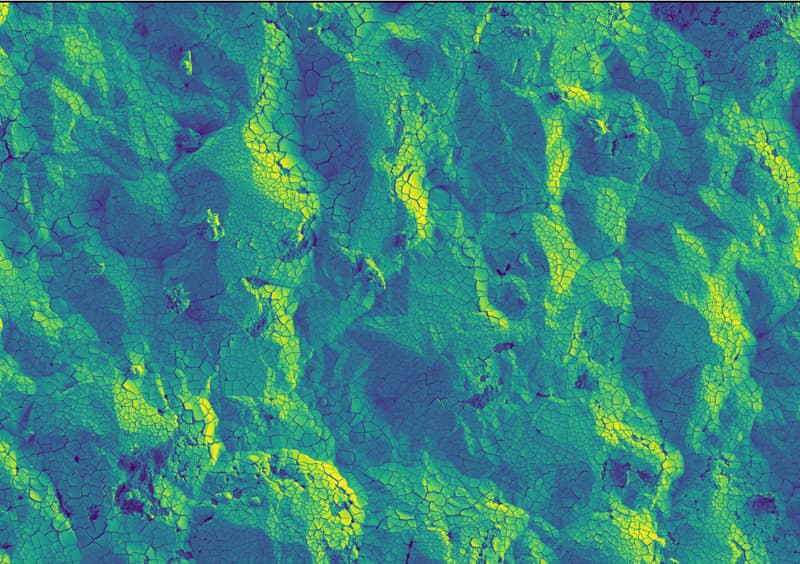
Working with dozens of rhenium electrodeposition samples prepared using pulse and pulse-reverse waveforms, the team trained generative diffusion-based AI models and a variational autoencoder on experimental parameters and the high-resolution scanning electron microscope images those parameters produced. The result: a model capable of predicting grain structure, morphology, and other microstructural features before a single additional sample is deposited.
"Electroplating is central to material development and production across many industries, and it has particularly useful applications in our production capabilities at the Laboratory," Scheinker said. "The generative diffusion-based AI model approach we've established has the potential to dramatically accelerate electrodeposition development, creating efficiencies by reducing the need for extensive physical experiments when optimizing new materials and processes."
LANL chose rhenium as the test case deliberately. The metal's high melting point and role in high-temperature alloys make it representative of the difficult-to-work materials central to defense and aerospace applications. The research is published in the Journal of The Electrochemical Society, and LANL notes the approach is designed to be adaptable to other electrodeposition and corrosion processes beyond rhenium.
The research's implications for Northern New Mexico extend from LANL's own production floor into the broader regional economy. Scheinker's team framed the work as having near-term operational benefits for LANL manufacturing, alongside technology transfer potential to private industry and the prospect of contracts and partnerships for companies in the region.
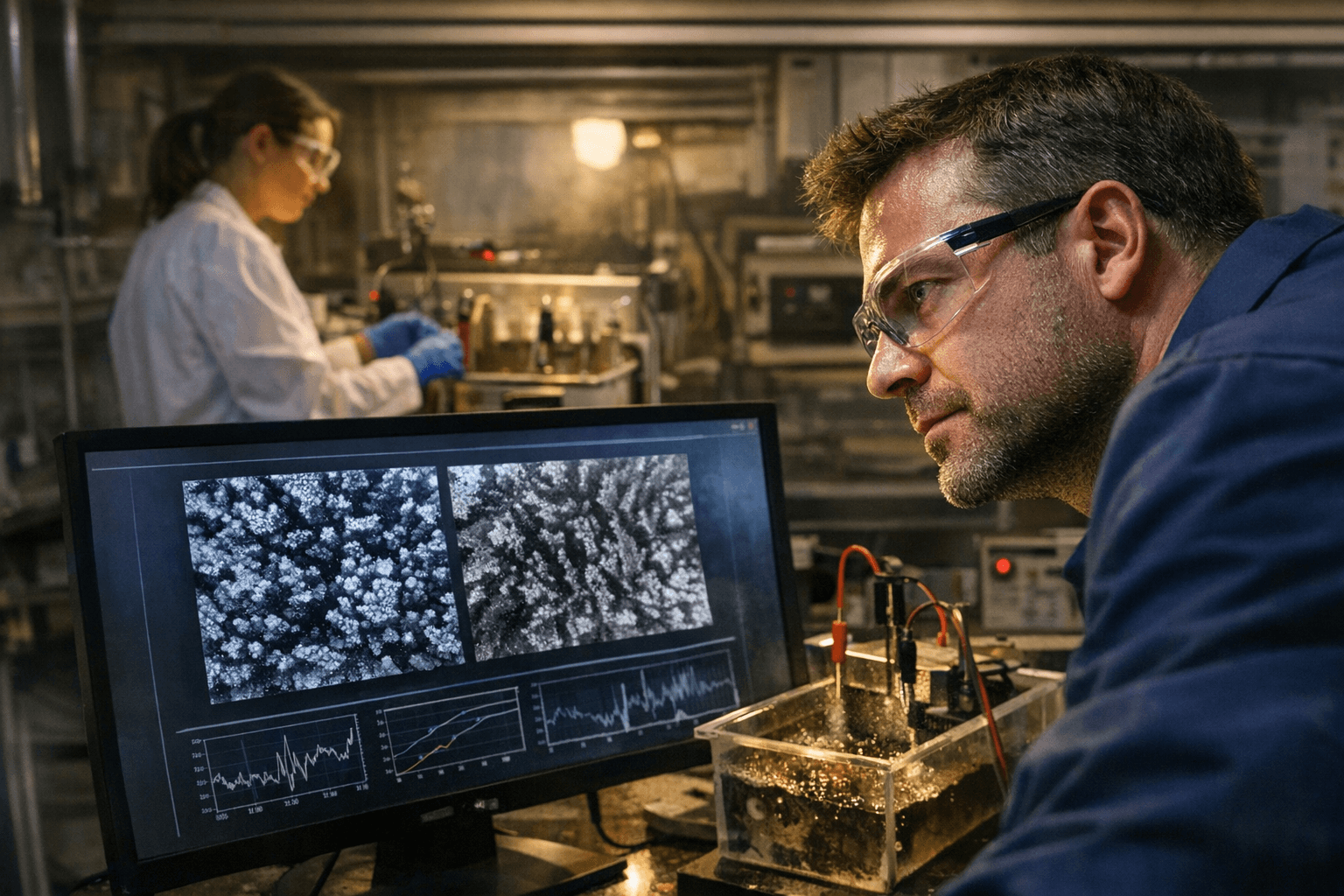
Electroplating's difficulty comes from the coupling of many variables at once: solvents, electrolytes, temperature, power settings. Traditional optimization means running experiment after experiment, imaging each result under a scanning electron microscope, and adjusting parameters by hand. The new model collapses that cycle by learning the relationship between inputs and microstructural outputs from LANL's existing experimental record, then using that knowledge to guide new runs rather than iterate blindly through physical samples.
This article was produced by Prism’s automated news system from verified source data, official records, and press releases, then run through automated quality and moderation checks before publishing. The system is built and supervised by the people who set the standards it runs under. Read our full AI policy.
Did this article answer your question?