Los Alamos Lab powers deep-space missions with plutonium-238 heat sources
Los Alamos builds the heat sources that keep deep-space missions alive where sunlight fails. That gives the county a rare federal role with real jobs and national leverage.
Why this matters in Los Alamos County
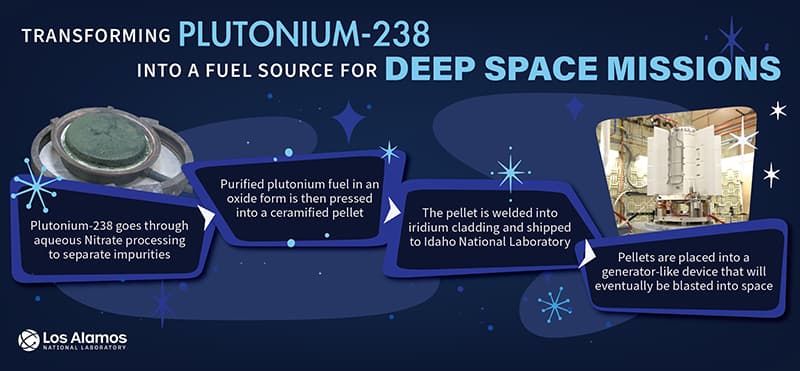
Los Alamos County’s space story starts with something small enough to fit in the palm of a hand: a plutonium-238 heat source that helps spacecraft survive where solar power fails. Los Alamos National Laboratory says it is the nation’s sole producer of general-purpose heat sources, the clads that serve as the essential building block for NASA’s radioisotope thermoelectric generators. For local readers, that is not an abstract science headline. It is a federal capability rooted in town, supported by specialized infrastructure, and tied directly to the kind of high-skill work that keeps Los Alamos relevant far beyond northern New Mexico.
The economic value here is not measured only in prestige. A capability like this depends on federal investment, nuclear stewardship, precision manufacturing, and long-term technical staffing, all of which help anchor Los Alamos County’s role in the national lab system. In a place where the Lab is already central to jobs, contracts, and public spending, the fact that a tiny component built here helps power missions across the solar system is a reminder that the county still sits inside a national industrial chain, not just a local research campus.
How plutonium-238 keeps spacecraft alive
NASA describes radioisotope power systems as a type of nuclear energy technology used in the darkest, dustiest, and most distant places in the solar system, where sunlight is too weak or too unreliable for solar panels. The fuel is plutonium-238, a material that emits steady heat through natural radioactive decay. That heat can be converted into electricity and used to keep instruments, heaters, and flight systems operating when a spacecraft is far from Earth and far from the sun.
That is why these systems matter so much for deep-space exploration. NASA says the general-purpose heat source is the essential building block for the radioisotope power systems used by its missions, and that makes the Los Alamos component a foundational part of mission design rather than a niche add-on. Without that steady heat source, spacecraft headed to cold, shadowed, or distant destinations would lose a power option that has already proved itself across decades of flight.
Why Los Alamos holds the line on this work
The Lab’s role did not appear overnight. Historical records show general-purpose heat source development was underway at Los Alamos Scientific Laboratory in 1977 and 1978, and the Laboratory says it designed the GPHS in the late 1970s and 1980s before taking over heat-source fabrication in the early 1990s. Technical literature also shows fabrication responsibility for Cassini GPHS-fueled clads was transferred to Los Alamos in 1990, underscoring how deeply the county is embedded in the hardware side of interplanetary exploration.
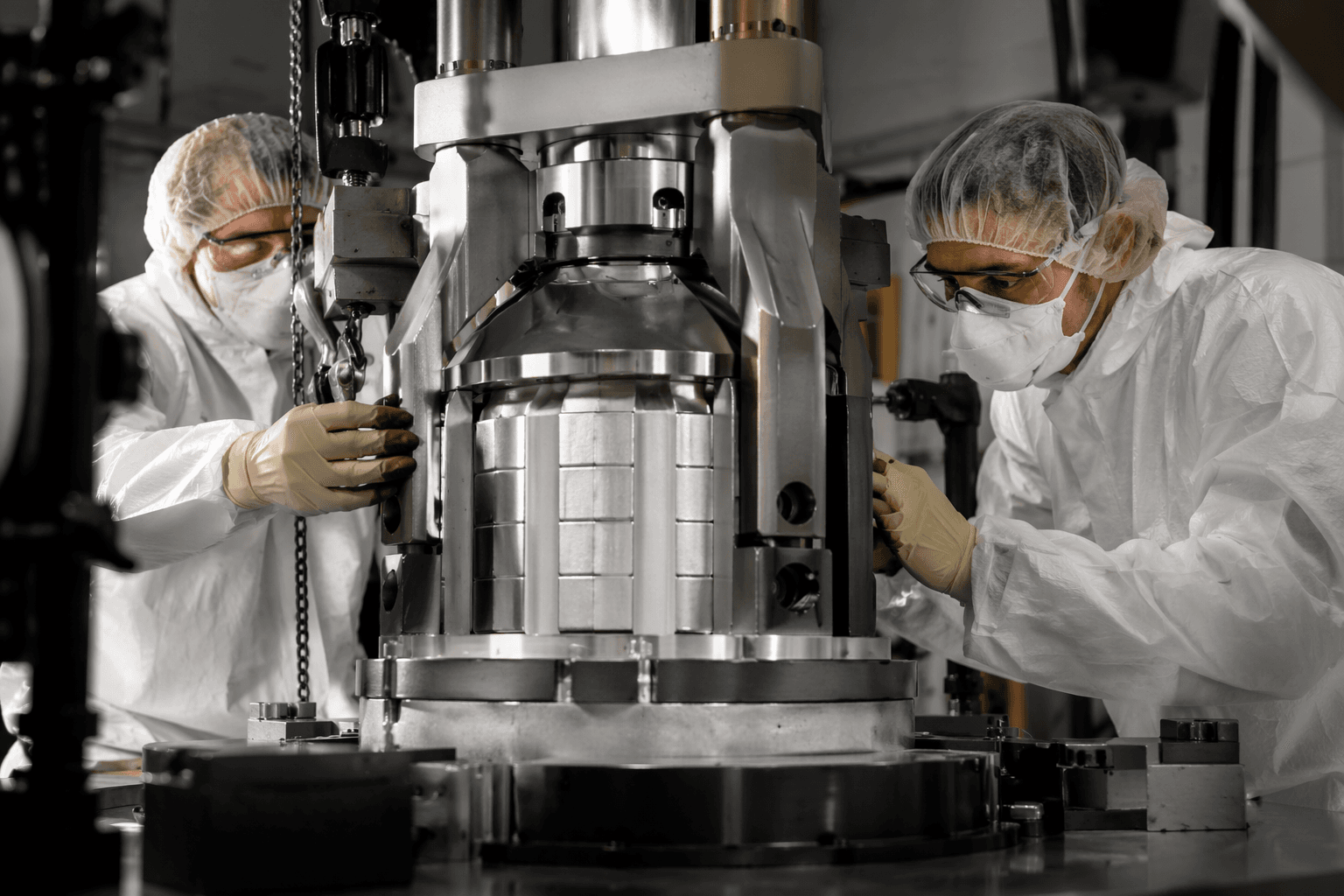
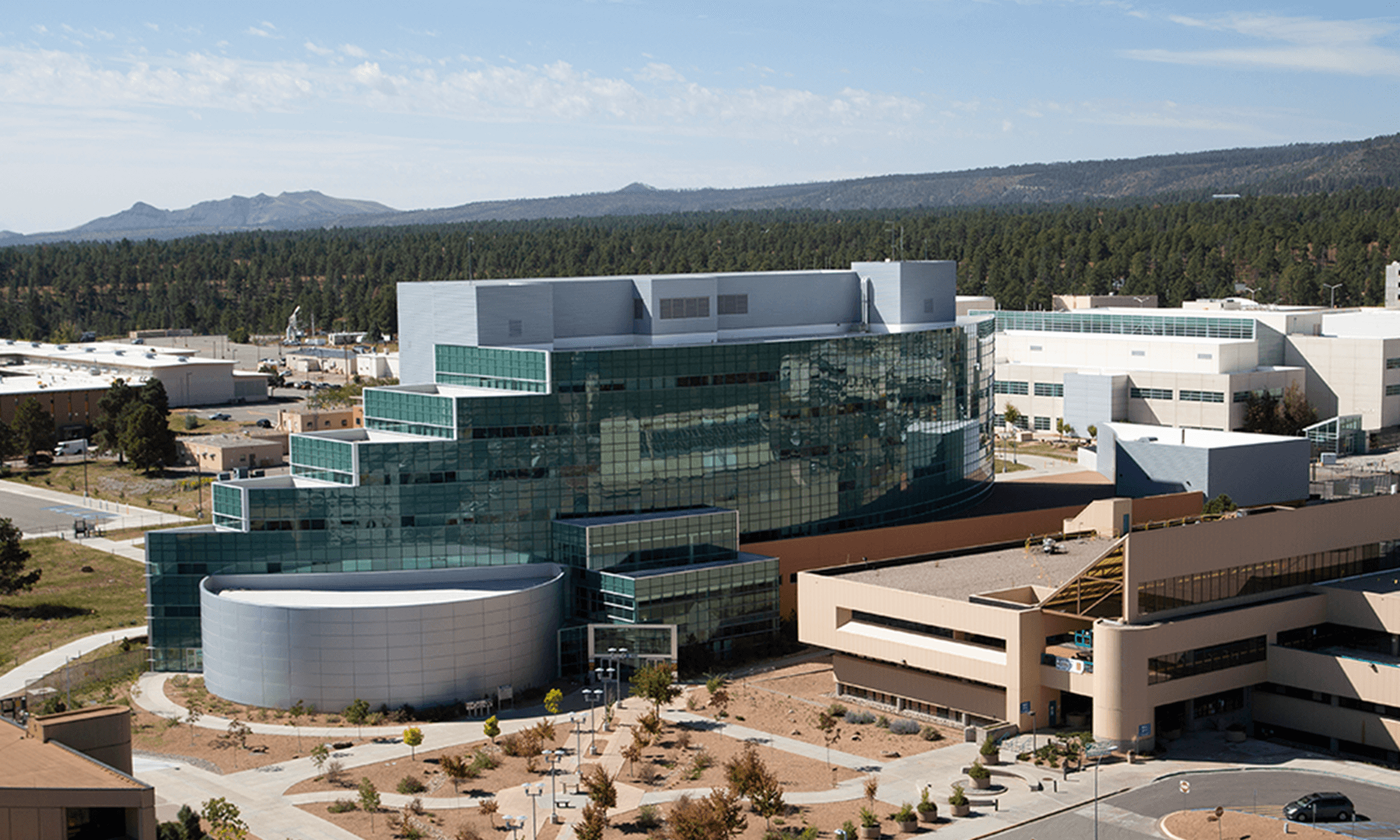
PF-4, the Lab’s plutonium facility, began operations in 1978 and supports plutonium-238 heat source fabrication alongside national security work. That matters because the same infrastructure that supports space hardware also sits inside a broader federal mission set, and the U.S. Department of Energy says Los Alamos is the sole plutonium pit production capability in the United States. In practical terms, Los Alamos County is home to one of the few places in America where materials science, nuclear handling, mission delivery, and national security all intersect in the same physical space.
Where the hardware is already flying
NASA says 24 missions have successfully flown with a radioisotope power system since 1969, and the U.S. Navy launched the first radioisotope power system in 1961. That long record is one reason the Los Alamos role should be understood as enduring industrial capacity, not a symbolic contribution. The work supports current missions such as Curiosity and Perseverance on Mars, including Perseverance in Jezero Crater, as well as Voyager 1, Voyager 2, and New Horizons.
Those spacecraft are not just names in a history lesson. They are active assets still returning data from places where solar power would be weak, intermittent, or impossible. The ability to keep them running reflects decades of federal spending, engineering discipline, and mission continuity, and Los Alamos sits inside that chain as the place where the heat-source hardware is built.
What comes next for the county
The next major test of that capability is already on NASA’s calendar. Dragonfly, the rotorcraft mission to Saturn’s moon Titan, is scheduled to launch in June 2027 and arrive at Titan in 2034, with plutonium-238 supplying the power it needs. Titan is one of the solar system’s coldest, most remote targets, which is exactly the kind of environment radioisotope power systems were built for.
For Los Alamos County, that future matters in a very local way. It means the Lab’s footprint is not defined only by security missions or cleanup debates, but also by infrastructure that helps launch and sustain some of the most ambitious science missions ever attempted. In a county where federal work shapes the economy and public identity, the fact that a tiny pellet made here can help power a mission to Titan is a powerful measure of taxpayer value and national relevance.
This article was produced by Prism’s automated news system from verified source data, official records, and press releases, then run through automated quality and moderation checks before publishing. The system is built and supervised by the people who set the standards it runs under. Read our full AI policy.
Know something we missed? Have a correction or additional information?
Submit a Tip