Los Alamos Urban Trail could become key town connector
The Urban Trail already links downtown to the Aquatic Center, but Los Alamos must decide whether it remains a pleasant path or becomes a true commuting corridor.
A route built for movement, not just scenery
The Los Alamos Urban Trail is already open as a roughly one-mile multi-use corridor, and the county built it like infrastructure: 10-foot-wide concrete, 370 linear feet of precast boardwalk, plus drainage work, retaining walls, lighting, signage, striping, and a rapid flashing beacon. Deputy Public Works Director Keith Wilson walked the route recently with Kevin Holsapple and discussed the scoping, engineering, and design problems that came with threading a trail through town, which is exactly the point. This is not a decorative footpath dropped into a park, but a constructed transportation asset meant to move people through the middle of Los Alamos.
Who the trail is for
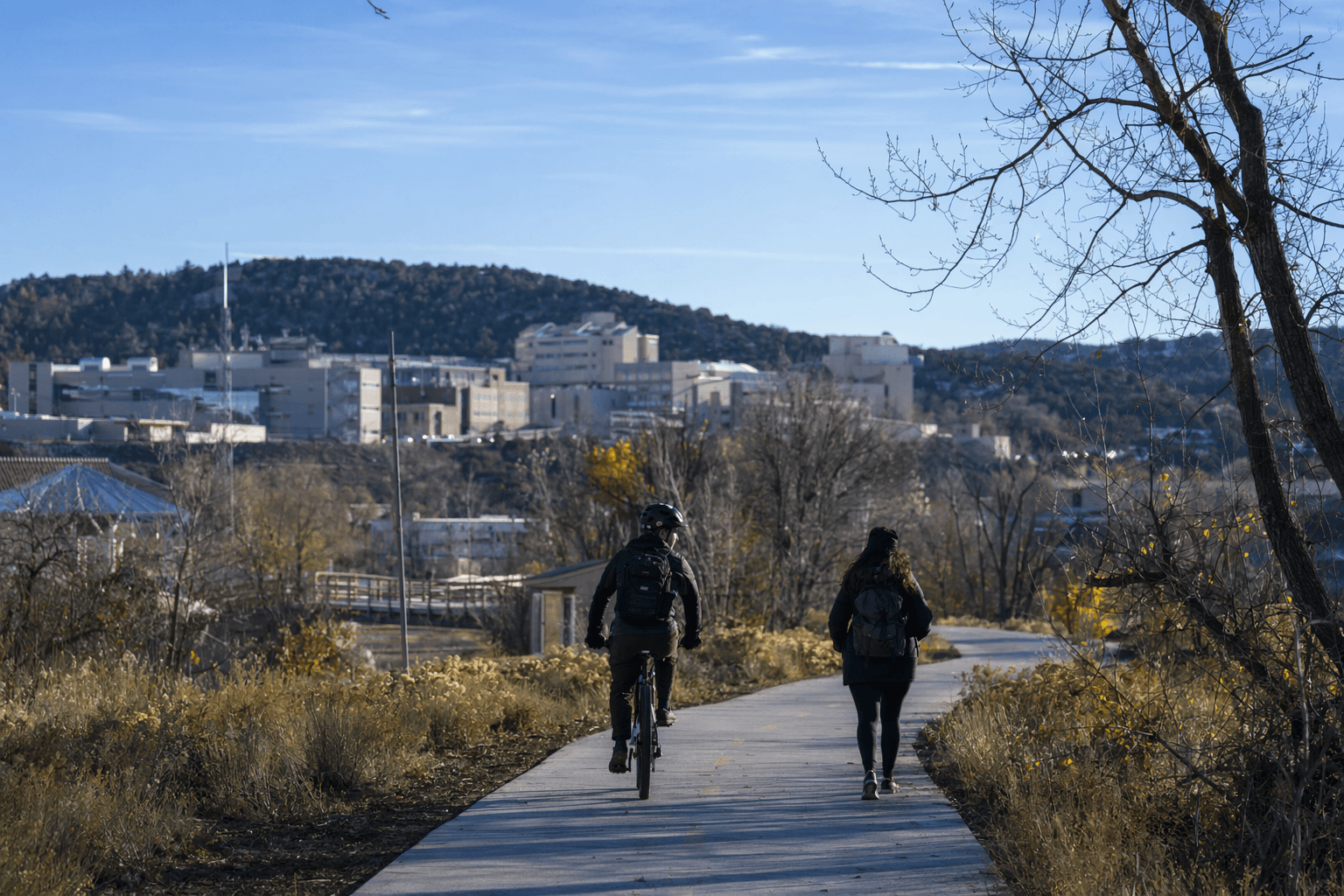
By design, the Urban Trail serves pedestrians and bicyclists first, but the use case is broader than that. Local reporting on the project described the original vision as a route suitable for walkers, bikes, strollers, wheelchairs, scooters and trailers, and county planning documents say the trail is meant to connect businesses, tourism, retail, schools, parks, recreation and residences. That makes the trail more than a recreation loop. It is a shared corridor that can carry errands, school trips, short commutes and casual outings if the surrounding network makes those trips practical.
Where it runs through town
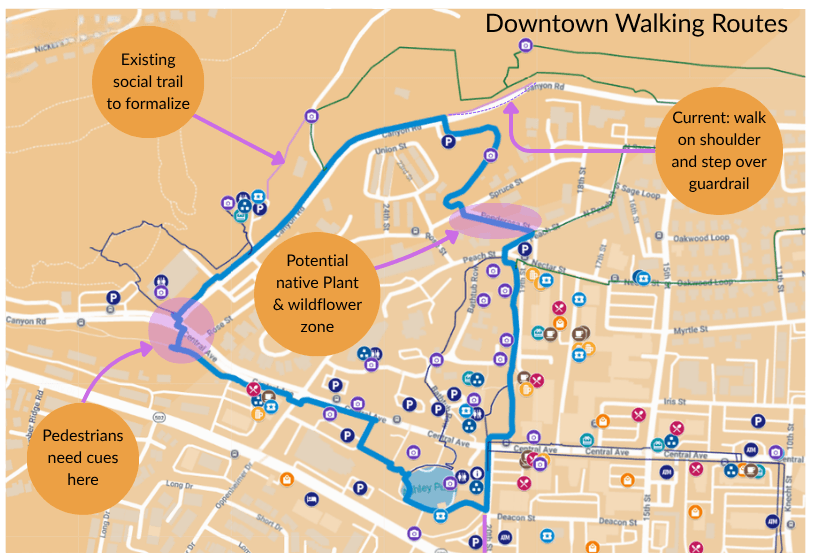
The county’s project page places the route squarely in the center of Los Alamos: Phase I runs from Trinity Drive and 20th Street through the Fuller Lodge grounds to Ponderosa Street and Spruce Street, while Phase II continues through the wooded area by the tennis courts and along Canyon Road to the rear entrance of the Aquatic Center. The county said the final segment between Spruce Street and Canyon Road opened on February 7, 2025, completing the full trail from Trinity Drive to the Aquatic Center. That alignment matters because it puts the trail within easy reach of downtown destinations, neighborhood streets and public facilities, which is what gives it transportation value beyond its scenic appeal.
Why the engineering mattered
The Urban Trail had to fit into steep, wooded mountain terrain while preserving mature trees and meeting ADA standards, a reminder that mobility projects in Los Alamos are rarely simple straight-line builds. That challenge is visible in the boardwalk section and in the county’s decision to add surface treatments and safety features rather than treat the trail as a stripped-down path. The project also had to work around existing development and local expectations, which is why Wilson’s descriptions of the design process matter. The trail’s value comes not only from where it goes, but from how carefully it was made to fit the town that already exists around it.
What makes it useful, and what still limits it
As a connector, the Urban Trail already gives Los Alamos a cleaner walking and biking line through the core of town. As a true transportation corridor, though, its usefulness depends on the quality of the links at either end and the ease of reaching it from adjacent streets, destinations and crossings. The trail’s final opening in 2025 solved the most obvious gap in the corridor itself, but the bigger question is whether the county will keep extending that logic into the surrounding network so riders and walkers do not have to re-enter car traffic the moment the trail ends. That is the difference between an amenity and a working alternative to driving.
Safety is part of the mission
County planning documents make clear that the trail belongs in a broader safety strategy. The 2025 Pedestrian Master Plan centers safety, connectivity, equity, health and vibrancy, and it says a well-designed pedestrian system improves access to schools, transit and businesses. The Urban Trail fits that framework because it gives people a route that is physically separated from ordinary traffic for much of its length, but its long-term value will still depend on safe approaches, clear crossings, legible signage and maintenance that keeps the corridor comfortable for all users.
The county decisions that will determine its future
If Los Alamos wants the Urban Trail to function as a serious town connector, the decisions ahead are straightforward even if the work is not. The county will need to keep investing in connectivity, ADA compliance, maintenance and public engagement, all themes that appear in its pedestrian and trails planning documents. The county has also said the project supported Council goals for infrastructure investment and communication, because public feedback was part of the development process. That suggests the real test is still ahead: whether officials use the trail as a backbone for a broader walking and biking network, or let it remain a high-quality route that stops just short of changing how people get around town.
This article was produced by Prism’s automated news system from verified source data, official records, and press releases, then run through automated quality and moderation checks before publishing. The system is built and supervised by the people who set the standards it runs under. Read our full AI policy.
Did this article answer your question?