Ashland markers reveal daily life in a coal camp town
Ashland's markers compress a coal camp's wages, scrip, child labor, and company control into one stop. For McDowell County, the test is whether that history can still draw visitors and local spending.
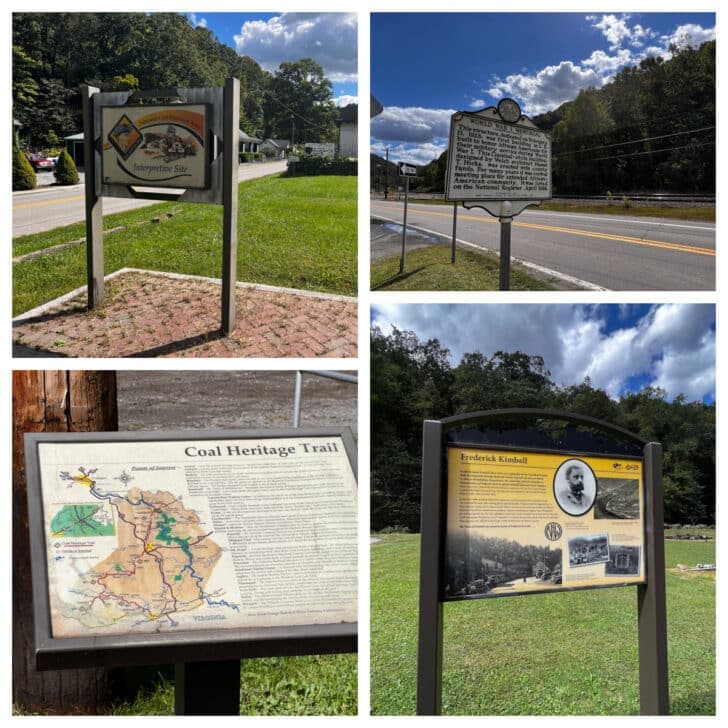
Ashland does not need a museum building to explain how a coal camp worked. A compact cluster of Coal Heritage Trail markers in the North Fork valley lays out the economy of wages, scrip, company housing, child labor, and the company store in one roadside stop. For McDowell County, that makes Ashland less a nostalgia piece than a test of whether preserved history can still function as public infrastructure for tourism and local spending.
A trail built to carry the region’s history
The markers in Ashland sit inside a larger public interpretation system, the National Coal Heritage Area, which encompasses all or parts of 13 counties in southern West Virginia. The state describes the Coal Heritage Trail as a route that winds through more than 187 rugged miles of industrial heritage, passing through Mercer, McDowell, Wyoming, Raleigh, and Fayette counties. Its mission is not simply to remember coal, but to preserve and interpret the region’s history for visitors and residents alike.
That broader framework matters because the trail is built to tell the whole story of the coalfields, including prospectors and speculators, railroad building, community building, violent labor struggles, and the men and women who came from around the world to make lives there. McDowell County, created on February 28, 1858, from part of Tazewell County, Virginia, became one of the most consequential places in that story. By the middle of the 20th century, it had become the nation’s leading coal-producing county until Logan County surpassed it in 1955.
Ashland Coal & Coke built the camp around a seam
The Ashland Coal & Coke marker gives the clearest snapshot of how the settlement began. The company was incorporated in 1892, leased the site in 1893, and opened a drift mine on the Pocahontas No. 3 seam. Like many coal operations in the Pocahontas field, it was organized by men from the Pennsylvania anthracite region, a reminder that southern West Virginia’s industrial growth drew on outside capital and outside expertise.
The mine’s early production shows how quickly a coal camp could scale. Ashland produced more than 30,000 tons in its first full year and more than four million tons by 1935. In a drift mine, workers tunneled horizontally into the seam rather than sinking a deep shaft, a lower-capital approach that fit the hand-loading era and the steep hillsides of the southern coalfields.
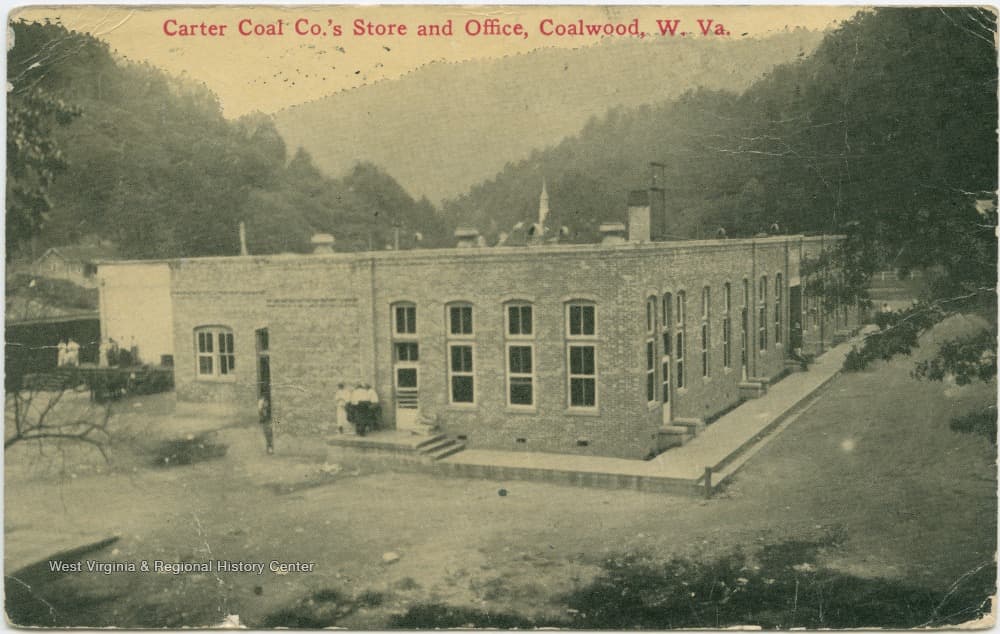
Ashland also grew into a substantial community. The North Fork valley once held an estimated 10,000 people, and the mine tipple was later demolished in the 1980s, leaving the store and a few company houses as the most visible remnants of a once much larger operation. That physical loss is part of the story too: what survives now is not a full townscape, but enough of one to show how the camp was organized.
The company store was the hub, not a side business
The Company Store marker explains why one building could anchor an entire settlement. In coal camp life, the store sold groceries, clothes, mining supplies, cradles, and coffins, while also serving as bank, post office, clinic, and communications hub. In a company town, it was not just retail space, but part of the mine’s operating system.
The scale of dependence was large across West Virginia. In 1922, almost 80 percent of miners lived in company houses and shopped in company stores, while an estimated 465 coal company towns existed in the state by 1930. Most were concentrated in Raleigh, Fayette, McDowell, Logan, and Mingo counties, which made company-town life a defining feature of southern West Virginia rather than an exception.
The economics were circular by design. The Miners’ Pay marker explains that wages often flowed back to the company through rent and store purchases, and that scrip, a private currency used in many coal towns, kept money under company control even after state law outlawed company-payment scrip in 1887. In a system where wages could account for sixty percent of production costs, the company store helped mine owners pull cash back into their own books.
Paychecks depended on mine schedules
The No Work Tomorrow marker captures the instability that sat underneath the coal camp economy. Mines operated only about two-thirds of full time from 1890 to 1930, and West Virginia miners averaged only 149 working days in 1921. That meant a family’s income, food purchases, and rent could all shift with the mine’s schedule, not just with wages.
Before the Great Depression, more than 90 percent of miners in southern West Virginia lived in company-owned towns without civic institutions. That left households dependent on the mine for work and on the company town for basic services, while also limiting the independence of local commercial life. In practical terms, a shutdown did not just idle a shift, it strained the entire social and economic structure around it.
Young miners show how early the work started
The Young Miners marker makes clear that coal camp labor reached into childhood. West Virginia miners were supposed to be at least 14, but boys as young as nine worked underground, and there were no restrictions on where or how many hours children could work. In the hand-loading era, miners worked in pairs with picks and explosives, while young boys known as trappers operated doors that controlled ventilation.
That marker matters because it shows that the coal economy was built around family labor as much as industrial production. The arrangement was not peripheral to the business model, it was part of it. In Ashland, that reality sat alongside a workforce and population shaped by race, migration, and boom-era growth.
African Americans made up about 20 to 26 percent of the southern West Virginia mining workforce in the early 20th century, even as they were hit hard by Depression-era unemployment. By 2020, African Americans made up about eight percent of McDowell County’s population. The county’s history, then, is not only about coal output, but about who was hired, who stayed, and who was left vulnerable when the market turned.
What Ashland can do now
Ashland works because the markers turn a vanished coal camp into a compact, readable stop. The surviving store, the remaining company houses, and the marker cluster let visitors trace how a company town functioned without needing a rebuilt streetscape or a full museum complex. That gives the site real value as a trail stop, but it also sets a limit: the economic payoff depends on whether visitors come through as part of the broader Coal Heritage Trail, not on a single attraction standing alone.
For McDowell County, that is the public-investment question underneath the history. The markers preserve a story of production, control, labor, and family life that once made the county the nation’s leading coal producer. In Ashland, the surviving signs still do the work of explaining how the coal camp economy shaped daily life, and why that history remains one of the county’s most legible assets.
This article was produced by Prism’s automated news system from verified source data, official records, and press releases, then run through automated quality and moderation checks before publishing. The system is built and supervised by the people who set the standards it runs under. Read our full AI policy.
Did this article answer your question?