Coalwood’s legacy goes beyond Rocket Boys, shaped by George L. Carter
Coalwood was a company-town system, not just a movie setting, and George L. Carter used it to shape housing, stores, schools and daily life in McDowell County.
Coalwood was never just a Rocket Boys backdrop. George L. Carter used it, and nearby Caretta, to build a company-town system that shaped where people lived, shopped, learned and worked in McDowell County. The story matters because it shows how coal power reached beyond the mine mouth into everyday governance, and how some company towns were run more cleanly and paid better than many others in West Virginia.
Carter’s power came from controlling coal and the rail lines that moved it
George L. Carter was born on January 10, 1857, and died on December 30, 1936, but his influence on southern West Virginia stretched far beyond his lifetime. The Library of Virginia says he founded the Clinchfield Coal Company in 1902, received a charter for the Carolina, Clinchfield and Ohio Railway in March 1908, and sold Carter Coal to Consolidation Coal Company in 1922 for $12 million, although another account gives the sale price as $17 million.
That combination of coal ownership and rail control is the key to understanding why Carter mattered in McDowell County. He was not simply buying mines, he was building the system that carried coal to market. He moved to his company town of Coalwood in 1916, placing himself inside the industrial world he had helped create and reinforcing the fact that the town’s daily life was tied to one owner’s decisions.
What a company town meant in West Virginia
Coalwood and Caretta were part of a much larger state pattern. West Virginia company towns usually grew up around a mine and included company houses, a store, a tipple, a church, a school and a post office. They were not incorporated and had no local government of their own, which meant the company often filled the roles that elsewhere would have belonged to town government.
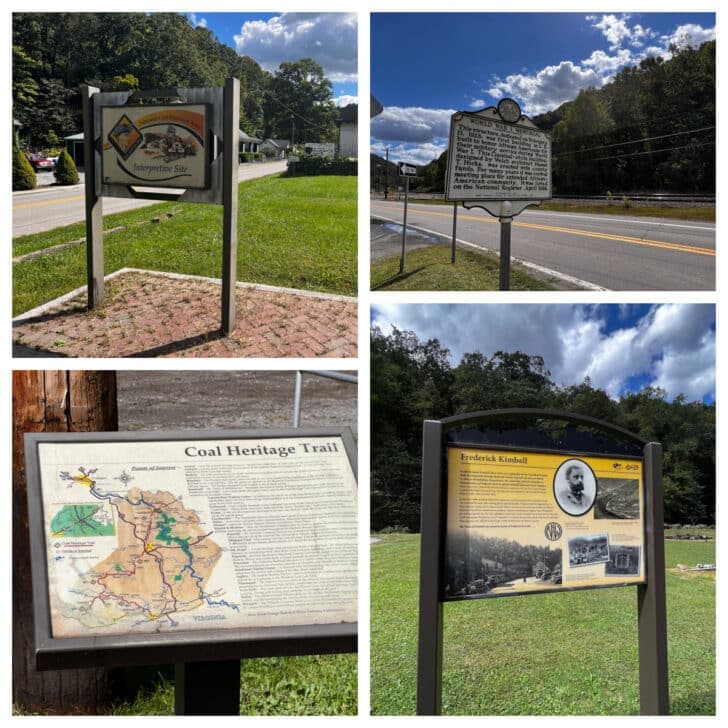
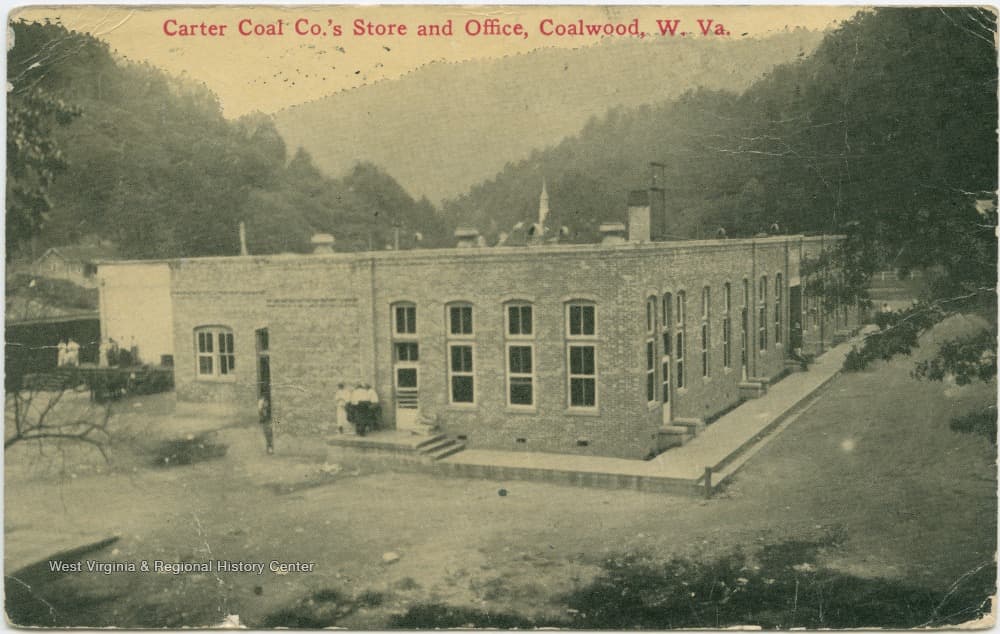
By 1922, almost 80 percent of West Virginia miners lived in company houses and shopped in company stores. Those stores were not just retail outlets. In many towns, the store building also held the post office and the payroll office, so wages, mail and daily purchases all ran through the same company-controlled space. The West Virginia coal-history trail says coal companies stripped the forests to erect simply designed houses, schools and churches close to the mines, and the towns followed rail branch lines, which made the geography of coal extraction visible in the layout of the community.
An estimated 465 coal company towns existed in West Virginia in 1930, which makes Coalwood and Caretta part of a statewide system rather than isolated curiosities. That system concentrated power in the hands of owners, left miners dependent on company housing and stores, and tied household stability to the fortunes of a single operation.
Coalwood and Caretta were Carter towns from the start
West Virginia University archives say Caretta and Coalwood were started early in the twentieth century as coal camps by mine operator George L. Carter. Caretta opened a post office on April 8, 1905, and had a school erected in 1907. It was first known as Logging Camp No. 5 before developing into a coal camp, and its name came from the transposed syllables of Mrs. Etta Carter, Carter’s wife, a small detail that still shows how personal the imprint of the Carter family was on the town.
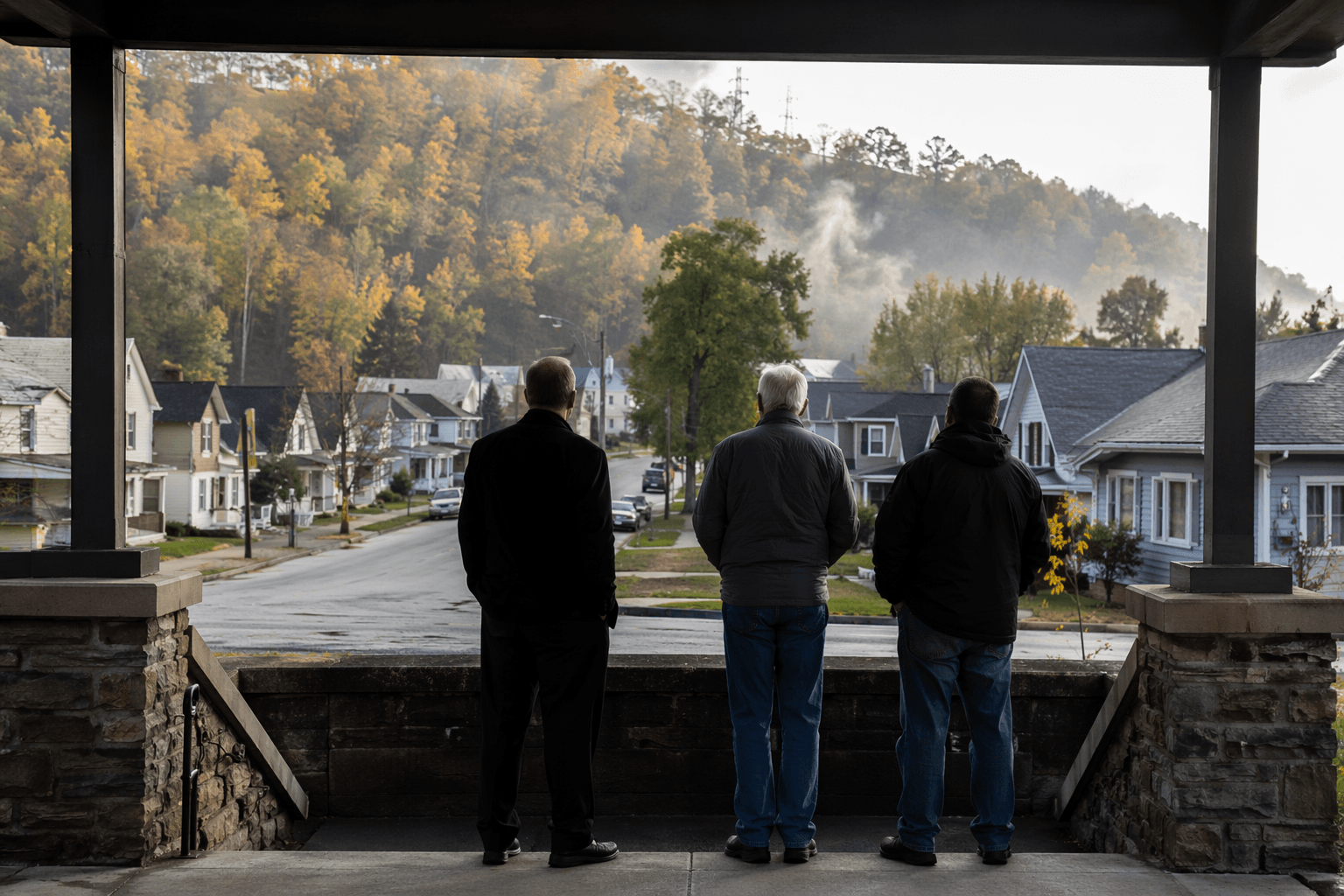
The West Virginia Encyclopedia says Coalwood and neighboring Caretta were cleaner and their employees were better paid than many other coal towns through the 1910s and 1930s. That comparison matters in McDowell County because it shows the county was not home to one uniform coal experience. Some camps were harsher and more exploitative than others, and Carter’s towns were often seen as relatively better-run examples within an unequal system.
The physical design of Coalwood still reflects company control
The built environment of Coalwood was shaped by corporate choices as much as by geology. The Southwest Virginia Architectural History Society says Consolidation Coal hired a Fairmont architect for many Coalwood houses and that some prefabricated Aladdin Homes were used there. That is a reminder that even the look of the houses was part of a corporate housing strategy, not a random collection of private homes.
The connection between Coalwood and Caretta went beyond family names and nearby hollows. One account says the Coalwood mine was connected to the adjoining Caretta mine in 1956, and by the end of that decade coal was being shipped through Caretta’s tipple and processing plant. In practical terms, that linked the two communities into one larger production system, with infrastructure, transport and market access all feeding the same industrial chain.
That physical design also explains why residents’ lives were so dependent on company decisions. When the mine controlled housing, access to goods, schools and the route to pay, the company was not just an employer. It was the center of local life and the main institution shaping whether a family could stay or had to move.
What happened after the coal era says as much as the boom did
Coalwood’s production ceased on October 1, 1986, according to one source, and a later account says the company-owned homes were sold to residents, ending the town’s classic company-town structure. That shift marked a break from the old order, when ownership of land and housing kept the whole settlement under one corporate umbrella.
Homer Hickam and October Sky made Coalwood familiar to readers far beyond McDowell County, but the deeper lesson is about governance and dependency. George L. Carter’s towns show how one coal operator could shape housing, stores, schools and the rhythm of daily life, and they also show how those arrangements eventually unraveled when the mine no longer anchored the local economy. For McDowell County, that history still echoes in questions about who controls land, what corporations owe the places they extract from, and how communities are supposed to endure after the payroll leaves.
This article was produced by Prism’s automated news system from verified source data, official records, and press releases, then run through automated quality and moderation checks before publishing. The system is built and supervised by the people who set the standards it runs under. Read our full AI policy.
Did this article answer your question?