Coalwood’s Rocket Boys story still defines McDowell County history
Coalwood still shows its company-town bones, from coal camp houses to the Methodist church, and that landscape now carries the weight of the Rocket Boys legend.

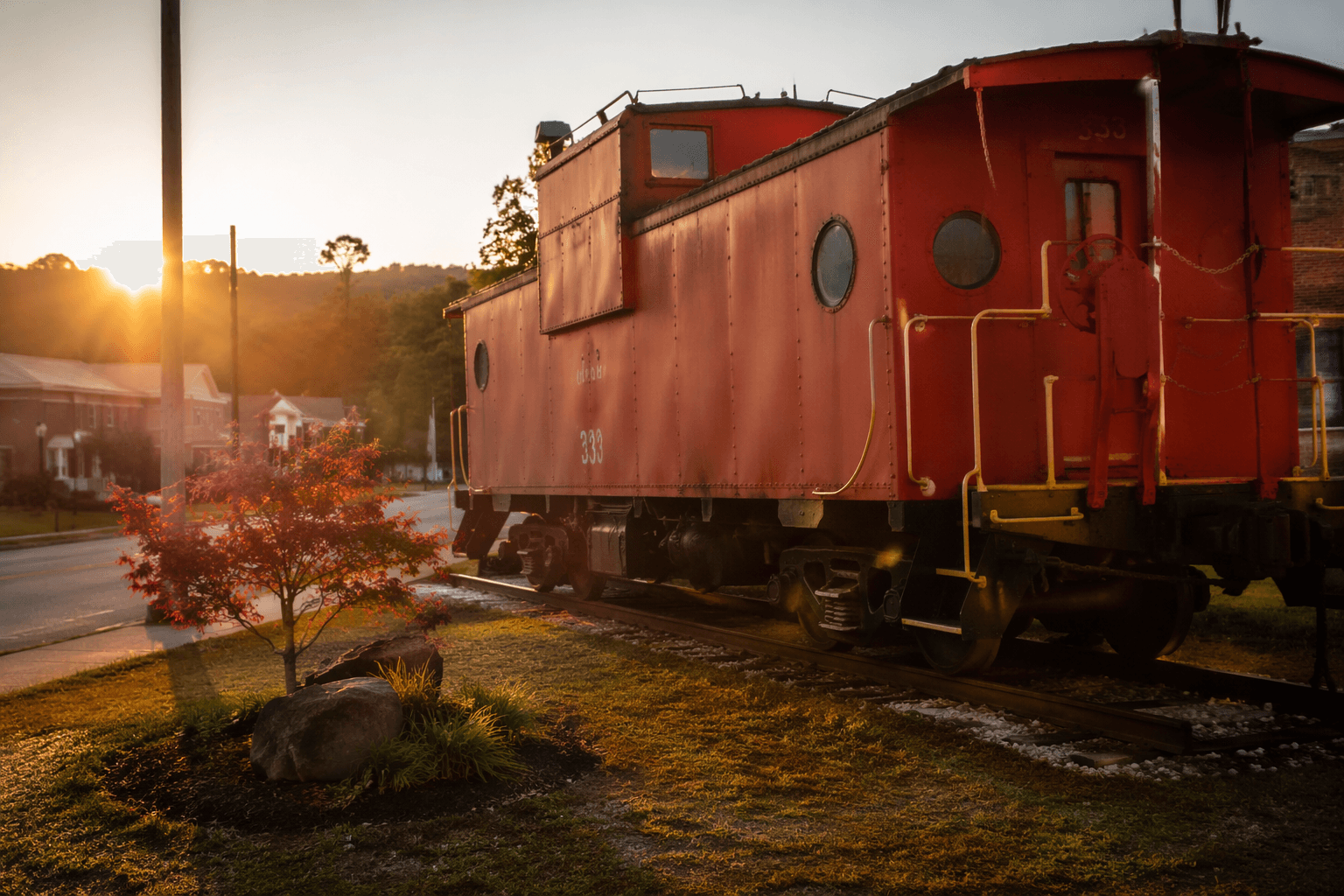
Coalwood still looks like a company town because, in many ways, it remains one. Between Welch and Caretta along Route 16, the community still holds coal camp houses, a machine shop, company apartments, and a Methodist church, all of which make the place read less like a film backdrop and more like a surviving industrial landscape.
That matters in McDowell County because Coalwood’s national fame did not erase its older story. Homer Hickam’s 1998 memoir Rocket Boys, later adapted by Universal as October Sky in 1999, brought the town into the national spotlight, but the physical setting is what gives the story its force: a real coal camp shaped by mining, company housing, and the everyday routines of work and school.

The town behind the memoir
Homer Hickam was born in Coalwood on February 19, 1943, and grew up there as the son of the mine superintendent. His book Rocket Boys tells the story of that childhood and the group of Big Creek High School classmates who began launching rockets after Sputnik went up on October 4, 1957. That date became the turning point in Hickam’s memory of his youth, because it marked the moment when a mining town on the edge of the coalfields opened into a future defined by science.
The rockets were not a one-off curiosity. Hickam and five classmates eventually won the county science fair and then the 1960 National Science Fair. Rocket Boys quickly became more than a local memoir: The New York Times selected it as one of its Great Books of 1998, and the National Book Critics Circle nominated it as Best Biography of 1998. The book’s success, followed by October Sky in 1999, gave Coalwood a rare place in American popular memory while leaving the actual community to carry the harder task of preservation.
What remains on the ground
Coalwood’s most important advantage is that its history is still visible. The Coalwood Rocket Memorial identifies the site as one of the places where the boys launched their first rockets in 1957, naming it Cape Coalwood. That detail matters because it gives visitors a concrete landmark rather than a vague historical claim: this is where the Rocket Boys story happened, in a place that still has the bones of the coal camp around it.
The surviving buildings also show how much of the company-town framework is still legible. Coal camp houses, company apartments, a machine shop, and the Methodist church remain part of the landscape, and those structures help explain how workers lived, worshiped, and moved through a town organized around mining. In Coalwood, the story is not just about one famous family or one school team. It is about an entire built environment arranged to serve coal production and the people who lived inside it.
Coalwood in the larger coal-heritage map
Coalwood is also part of the National Coal Heritage Area, which covers 5,300 square miles in southern West Virginia. The National Park Service says that many of the area’s communities still retain much of their original company-town character, and Coalwood fits that description closely. The heritage-area designation gives the town a broader frame: it is not an isolated curiosity, but one example of how coal shaped settlement patterns across the region.
That wider context reaches back to George L. Carter, who moved to his company town of Coalwood in 1916. Before that, beginning in 1901, he had bought 20,000 acres in McDowell County and began mining nearby Coalwood. His development of the area explains why the town existed in the first place and why its street pattern, housing, and commercial spaces were tied so tightly to the coal business. Carter’s Coalwood and neighboring Caretta were described as cleaner and better paid than many other coal towns in the early 20th century, which adds another layer to the county’s industrial history: Coalwood was not just any coal camp, but one built under a company model that workers experienced differently from many nearby places.
The buildings that shaped and then disappeared
One of the most important surviving records of Coalwood’s commercial life is the Carter Coal Company store. The West Virginia Division of Culture and History’s State Historic Preservation Office says the building was constructed around 1912 and altered in 1922, with a period of significance running from about 1912 to 1941. It was also the only extant company store in McDowell County that appeared to stand as a unit in a row of commercial buildings, which made it unusually important as an artifact of company-town commerce.
That importance is sharpened by loss. A later local-history listing says the store was demolished on March 29, 2008. For Coalwood, that demolition is the cautionary line in the story: the town’s historic identity is visible, but not secure. Every remaining structure now carries more weight because one of the most recognizable pieces of the coal camp commercial district is gone.
Why Coalwood’s future is still a local decision
McDowell County’s own tourism materials now present heritage sites and outdoor recreation as part of the county’s economic-development strategy, and that makes Coalwood more than a memorial to the past. It is part of a present-day decision about what kind of county economy can grow around old mining landscapes, preserved buildings, and place-based history. The more Coalwood is treated as a working historic landscape, the more it can support education, interpretation, and visitor traffic tied to the county’s broader heritage offer.
The alternative is simple: if the remaining houses, church, and industrial structures are not maintained, repurposed, or formally interpreted, they will keep aging without the protection that makes them legible to the public. Coalwood’s Rocket Boys fame guarantees recognition; only local and state choices will determine whether the town’s physical record of the coal company era survives alongside that fame.
This article was produced by Prism’s automated news system from verified source data, official records, and press releases, then run through automated quality and moderation checks before publishing. The system is built and supervised by the people who set the standards it runs under. Read our full AI policy.
Did this article answer your question?