McDowell County Sports Hall of Fame preserves local athletic legacy
Seventeen people entered the McDowell County Sports Hall of Fame in Welch, where old schools, current schools and alumni still share one county memory.
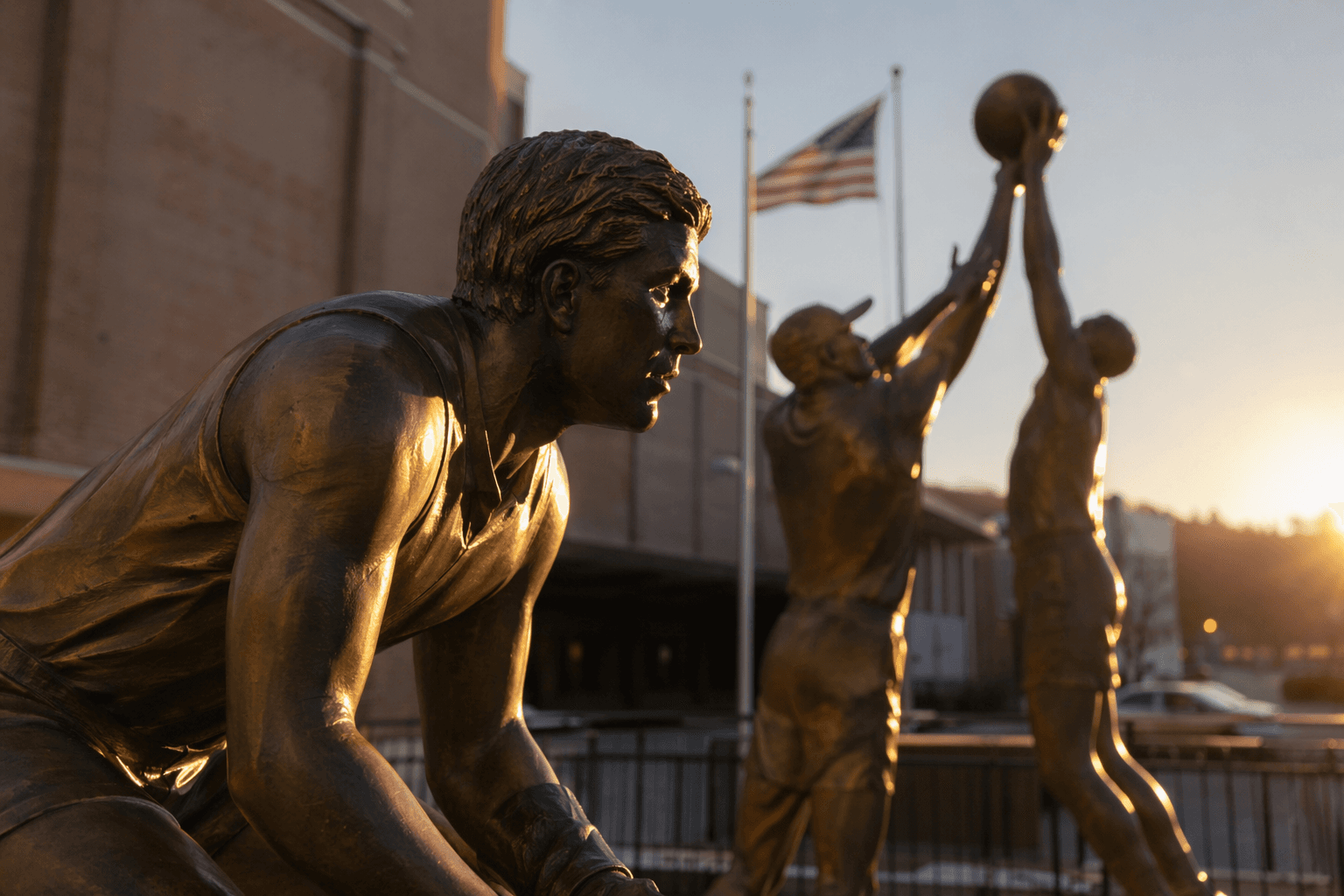
Seventeen people were recognized at the McDowell County Sports Hall of Fame ceremony in Welch, and the names added in 2024 show how the county keeps its sports record moving forward while honoring the past. The hall sits at Sterling Drive-In on Stewart Street, not in a formal museum, and it is used to connect athletes, coaches, supporters and families across generations of McDowell County schools.
How the hall works
The McDowell County Sports Hall of Fame began in 2011 as a way to recognize county athletes who went on to succeed in college or professional sports, along with coaches and supporters of McDowell County high school teams. Its selection process is rooted in the county itself: a committee made up of members from former McDowell County high schools and the two current schools, Mt. View and River View, helps identify candidates for possible induction.
That structure matters because the hall is not just preserving individual achievements. It is preserving a county-wide record of who played where, who coached whom, and which schools built the athletic identities that still matter to local families. In Welch, the hall gives those memories a physical home that is open to the ordinary rhythm of town life at 788 Stewart Street.
Why the location matters in McDowell County
The setting at Sterling Drive-In makes the hall feel like part of the community rather than a separate institution. That everyday location fits a county where school identity has shifted over time, especially after River View High School opened in 2010 in Bradshaw and consolidated the former Iaeger and Big Creek high schools.
McDowell County now has a school landscape that reaches across eras: River View in Bradshaw and Mount View High School in Welch are the two current high schools, while older campuses remain part of local memory and alumni identity. The Hall of Fame helps bridge that divide by giving former schools a continuing place in county conversation, even after consolidation changed the way students and teams are organized.
For families, that means a former athlete from Welch High, Iaeger, Big Creek or another McDowell County school can still be recognized in a setting that speaks to the whole county. For schools, it creates a shared roster that outlives campus closures and reorganization. For alumni, it gives old rivalries and old wins a common home without erasing where they came from.
The people who built it
The hall was started by the Lions Club and Wayne Hicks, an important figure in Welch athletics and civic life. Hicks was also inducted into the Concord College Hall of Fame, and an obituary says he was instrumental in founding the McDowell County Sports Hall of Fame and entered it himself in 2012.
His connection to the Welch Lions Club went far beyond a passing affiliation. The obituary notes that he served in the Mighty Welch Lions Club for more than 58 years, which places the hall inside a larger tradition of local service and volunteer leadership. That is one reason the Hall of Fame feels durable rather than ceremonial: it grew out of people who were already invested in the county’s institutions.
The hall’s origin story also explains its tone. It is not built around distant administration or outside branding. It was created by local civic leaders and shaped by people who understood how much McDowell County sports meant to town identity, school loyalty and community memory.
The 2024 class showed how the hall still evolves
The 2024 ceremony recognized 17 people, showing that the hall is still actively adding to its record rather than freezing it in place. That year also included a moment of silence for Wayne Hicks and Gary Dove, tying the new class to the people who helped preserve county sports memory in the first place.
One of the most visible names in that class was Frank Marino, a Welch High School graduate from the class of 1955. Marino coached Ripley football for more than 25 years, from 1977 to 2002, and he died in 2015 at age 78 after a long career that began with his own days as an outstanding athlete and coach in Welch.
Marino’s induction connected the hall to two school communities at once. Welch High supplied his roots, while Ripley High School was where he built his coaching reputation over a quarter century. That kind of cross-county arc is exactly what makes the Hall of Fame useful to McDowell County: it shows that one school’s athlete can become another school’s coach, and still remain part of the home county’s story.
Gary Dove represented another layer of institutional memory. Born January 15, 1950, and dying September 5, 2023, he was described as a lifelong McDowell County resident who influenced multiple generations through community service and dedication to youth. He was also known as a careful historian of McDowell County sports culture and a regular contributor to the Bluefield Daily Telegraph sports pages, which helped keep local athletic history visible beyond the playing field.
Why the hall still matters to McDowell County
The McDowell County Convention & Visitors Bureau includes the hall in its visitor story, treating it as part of the county’s public identity. Explore McDowell describes its broader mission as sharing the county’s stories, places and people with honesty, pride and purpose, and the Sports Hall of Fame fits that approach because it turns local sports into a visible civic asset.
That matters in a county where old schools have closed, new schools have opened and generations of athletes have moved on to college, coaching and professional life. The hall keeps those links legible. It gives Welch, Mount View, River View, former county schools and the families connected to them a common place to remember who played, who coached and who helped build the traditions that still define McDowell County pride.
This article was produced by Prism’s automated news system from verified source data, official records, and press releases, then run through automated quality and moderation checks before publishing. The system is built and supervised by the people who set the standards it runs under. Read our full AI policy.
Did this article answer your question?