Kimball caboose recalls McDowell County’s railroad and coal heritage
A Virginian Railway caboose numbered 333 still sits on Main Street in Kimball, tying a roadside relic to McDowell County’s coal-and-rail past. Its story reaches from Princeton shops to a broader heritage corridor.
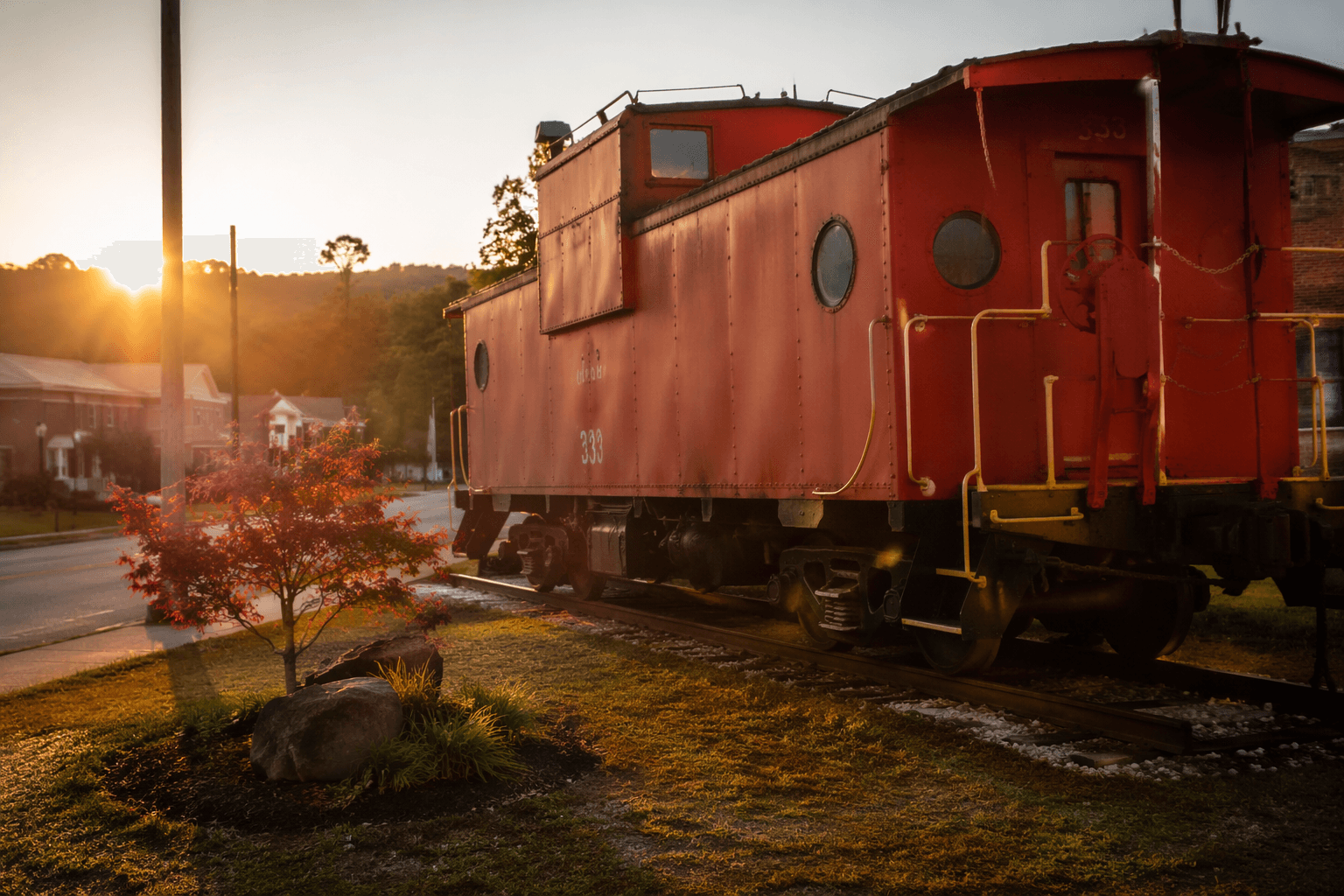
A Virginian Railway caboose numbered 333 still sits on Main Street along U.S. Route 52 in Kimball, where it gives McDowell County a rare, visible reminder of the rail network that once moved coal, workers, and freight through the Tug River Valley. Built in the late 1940s or early 1950s and assembled at the railroad’s back shops in Princeton, the car connects one small streetscape to a much larger industrial landscape that shaped southern West Virginia. The caboose matters now because it is easy to see, easy to identify, and tied to a town whose rail history is still written into its streets.
Where the caboose fits in Kimball
Kimball’s caboose stands out because it is not a generic display piece. Railroad photo archives identify it as VGN 333, a Virginian Railway caboose displayed in Kimball, and Explore McDowell places it on Main Street beside U.S. Route 52. That combination of a specific car number, a specific railroad, a specific shop location in Princeton, and a specific town gives the relic an unusually concrete local history.
The setting matters as much as the car itself. Main Street is still one of the clearest places to read Kimball’s old railroad geography, and the caboose works as a marker for a landscape where company-town development, rail facilities, and coal traffic once defined daily life. For residents and visitors moving through McDowell County, it is one of the few roadside objects that immediately explains why this town looks and feels the way it does.
The railroad behind number 333
The caboose comes from the Virginian Railway, founded in 1907 and built to compete with the Chesapeake & Ohio and Norfolk & Western in hauling coal from southern West Virginia. In 1905, the Virginian developed shops and yards in Princeton, a rail complex that later gained National Register of Historic Places recognition in 2003. That Princeton connection gives Kimball’s caboose a direct link to the railroad’s working backbone, not just its passenger image or trackside memory.
The Virginian merged with the Norfolk & Western Railroad in November 1959, ending its independent run but not its influence on the coalfields it served. The line helped open and support the Winding Gulf Coalfield, and its infrastructure left behind a network of rail sites that still anchor West Virginia history. A caboose built for that system and displayed in Kimball is a small survivor from a larger transportation world that once controlled how coal reached market.
Kimball as a company town
Kimball itself grew out of the railroad and coal economy that the caboose represents. The town was named for Frederick James Kimball, the Norfolk & Western Railway’s second president, and a historical marker record says it was laid out and developed by the Houston Coal Company. Kimball was incorporated in 1911, which places its formal civic life squarely inside the era when coal companies and railroads shaped town plans across McDowell County.
SAH Archipedia describes Kimball as a largely African American community that accommodated the railroad’s repair shops, and that history helps explain why a single railcar still carries so much meaning there. The town’s commercial area now follows a broad curve in U.S. 52, but its older identity was built around railroading, housing, and the labor that kept the system moving. The caboose does not sit apart from that story; it is part of the same built environment that once supported shops, yards, and coal service.
Coal heritage on a broader map
Kimball is also part of a wider public heritage landscape. The National Coal Heritage Area spans about 5,300 square miles in southern West Virginia, and Congress designated it in 1996 to preserve, protect, and interpret coal-mining heritage communities. The National Park Service says the area still reflects much of its original character through company towns, immigrant labor traditions, and the long dominance of coal in local life.
That larger framework is why a caboose in Kimball can carry civic weight beyond nostalgia. The West Virginia Coal Heritage route places Kimball on the National Coal Heritage scenic highway, and the Federal Highway Administration describes the Coal Heritage Trail as a National Scenic Byway that showcases coal company towns, tipples, railroad structures, and reclaimed mining lands. In a county with a 2020 population of 19,111 spread across roughly 533.5 square miles, a single preserved object can work as both landmark and invitation, especially when so much of the old industrial landscape has faded from everyday use.
Why the relic still matters
Kimball’s rail-and-coal story is not only about machinery and corporate names. The Kimball mining disaster on July 18, 1919, at the Carswell coal mine killed six miners, a reminder that the town’s industrial history was tied to labor, danger, and the human cost of extraction. A caboose on Main Street cannot tell that entire story by itself, but it can point people toward it.
That is why preserving the caboose matters to local identity and heritage tourism now. It gives McDowell County a physical object that links Princeton’s rail shops, the Virginian Railway’s coal-hauling network, Kimball’s company-town past, and the larger National Coal Heritage Area into one readable stop. In a place where rail traffic no longer defines the streets, the caboose keeps the county’s transportation and coal history visible in the public square.
This article was produced by Prism’s automated news system from verified source data, official records, and press releases, then run through automated quality and moderation checks before publishing. The system is built and supervised by the people who set the standards it runs under. Read our full AI policy.
Did this article answer your question?