Jack Caffrey Center revives historic Welch building for arts, events
Welch turned a former post office and car dealership into a 7,500-square-foot civic hub where residents can meet, learn, rent space, and gather downtown.

At 143 Wyoming Street, the Jack Caffrey Arts & Cultural Center gives McDowell County something rare: a downtown building that works as public space, rental space, and a place for everyday community life. In Welch, where usable gathering rooms are scarce, the center now hosts exhibitions, meetings, trainings, and events in a structure that was saved and repurposed instead of left idle.
A downtown building turned into shared infrastructure
The center opened in 2019 after a second-level renovation of about 7,500 square feet in downtown Welch. The building’s earlier lives tell the story of the county’s changing economy: it began as a post office, later became an automobile dealership, and then served as the Ashworth DeSoto Car Dealership and a NAPA Auto Parts store before its current use. That kind of reuse matters in a coalfield county seat, because it keeps a substantial building in circulation rather than treating it as a relic.
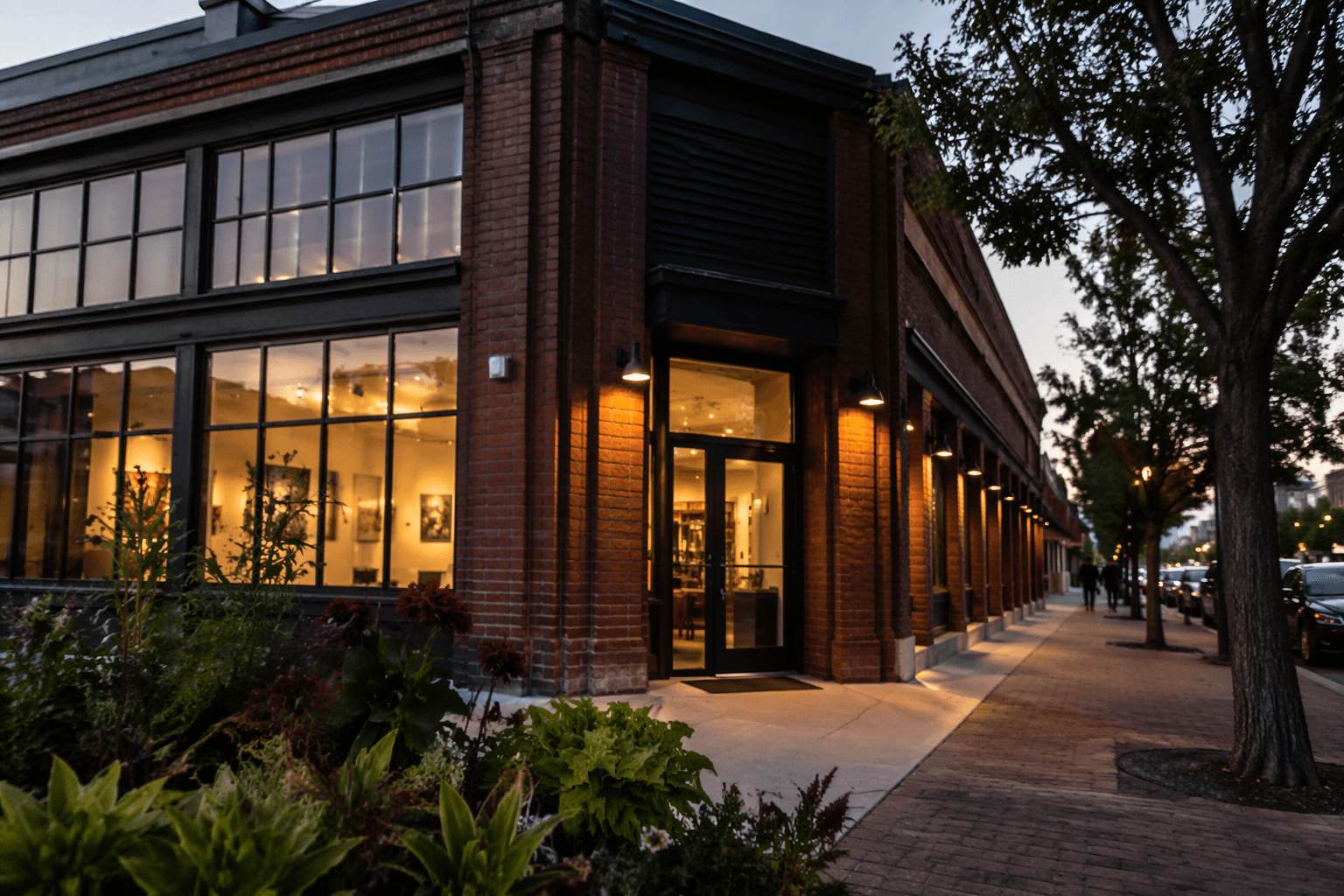
The renovation did more than clean up an old shell. The project preserved exposed brick masonry walls and large-span steel Pratt trusses, while adding polished concrete floors and new aluminum storefront glazing. A new roof membrane was installed, and an uncovered second exit stair was enclosed to improve occupant safety. The result is a building that still carries Welch’s commercial past but is equipped for present-day use.
That work also drew outside recognition. The West Virginia chapter of the American Institute of Architects gave The Thrasher Group an Honor Award for Excellence in Architecture for Interiors in 2019, a sign that the project was seen not only as preservation, but as a well-executed civic renovation.
What residents can use it for now
The Jack Caffrey Center is designed to do practical work for the county. The City of Welch says the center can host up to 280 people, or 150 people in seated table-and-chair use. It also offers the space, stage, tables, chairs, and kitchen facilities for rent, along with two single office spaces and a large event space. That flexibility makes it useful for more than performances or displays, because it can accommodate meetings, trainings, small business activity, and public gatherings in one address.
The city also uses the building as an exhibition venue, with several shows and events each year featuring local artisans and crafters. That gives local makers a visible place to show work in downtown Welch, while also giving residents a reason to come into town for something beyond errands or appointments. In a place where civic life often has to be assembled from limited resources, a single building that can handle art, business, and meetings carries outsized value.
The center has also hosted the Smithsonian traveling exhibit Crossroads, which focused on the demographic, educational, service-access, and economic changes many rural American towns face. That programming choice fits the building’s larger role: it is not only a display space, but a place where local life can be connected to wider questions facing communities like Welch.
Why the city sees it as more than an arts room
The City of Welch describes the center as a historically renovated structure that welcomes heritage, education, and business, with a mission to remember the past, reawaken heritage, and re-imagine the future through arts and education. That mission puts the building squarely in the realm of civic infrastructure. It is being used to help Welch turn history into a functioning public asset, not just to preserve a facade.
That approach fits the city’s broader framing of Welch as a coal-built county seat still trying to move forward. Downtown reuse becomes economic problem-solving when a building can attract events, support small meetings, and give local groups a place to assemble without needing to build something new from scratch. In a county where gathering space is limited, preservation becomes a tool for access.
The name on the building carries local weight
The center was made possible through the vision of Reba Honaker, Welch’s former mayor, and it was named for Jack Caffrey, one of Welch’s most respected and influential leaders. Caffrey, whose full name appears in obituary material as John Edward Caffrey, died on April 14, 2015. He was described as a prominent businessman and civic leader, and separate material identifies him as a former U.S. Steel engineer and former DEP secretary.
That background helps explain why the naming matters. The building is not simply commemorative, it is attached to a person whose career reflected both business and public service in the region. In a town where leadership has often meant holding together work, industry, and civic responsibility, the name gives the building a local identity that residents recognize.
How the center is already being used
The center’s newer role is visible in the kinds of events it now hosts. On Wednesday, August 13, 2025, the McDowell County Chamber of Commerce scheduled a free Grants 101 workshop there, led by the West Virginia Grant Resource Centers. That kind of event shows how the building has expanded beyond arts programming into practical capacity-building for local organizations and businesses.
Local event listings and reporting also point to the center being used for business roundtables and other community meetings. That is exactly the kind of use a county seat needs from a central building: a place where people can learn about funding, meet face-to-face, and work through local issues without leaving Welch.
Why the building fits McDowell County’s needs
McDowell County was established on February 20, 1858, and Welch has long carried the weight of being the county seat in a region shaped by coal, changing industries, and population loss. The Jack Caffrey Arts & Cultural Center answers that reality with a building that is both symbolic and useful. It keeps a historic structure in service, gives residents a place to gather, and offers a flexible downtown site for arts, business, and civic life.
What Welch gained is not just a restored building. It gained a working center for public life, one that can host a grant workshop one week, an exhibit the next, and a community meeting when the county needs a room. In a place where every usable space matters, that is preservation doing the work of policy.
This article was produced by Prism’s automated news system from verified source data, official records, and press releases, then run through automated quality and moderation checks before publishing. The system is built and supervised by the people who set the standards it runs under. Read our full AI policy.
Did this article answer your question?