Joe Coal memorial honors McDowell County miners and coal heritage
Joe Coal stands over Bradshaw as a living record of miners, mine deaths, and family memory, tying McDowell County's past to its present strain.
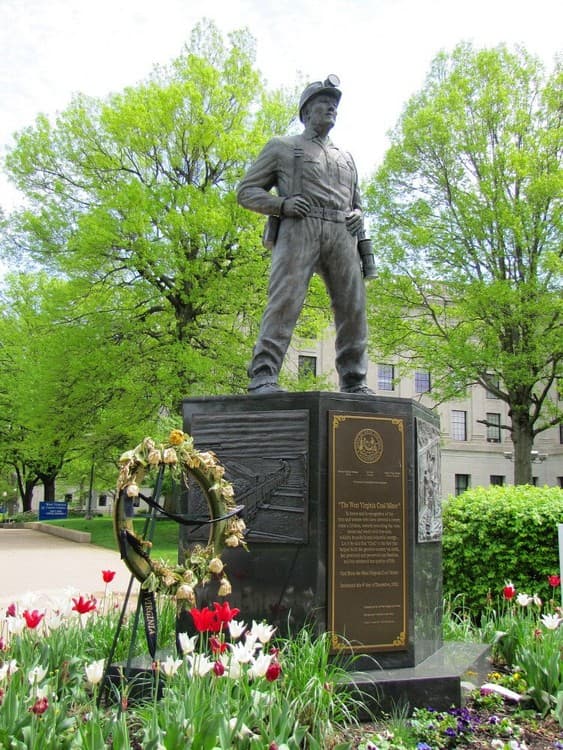
Joe Coal rises along WV Route 83 in Bradshaw as more than a roadside figure. The McDowell County Coal Miner’s Memorial keeps the county’s labor history in plain view, naming the miners whose work built local communities and powered industries far beyond the mountains. In a county still wrestling with poverty, population loss, and the health effects of coal, the monument remains a public reminder that the past is not buried, it is still shaping daily life.
A memorial built by families, not officials
The memorial grew out of local determination. In 1992, the Sandy River District Action Committee organized a grassroots effort to create a monument honoring McDowell County miners, and families from across the county helped make it real. That origin matters because the site was not imposed from above; it was assembled by people who wanted a permanent place to remember the men who worked underground, often at great risk, to support their families and the wider economy.
Locals know the figure as Joe Coal, and he stands over granite slabs engraved with miners’ names. The memorial page says names continue to be added by families each year, which turns the site into a living record rather than a finished sculpture. For descendants, that ongoing engraving is not cosmetic. It is a way of keeping a family name in public view when so many coal jobs, and the towns built around them, have faded.
Why Bradshaw gives the memorial its force
Bradshaw is a small place with a large history. The town had a 2020 census population of 203 and was incorporated in December 1979, but its coal story reaches back much further. Local historical sources describe Bradshaw as a coal company town built by Bradshaw Coal Co. in 1919, sold to Southern Coal Corporation in 1942, with the mine closing in 1950.
That history gives Joe Coal a direct link to a specific company-town era rather than an abstract mining past. The memorial stands in the same landscape where company ownership, camp life, and mine work once shaped housing, wages, and family routines. When residents pass the site today, they are seeing not just a tribute to miners, but a marker of the industrial system that built the town itself.
Coal built the county, and the costs were real
McDowell County’s own numbers explain why the memorial still carries so much weight. The county’s estimated population fell to 16,878 in July 2025, down from 19,111 at the 2020 census, and the estimated poverty rate was 38.4% in 2024. In a county where so many families have lived through the rise and decline of coal, preserving industrial memory is not nostalgia. It is part of understanding why the county looks the way it does now.
The memorial also refuses to romanticize the work. Its history acknowledges deaths from explosions and roof falls, along with long-term illnesses such as black lung and silicosis. That sober accounting matters in McDowell County, where the cost of coal has been written into family memory for generations. A major example is the Pond Creek No. 1 mine disaster in Bartley, where an explosion on January 10, 1940, killed 91 miners. In a place shaped by so many losses, a memorial that names workers instead of erasing them becomes a form of public justice.
The county’s coal record runs deep enough to be part of state memory, too. The West Virginia Office of Miners’ Health Safety and Training says historical coal-production records have been compiled since 1883, underscoring how long coal has anchored the state’s economy and its recordkeeping. Joe Coal sits within that longer chronology, reminding visitors that McDowell County helped power more than local households. The memorial page ties coal to the steel mills that produced World War II war materials, showing that this labor fed national industry and global conflict as well as Appalachian paychecks.
The health legacy is still active
Coal’s history is not only industrial. It is medical. The CDC National Institute for Occupational Safety and Health says coal mine dust causes black lung disease, also known as coal workers’ pneumoconiosis, and that black lung can be an underlying or contributing cause of death for coal miners. That makes the memorial’s message current, not archival.
NIOSH also says the Coal Workers’ Health Surveillance Program provides free black lung screenings to coal miners. In 2026, annual screenings were announced in communities throughout West Virginia from March through May. For McDowell County families who have lived with coughs, breathing problems, and the fear of occupational illness, that connection between memory and medicine is impossible to ignore. Joe Coal stands in the open air, but the disease he represents is often carried long after the mine shifts end.
A countywide marker of identity, loss, and continuity
The memorial also fits into a broader pattern of coal remembrance in McDowell County, alongside other heritage sites and mine-disaster memorials, including Mack Dowell in Kimball. That network of markers shows how the county has chosen to remember its industrial past in public spaces rather than leave it only in private family stories. For nearby residents, former miners, and descendants, the site preserves a shared language of work, sacrifice, and survival.
Explore McDowell describes Joe Coal as a steadfast presence watching over the county’s coal heritage, and that description lands because it speaks to more than history. It reflects an identity still shaped by the labor that once kept the lights on, the losses that followed, and the economic changes that have left McDowell County smaller and poorer than it was a generation ago. Keeping the memorial visible means keeping that full story visible too, including the pride, the pain, and the price of the coal era that built the county and still defines how many people here remember home.
This article was produced by Prism’s automated news system from verified source data, official records, and press releases, then run through automated quality and moderation checks before publishing. The system is built and supervised by the people who set the standards it runs under. Read our full AI policy.
Did this article answer your question?