John J. Lincoln House in Elkhorn shows coal-era life in McDowell County
The 1899 John J. Lincoln House shows how coal money shaped Elkhorn, from elite domestic labor to town power. Its compound still maps who ruled McDowell County.
Elkhorn’s John J. Lincoln House is not just a handsome old home on a quiet stretch of McDowell County. It is a surviving blueprint of coal-era power, built in 1899 at the western end of the community where the valley opens near Elkhorn Creek and where the county’s coal economy once controlled nearly every part of daily life.
What remains there today tells a story bigger than architecture. The main house, its schoolhouse, its dependency, and its service buildings show how one coal family lived above the camp it helped run, and how domestic space, labor, and status were arranged in a company-town setting that shaped Elkhorn itself.
A coal operator’s house, not just a landmark
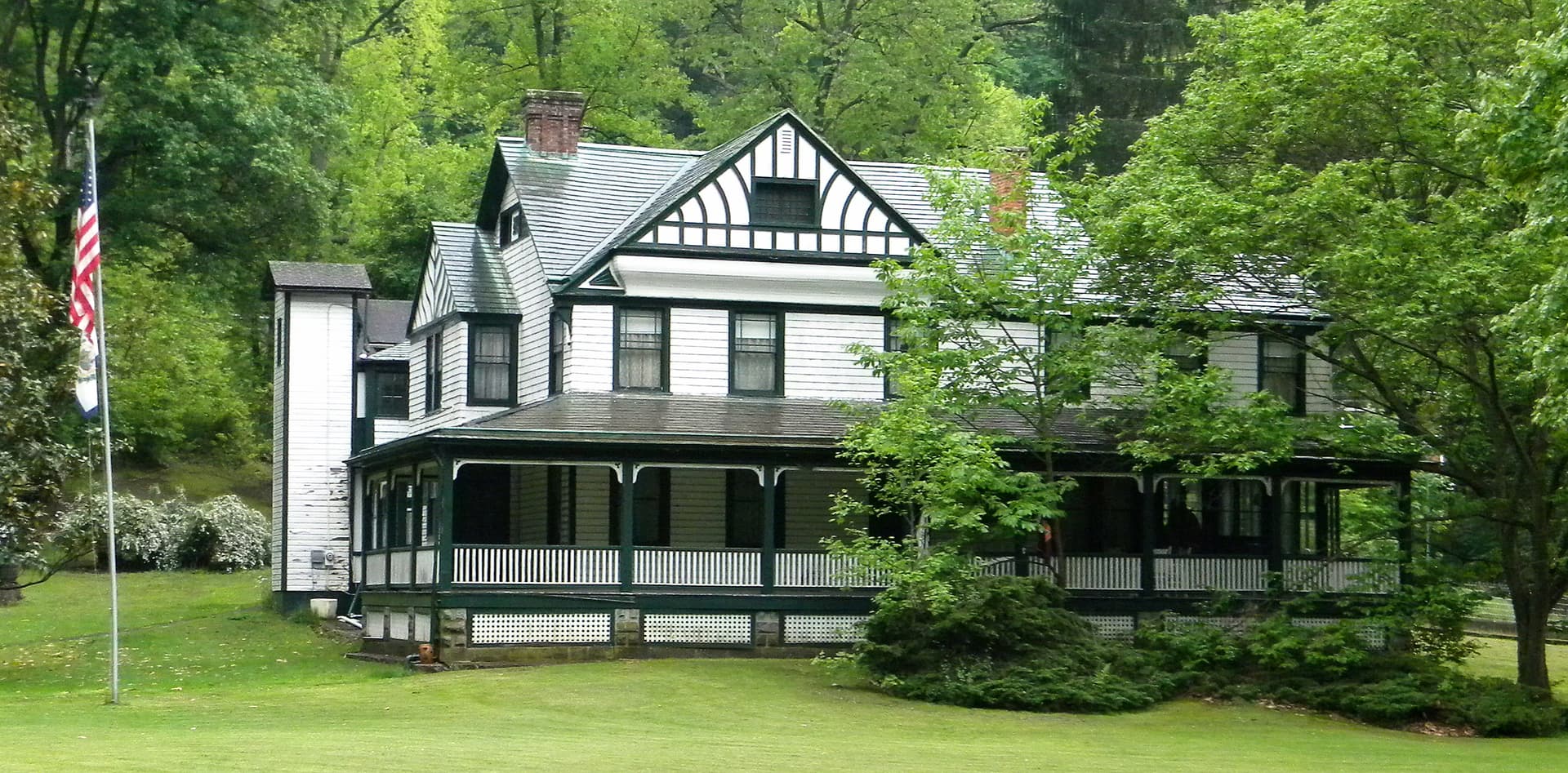
The house stands out immediately for its form. It is a rambling frame structure with a multigabled roofline, an expansive one-story porch, half-timbering on many of the gables, and an original copper roof that still gives the place a distinct profile. The mix of Queen Anne and Shingle Style influences places it in the late-19th-century moment when prosperous industrial families used architecture to signal wealth, taste, and permanence.
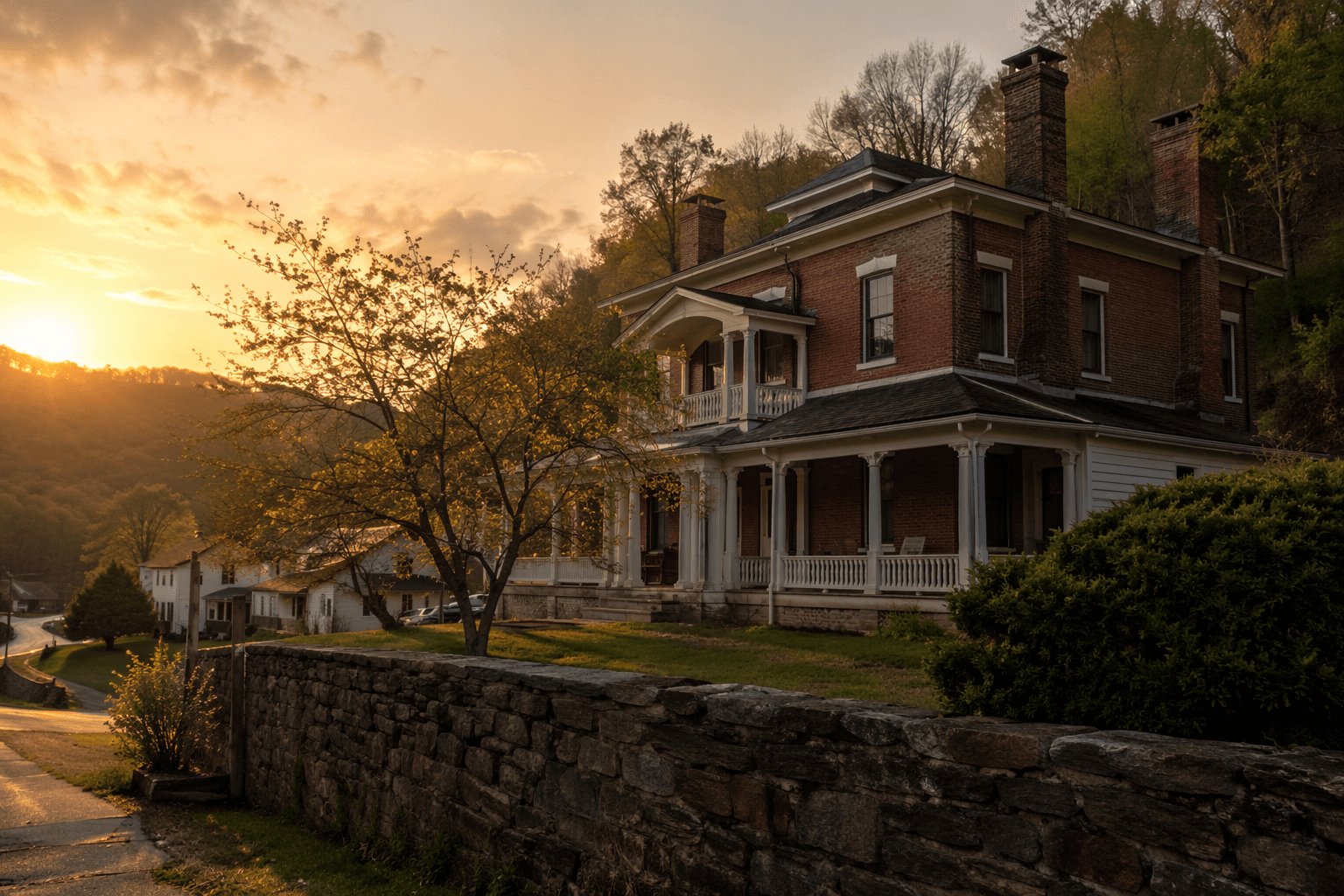
That visual ambition matters in McDowell County because Elkhorn was not an isolated country estate setting. SAH Archipedia places the house in one of the county’s earliest coal camps, established in 1888 when the railroad reached the narrow valley of Elkhorn Creek. The house sits in a spacious yard on the western end of what was once a bustling community, and the site’s scale reflects the reach of the coal interests that operated there.
The compound tells the fuller story
The main residence is only part of the record. The property also includes a small schoolhouse in the side yard and a two-story frame dependency in the rear yard that housed the family’s maid and chauffeur, details that turn the site into a compact lesson in how coal-era elites organized home life. The National Register nomination adds a contributing two-story I-house and a hipped-roof, clapboard-sided dairy house, reinforcing that this was a working domestic compound, not a lone showpiece.
Those structures help explain power in concrete terms. The Lincoln House shows who had private rooms, who had a separate schoolhouse, who lived in service quarters, and how a coal operator’s household extended beyond the family itself. In a town built around extraction, the arrangement of buildings becomes evidence of social rank, labor hierarchy, and the everyday reach of industrial wealth.
John J. Lincoln’s influence reached beyond the front porch
John J. Lincoln was the man behind that reach. He arrived from Pennsylvania in 1893 and became a leading figure in McDowell County’s growing coal industry. An Eastern Regional Coal Archives finding aid identifies him as a coal operator at the Crozer Coal and Land Company in Elkhorn, and other local history material says he served as chief engineer and superintendent for the Crozer Land Association before becoming vice president and general manager of the coal company.
His influence was not confined to the mine office. One local source says Lincoln allowed orchestra concerts on the house lawn to uplift the Elkhorn community, a detail that reveals how coal-era bosses sometimes used cultural patronage to reinforce their standing as local benefactors. Biographical records identify him as John Joseph Lincoln, born near Rising Sun, Pennsylvania, on October 11, 1865, and dying in Elkhorn on January 28, 1948.
That concentration of roles is part of what made him a county power broker. Additional records list him as director of the McDowell County National Bank, president of the Norfolk Realty & Land Companies, chairman of the Pocahontas Operators’ Association executive committee, president of the McDowell County Court, and president of the Board of Education of the Elkhorn district. In one life, the house connects coal, finance, public authority, land development, and education.
Elkhorn grew with the railroad and the mines
The Lincoln House makes more sense when set against the boom that built Elkhorn. McDowell County itself was formed in 1858, but its modern growth came much later. The county’s population rose from 7,300 in 1890 to 18,747 in 1900 and 47,856 in 1910, a surge that tracked the spread of coal development across the southern West Virginia coalfields.
Elkhorn’s own timeline mirrors that rise. The post office opened in 1888, the same year the railroad reached the valley, and Houston Coal and Coke operated there from 1888 until 1930, with beehive coke ovens continuing until 1931. Crozer Coal and Coke later upgraded the Elkhorn colliery in 1926 with a 3,000-ton-per-day tipple, and its last coal production in McDowell County came in 1954.
Those dates matter because they show that the Lincoln House did not sit apart from the industrial system around it. It was part of the same growth cycle that brought tracks, post office service, coke ovens, and major extraction infrastructure into a narrow valley that was transformed in a generation.
Why the house still matters now
The John J. Lincoln House was listed on the National Register of Historic Places on July 16, 1992, and the West Virginia State Historic Preservation Office includes it among McDowell County’s registered historic places. The nomination says the property is significant under Criterion A for coal mining history, Criterion B for its association with Lincoln, and Criterion C for architecture, which gives the site value on more than one level.
That recognition also raises a practical local question: what gets preserved, what gets interpreted, and what is left to fade. McDowell County already has a substantial concentration of listed coal-related places, including company stores, a courthouse, and the Welch Commercial Historic District, but the Lincoln House adds something specific to that record: a surviving domestic compound that shows how power operated inside the coal camp as well as over it.
For Elkhorn and for McDowell County, that is the real value of the house. It is not simply a historic residence with a distinctive roofline. It is a place where the county’s industrial wealth, political influence, and social hierarchy can still be read in wood, porches, outbuildings, and the ground they occupy.
This article was produced by Prism’s automated news system from verified source data, official records, and press releases, then run through automated quality and moderation checks before publishing. The system is built and supervised by the people who set the standards it runs under. Read our full AI policy.
Did this article answer your question?