McDowell County farm story revisits coal, Black power, and change
T&T Organic Farms shows how land ownership, grant funding, and Black civic history still shape who can farm and profit in McDowell County.

McDowell County’s farm story is really a land story. T&T Organic Farms sits on Berwind Land Company property, and that single fact cuts to the heart of who gets to own land, work it, and keep building on it in a county shaped by coal, collapse, and repeated reinvention. The stakes are not abstract: the farm lost $1.1 million in USDA grant funding earlier this spring, even as its leaders kept moving by leaning on what they already had.
A county built by extraction, then left to remake itself
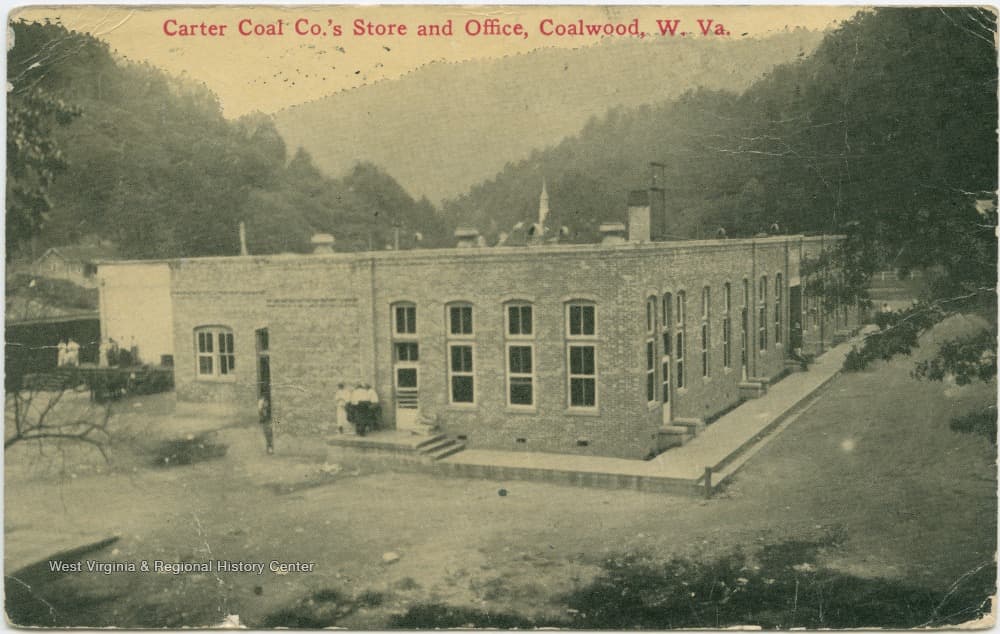
McDowell County was created by the Virginia General Assembly on February 20, 1858, and became part of West Virginia on June 20, 1863. By the coal-boom years, it had become the leading coal-producing county in the nation, a place where extraction reordered the landscape and the economy around company towns rather than farms. That shift was dramatic enough to change the county’s population trajectory, which reached 68,571 in 1920 and later peaked at 98,887 in 1950.
The boom did not last cleanly. By 1933, thirty of the county’s ninety coal mines had closed, 5,000 miners were unemployed, and another 14,000 had only sporadic work. Those numbers explain why land use in McDowell County has always been more than a question of property lines. When mines close and payrolls disappear, the people left behind are not just losing jobs, they are losing the institutions that helped them stay rooted in place.
Black power in Keystone was part of the county’s economic base
McDowell County’s coal era also included Black ownership, wages, voting power, and civic leadership. Keystone was central to that history. The West Virginia Encyclopedia describes Keystone as a racially diverse community and the center of McDowell County’s “Free State” community of color, and it notes that the state’s first Black mayor lived there. Minnie Buckingham Harper, the nation’s first Black woman legislator, also lived in Keystone, a reminder that political power in the county once grew from neighborhoods, churches, newspapers, and workplaces that gave Black residents a stake in public life.
The McDowell Times helps complete that picture. Founded in Keystone in 1904, the paper was a leading African-American newspaper in West Virginia, edited by M.T. Whittico. According to the Library of Congress, it offers a window into laboring African-American communities and Republican politics in the coalfields. That matters now because McDowell County’s redevelopment conversation cannot be separated from the older one about who had access to land, capital, and a public voice in the first place.
Why T&T Organic Farms matters far beyond one field
T&T Organic Farms, owned and operated by Jason Tartt, is part of that longer arc. The farm says Tartt is its owner, a co-founder of EDGE, or Economic Development Greater East, and the founder of the American Youth Agripreneur Association, known as AYAA. Together, T&T Organic Farms and EDGE operate the DRT Farm, a 350-acre demonstration, research, and training site on Berwind Land Company property. In a county where so much land was organized around coal companies, the choice of site is itself a statement about what post-coal redevelopment can look like.
Tartt’s work is also tied to family memory and local continuity. He has described his great-grandfather as growing vegetables along the same hillsides, which turns the farm into more than a business plan. It becomes evidence that agricultural knowledge did not arrive in McDowell County as an outside trend. It was already there, waiting for a way back in after decades when coal dominated both land and imagination.
What changed when the funding changed
The most immediate pressure on that work came when T&T Organic Farms lost $1.1 million in USDA grant funding this spring after the federal government cut what the Trump administration labeled DEI spending. That loss matters because farms like this often sit at the intersection of three fragile systems: land access, public funding, and training. If one of those pieces falls away, the whole model becomes harder to sustain.
Even so, the operation kept going by focusing on what it already had rather than what had been taken away. That response says a great deal about Appalachian economic resilience, but it also points to a harder truth: survival is not the same as security. A farm can be innovative, locally rooted, and culturally significant and still remain vulnerable when its support flows through federal grant programs that can change with political winds.
What to watch when land changes hands in McDowell County
For McDowell County, the practical question is no longer whether reinvention is necessary. It is which version of reinvention gets backed, and who owns the ground under it. When a farm sits on legacy industrial land, when public grants underwrite workforce training, and when Black agricultural memory is being turned into present-day enterprise, the real power lies in the rules that decide access.
- Who controls the land, and whether it stays in productive use
- Whether farms and training projects can reach USDA support and similar programs
- How workforce pipelines like AYAA connect young people to food production and entrepreneurship
- Whether redevelopment treats Black history as lived economic history, not just heritage language
That is why T&T Organic Farms belongs in the larger McDowell County conversation. The farm is not only growing food and training workers. It is testing whether land, memory, and local ownership can still be assembled into durable economic power in a county where coal once made the rules and then left the bill behind.
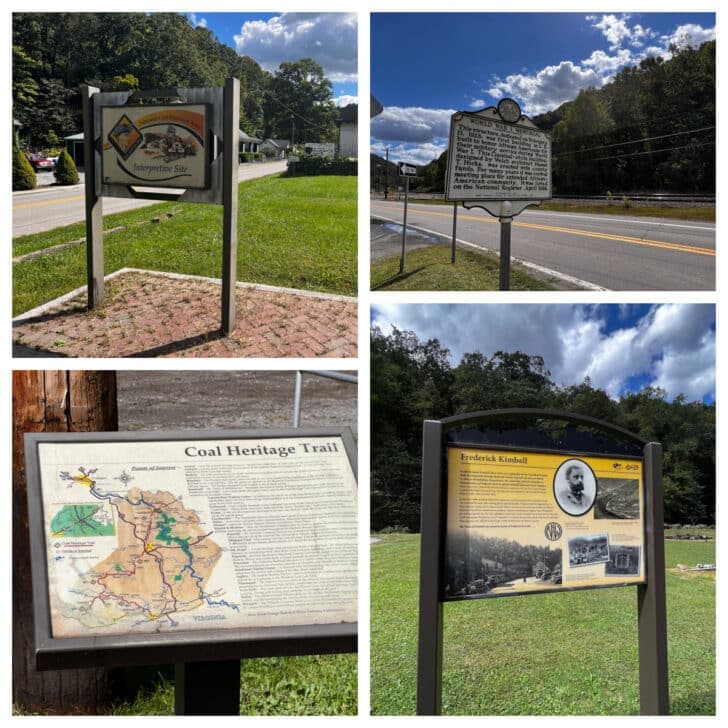
As McDowell County remains part of West Virginia’s National Coal Heritage Trail, its future will keep circling back to the same question: who gets to turn land into livelihood, and who gets locked out when the next economy takes shape.
This article was produced by Prism’s automated news system from verified source data, official records, and press releases, then run through automated quality and moderation checks before publishing. The system is built and supervised by the people who set the standards it runs under. Read our full AI policy.
Did this article answer your question?