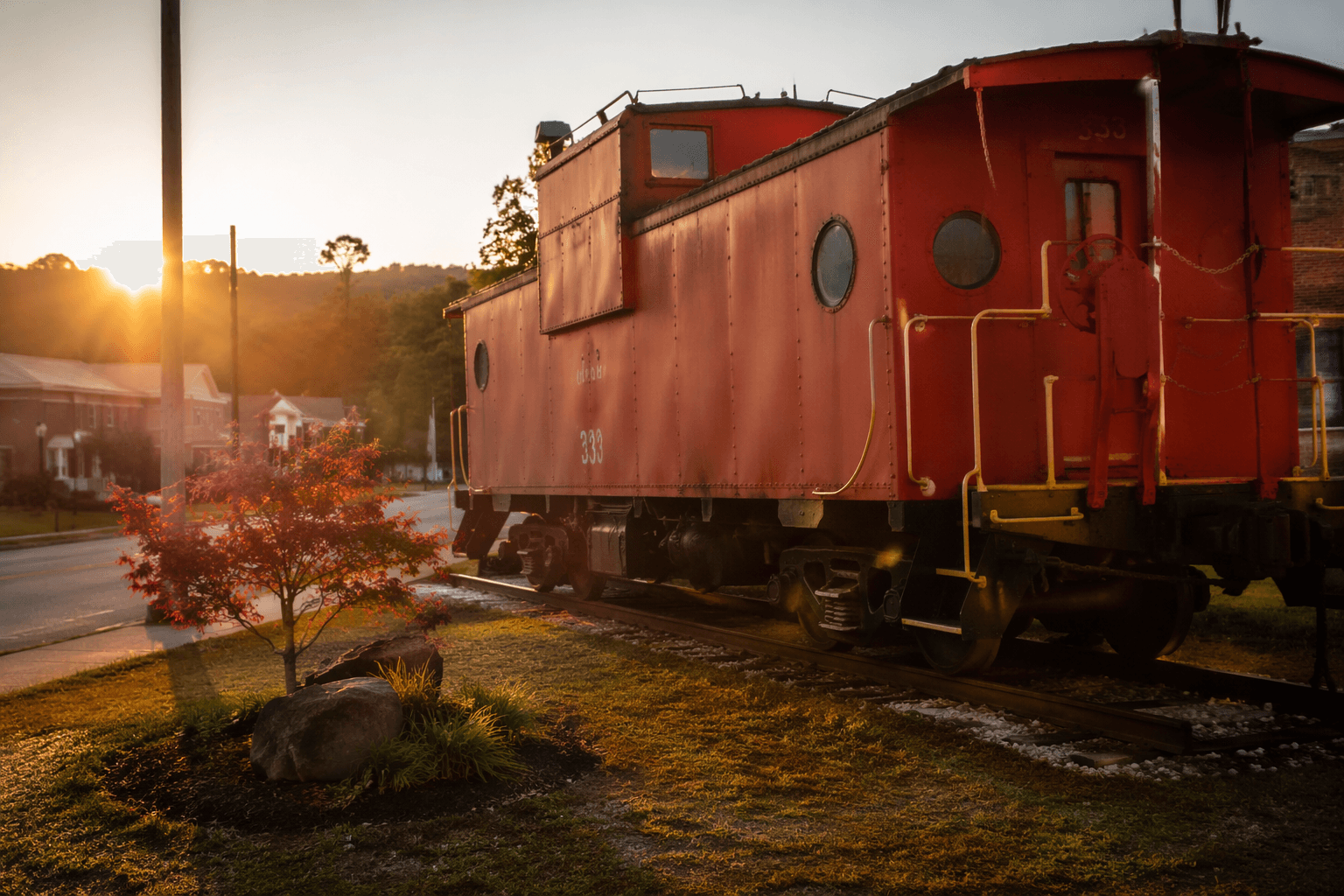
McDowell County park turned flood damage into downtown green space
Welch turned flood-damaged downtown land into a park built for the next high water. Martha H. Moore Riverfront Park now stands as a local model of recovery, memory, and practical resilience.
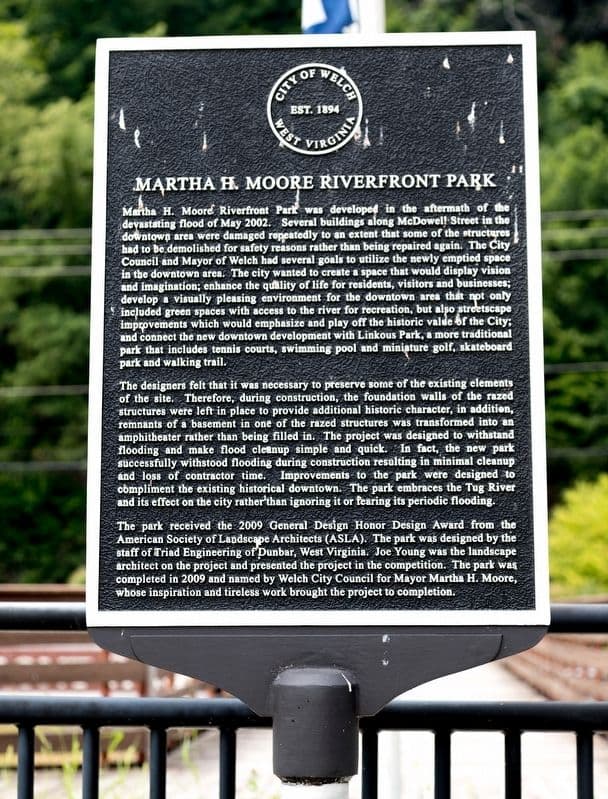
Welch did not rebuild its riverfront by erasing the scars left by flooding. It kept the foundation walls, turned a remnant basement into an amphitheater, and opened Martha H. Moore Riverfront Park as a downtown asset designed to take on water without losing its use. In a county where flood damage has repeatedly reshaped public decisions, the park is one of McDowell County’s clearest examples of recovery that became infrastructure.
Flood damage forced Welch to think differently
McDowell County was hit by two major floods within ten months, and the damage reached deep into the county seat. A July 8, 2001 flood followed more than eight inches of rain, and a second severe thunderstorm on May 2, 2002 dropped over five inches of rain. The May 2002 flooding affected Welch, Kimball, Landgraff, Eckman, Keystone, and Norfolk, leaving repeated damage along McDowell Street and pushing city leaders toward demolition of some structures for safety.
That clearing could have become another vacant lot in a struggling downtown. Instead, Welch used the opening to rework the riverfront around the Tug River and treat flood exposure as a design problem, not a reason to abandon the site. The result was a public space intended to improve daily life while still respecting the historic core of the city.
What the park was designed to do
Martha H. Moore Riverfront Park sits in the center of downtown Welch, with a view of the Tug River. The city describes it as a downtown green space with a river view, and Visit McDowell County says it uses the remnants of past structures for recreation. That combination matters because the park was not built as decorative filler. It was designed to connect with Linkous Park, Welch’s more traditional recreation area, while adding green space and river access in the heart of town.
The design choices are what make the park stand out as a resilience project. The historical marker says the foundation walls of razed buildings were kept in place to preserve the site’s historic character. The basement remnant was turned into an amphitheater rather than filled in, which kept the shape of the old downtown footprint visible inside the new public space. The same marker says the park was intentionally designed to withstand flooding and to make cleanup faster and easier when water came through.
That plan was not theoretical. The marker says the park held up during flooding while still under construction, with minimal cleanup and contractor downtime. In a town where flood risk is a recurring fact of life, that performance gave the project proof beyond the drawing board.
Why the park matters beyond Welch
The Welch project fits the way FEMA advises communities to think about flood maps and floodplain planning: understand risk, then use that knowledge to reduce damage and guide future development. Welch’s answer was not to wall off the river and hope for the best. It was to build a space that could absorb periodic flooding, recover quickly, and still serve residents the rest of the time.

That approach is especially relevant in McDowell County because the Tug Fork and its tributaries remain live hazards. In February 2025, the Tug Fork outside Welch crested at just over 22 feet during a flood event, tying a record and underscoring that the river’s danger is not a matter of history. For a city with 1,715 residents, according to the city of Welch, decisions about downtown land use carry real weight: a small tract of land can either sit empty after disaster or become a civic asset that works with the landscape.
The park’s recognition in 2009 also showed that flood-conscious design could be judged on more than local necessity. The American Society of Landscape Architects gave the project a General Design Honor award, placing a small Appalachian county seat into the same professional conversation as larger and more heavily funded landscape projects. ASLA’s awards program identifies General Design as one of its core categories, which makes that honor a notable validation of the park’s planning and execution.
Martha H. Moore’s public imprint on Welch
The park also carries the name of one of Welch’s most consequential municipal leaders. Martha H. Moore was born in Welch, began city service as a city clerk, moved onto City Council in 1984, and was elected mayor in 1986 as the first woman to hold that office. Welch City Council later renamed Tug Street as Martha H. Moore Parkway, putting her name into the city’s street grid as well as its civic memory.
Moore’s record stretches far beyond the riverfront. She was recognized as West Virginia Mayor of the Year in 1990 by the West Virginia Municipal League. A separate marker says she served seven terms as mayor, helped make Welch’s modern sewer system fully operational in 1998, and helped annex land for Indian Ridge Industrial Park and support infrastructure for FCI McDowell. Those details matter because they show the park as one piece of a longer municipal rebuild that included utilities, economic development, and public works.
Her role also helps explain why the riverfront project carries more than aesthetic value. Welch did not arrive at this park through a routine beautification effort. It came out of an era when the city was repairing basic systems, trying to stabilize its finances, and deciding how to use damaged land in a way that would not repeat old vulnerabilities. The park sits inside that larger story of civic management, where flood recovery, sewer modernization, industrial recruitment, and downtown land use all intersected.
What other McDowell County communities can take from it
Martha H. Moore Riverfront Park shows that reused flood-damaged land does not have to become abandoned land. In a county facing blight, repeated flooding, and redevelopment decisions with long-term consequences, the Welch model offers a practical standard: keep what gives the site memory, build for recovery, and make public value the main use of the land.
The lesson is not that every damaged parcel should become a park. It is that public investment works best when it is matched to local risk and local geography. Welch kept the river in view, left the historic footprint visible, and accepted that floodwater would remain part of the place’s future. That is why the park endures as both a civic amenity and a record of how a small county seat can turn disaster recovery into a lasting public asset.
This article was produced by Prism’s automated news system from verified source data, official records, and press releases, then run through automated quality and moderation checks before publishing. The system is built and supervised by the people who set the standards it runs under. Read our full AI policy.
Did this article answer your question?