Panther State Forest offers year-round camping, group recreation in McDowell County
Panther State Forest gives McDowell County year-round camping, group recreation and trout fishing. Its value depends on usable access, water, trails and day-use facilities.
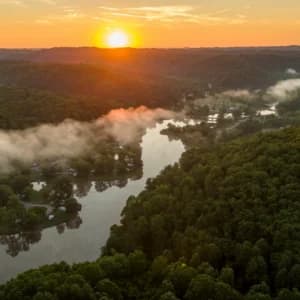
Panther State Forest gives McDowell County a year-round place to camp, fish, hike and gather, with six improved rustic campsites, a 60-person group camp and trail access from Panther Creek to the fire tower. The forest sits near Iaeger on the West Virginia-Kentucky border and works as one of the county’s most practical public outdoor assets when its roads, water access and trail guidance stay in order.
A forest built for all-season use
The campground stays open year-round, weather permitting, which gives Panther a use pattern that stretches well beyond summer weekends. The official park page places the forest at 11,389 acres, and the state identifies it as West Virginia’s southernmost state forest. That combination of size and location makes it more than a scenic stop: it is a working recreation site that can serve McDowell County residents, day visitors and overnight campers in every season.
The forest was established in 1940 to provide public recreational facilities in the southern coalfields. That local origin matters in McDowell County, where access to public land has always been tied to geography, transportation and the availability of basic amenities. Panther was not created as a decorative preserve; it was built to give people a place to use.
Camping along Panther Creek
The campground’s six sites sit along Panther Creek in an improved rustic setting. Each site includes electric hookups, fireplaces and picnic tables, which makes the campground usable for families and small groups that want more than primitive tent space. Water access is at the park office, about 2.5 miles away, so anyone staying overnight needs to plan around that distance rather than assume water is at the campsite itself.
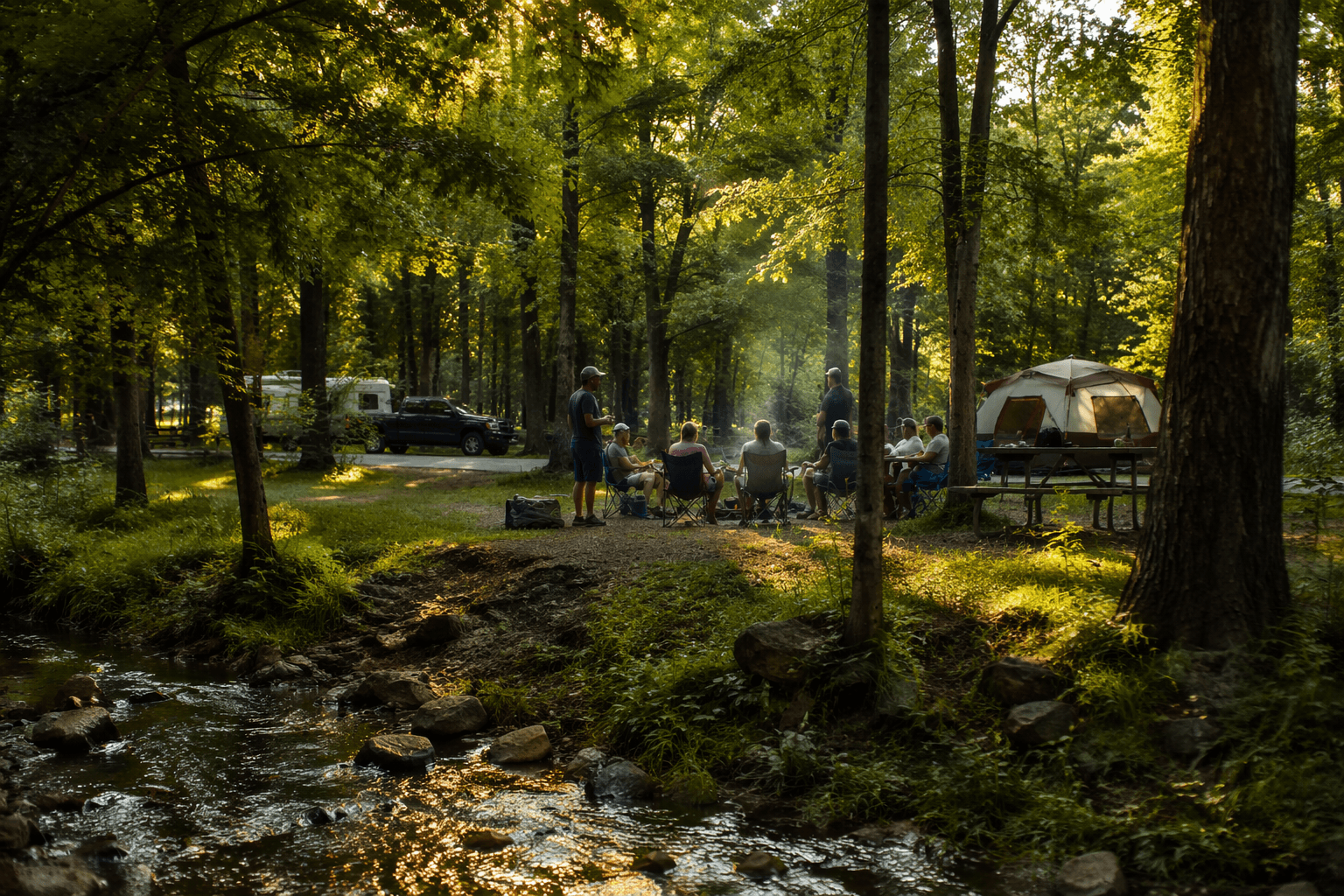
That setup gives the forest a very specific role in county recreation. It can support short camping trips, informal family getaways and visitors passing through the southern part of the county, but it also depends on basic upkeep. Electric service, fire rings, tables, access routes and the trip to water are the details that determine whether the campground feels ready or inconvenient.
Group camp space for larger gatherings
Panther’s group camp extends the forest’s use far beyond individual campsites. The area includes a 60-person barracks-style house, a main building with a modern kitchen and fireplace, a large open area for meetings and banquets, a campfire ring and court sports. The group camp area also includes a volleyball court, a basketball court, hiking trail access to the fire tower and swimming pool, and an open field for recreation.
Those features make the site usable for family reunions, church retreats, club outings and other organized gatherings that need a roof, a kitchen and outdoor space in the same place. The practical advantage is simple: a group can sleep, cook, meet and play without leaving the forest. For McDowell County, that kind of facility supports both community use and visitor traffic in a way a trailhead alone cannot.
Swimming, fishing and trail access
Panther also supports the classic mix of swimming, fishing, hiking and hunting that defines much of outdoor use in the county. In summer, visitors can use the swimming pool and wading pool, and picnic shelters are available for rent. That gives the forest a day-use profile as well as an overnight one, which matters for local families looking for a place to spend part of a day without committing to a long trip.

Fishing is centered on Panther Creek, which is stocked seasonally with trout, including a four-mile stretch highlighted on the park’s activities page. Hikers have access to miles of connecting trails and unimproved roadways, but the park specifically advises visitors to pick up a trail guide before heading out. That matters in a forest where access is broad but not always obvious, especially for first-time visitors or anyone unfamiliar with the road and trail network.
The trail map identifies a fire tower at about 2,100 feet in elevation, and Twin Rocks Trail is marked as the easiest trail in the forest. At 0.75 miles one way, it starts behind the group camp and gives casual hikers a clear entry point into the forest without requiring a full-day trek. For a county that relies on accessible recreation, that kind of short, identifiable trail is as important as the longer routes.
Hunting is allowed in designated areas with the proper West Virginia license, and the park lists deer, turkey, squirrel, bear, raccoon and grouse among the game species. That puts Panther into the regular hunting calendar as well as the camping calendar, which helps explain why the forest remains relevant through more than one season.
Why Panther’s history still matters
Panther’s name comes from Panther Creek, which the state encyclopedia says was reportedly named after a pioneer who killed a panther along its banks. The creek is described as a tributary of the Tug Fork, which ties the forest to the broader geography of the Tug Fork valley rather than to a stand-alone park identity.

The forest also has a strong community-history story. Welch Daily News led a “Pennies for Panther” campaign that raised more than $9,000, helping push the project forward in the years before it opened. That fundraising effort is part of the reason Panther feels rooted in McDowell County rather than imposed from outside it.
The state encyclopedia says Panther is counted both as a state forest and a wildlife management area, which adds to its role as shared public land. That dual identity helps explain why it serves a range of users, from campers and hikers to hunters and day visitors moving through the southern coalfields.
What officials must keep working
Panther’s value depends on maintenance that people can actually see and use. Water access at the park office, trail guidance, campground hookups, picnic shelters, swimming facilities and the road and trail network all shape whether the forest functions as a reliable county asset or just a name on a map. When those pieces are working, Panther becomes one of McDowell County’s few public spaces that can handle family trips, group events and outdoor recreation across the calendar.
West Virginia tourism officials describe visitor spending as a source of jobs, tax revenue and local economic activity, which makes Panther part of a larger county question as well: whether public land is being kept open, usable and clearly signed for the people who live nearby and the visitors who come through. In McDowell County, Panther State Forest succeeds when access is real, not theoretical.
This article was produced by Prism’s automated news system from verified source data, official records, and press releases, then run through automated quality and moderation checks before publishing. The system is built and supervised by the people who set the standards it runs under. Read our full AI policy.
Did this article answer your question?