Welch Merci Boxcar links World War II gratitude to local preservation
Welch’s Merci Boxcar ties McDowell County to France’s postwar gratitude, and its future now depends on caring for the car, the artifacts and the oak-tree links around it.

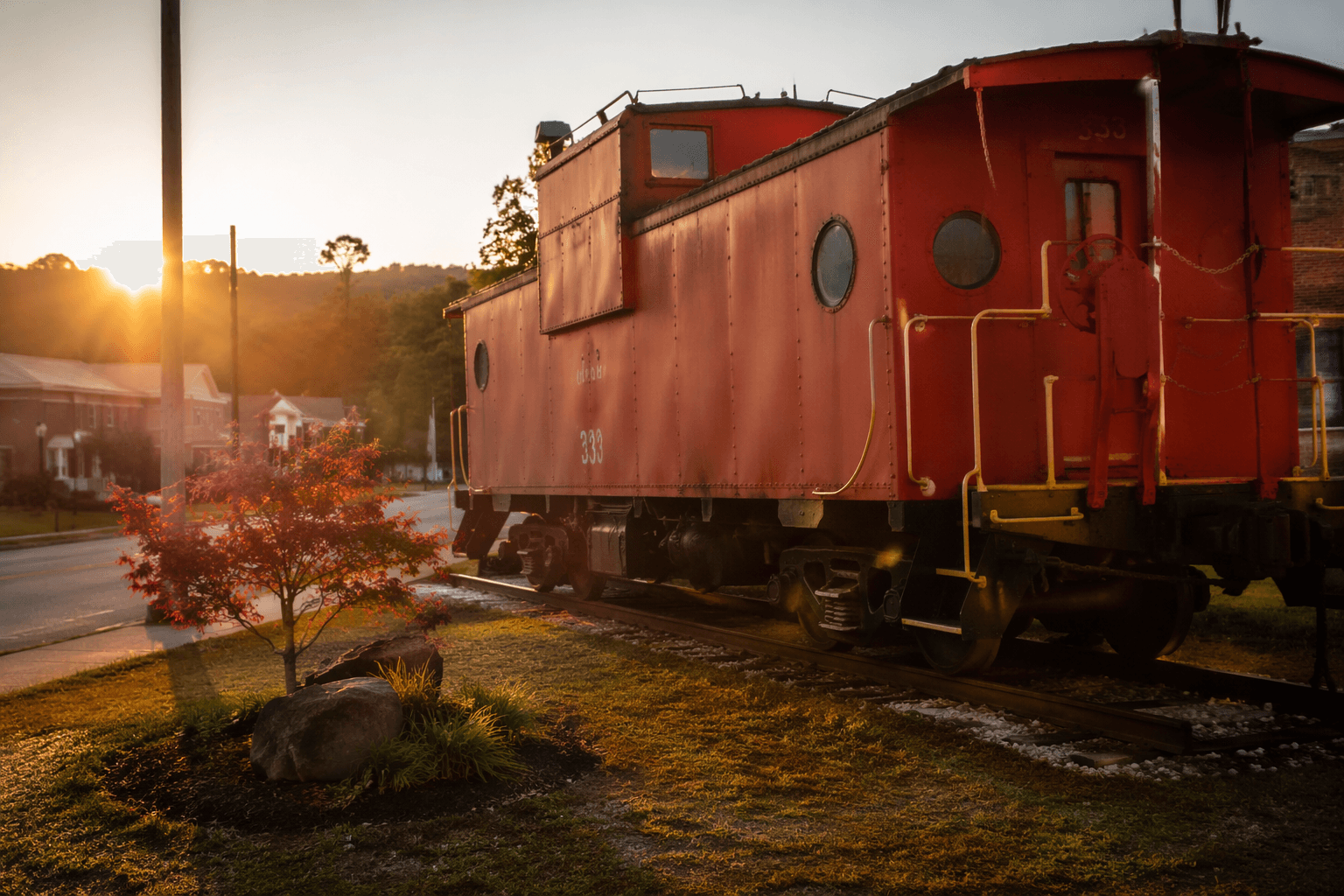
The Merci Boxcar in Welch stands in Veterans Park on Riverside Drive and Route 52 as one of McDowell County’s most unusual landmarks. It is a physical link to World War II, to France’s gratitude, and to the local work that kept a badly deteriorated railcar from disappearing altogether.
The car also carries a stewardship question that matters now: the boxcar is outside, the related artifacts are housed in Mansion House, and the story stretches from Welch to Point Pleasant. Keeping that network visible is what turns a preserved object into a public asset instead of a static relic.
What the boxcar represents
The Welch car is marked P.L.M.K. 134980, and the historical marker says it was given to the people of West Virginia by the people of France on February 7, 1949. The gesture was part of the Merci Train, a 49-boxcar response to the 1947 American Friendship Train, which had sent food and supplies to France and Italy after the war.
These were old French “forty-and-eight” cars, named for the way they could carry 40 men or 8 horses. During World War II, the same style of boxcar had hauled troops and supplies. That history makes the Welch display more than a souvenir of diplomacy; it is a piece of transport history with wartime scars built into its form.
The emotional scale of the exchange was large as well. The Friendship Train’s New York City welcome drew more than 200,000 people, a reminder that the Merci Train began as a public act of relief and recognition, not an abstract diplomatic gesture. French railroad worker André Picard is the grassroots organizer tied to the French response.
How Welch saved its car
The Welch boxcar did not arrive as a polished monument. The marker says it was found in South Charleston in 1994 in severely deteriorated condition, with very little wood left and heavy rust. It was brought to Welch on D-Day, June 6, 1996, then taken to McDowell County Vocational School, where it was renovated.
That sequence matters because it shows preservation here was active, not symbolic. The car was rescued, repaired, and then erected as a historical marker in 1997. In a county where industrial landmarks often vanish when their original use ends, the Merci Boxcar survived because local hands treated it as something worth saving.
The local record also keeps the human names attached to that effort in view. The marker preserves a roll of McDowell County names connected to the project, including W. Norris Sr., James Dotson, Richard Pickett, Shields R. Burge, James Burdette and James Gouge. Their presence on the record underscores that this was community work, carried by people close to the site.
Where the rest of the story lives
The boxcar is only part of the display. The West Virginia Merci Train page says artifacts from the car are kept in Mansion House, a historic log structure maintained as a museum by the Colonel Charles Lewis Chapter of the Daughters of the American Revolution. That arrangement splits the preservation job between an outdoor landmark and an indoor collection, which is a practical way to protect smaller objects while keeping the car visible in public.
The site also reaches beyond Welch through living memorials. The West Virginia page says four French oak trees in Tu-Endie-Wei State Park came from the Merci boxcar as saplings from France. Russell Burge later propagated saplings from acorns gathered from those trees and planted two near the present Welch site.
That oak connection matters because Tu-Endie-Wei is not just any park. It stands at the junction of the Ohio and Kanawha rivers and commemorates the Battle of Point Pleasant on October 10, 1774. The trees make the Merci story statewide, tying Welch to a memorial landscape in Point Pleasant and turning a wartime gift into a living chain of remembrance.

Why it matters for McDowell County now
McDowell County tourism materials list the Merci Boxcar among local historical sites, which puts it in the same category as other places that help define Welch as more than a courthouse town. For visitors, the car offers an immediate stop on Riverside Drive and Route 52. For residents, it is a marker of civic identity that connects a coalfield county to France, World War II, and the state’s own memorial traditions.
That is why preservation here has to stay active. The car needs continued upkeep where it sits, the artifacts at Mansion House need careful museum care, and the oak-tree connection needs interpretation so people understand why Welch is linked to Point Pleasant and to the Merci Train at all. Without that work, the site risks becoming a roadside object with a plaque. With it, the boxcar remains a public-stewardship project that still teaches how a local landmark can carry international history.
How to read the site in one visit
- the car in Veterans Park on Riverside Drive and Route 52
- the artifacts in Mansion House, maintained by the Colonel Charles Lewis Chapter of the Daughters of the American Revolution
- the French oak trees tied to Tu-Endie-Wei State Park in Point Pleasant
- the restoration history that brought a rusted car from South Charleston to Welch in 1996
A visit to the Merci Boxcar tells the full story only when the pieces are read together:
Seen that way, the Welch Merci Boxcar is not just preserved. It is still doing the work of memory, and McDowell County is the steward that decides whether that memory stays visible.
This article was produced by Prism’s automated news system from verified source data, official records, and press releases, then run through automated quality and moderation checks before publishing. The system is built and supervised by the people who set the standards it runs under. Read our full AI policy.
Did this article answer your question?