Gallup honors Navajo Code Talkers through local heritage sites
Gallup’s Code Talkers story is still on the map, from the Gallup Cultural Center to Comfort Suites’ veterans exhibit. The trail links local memory to Route 66 tourism.
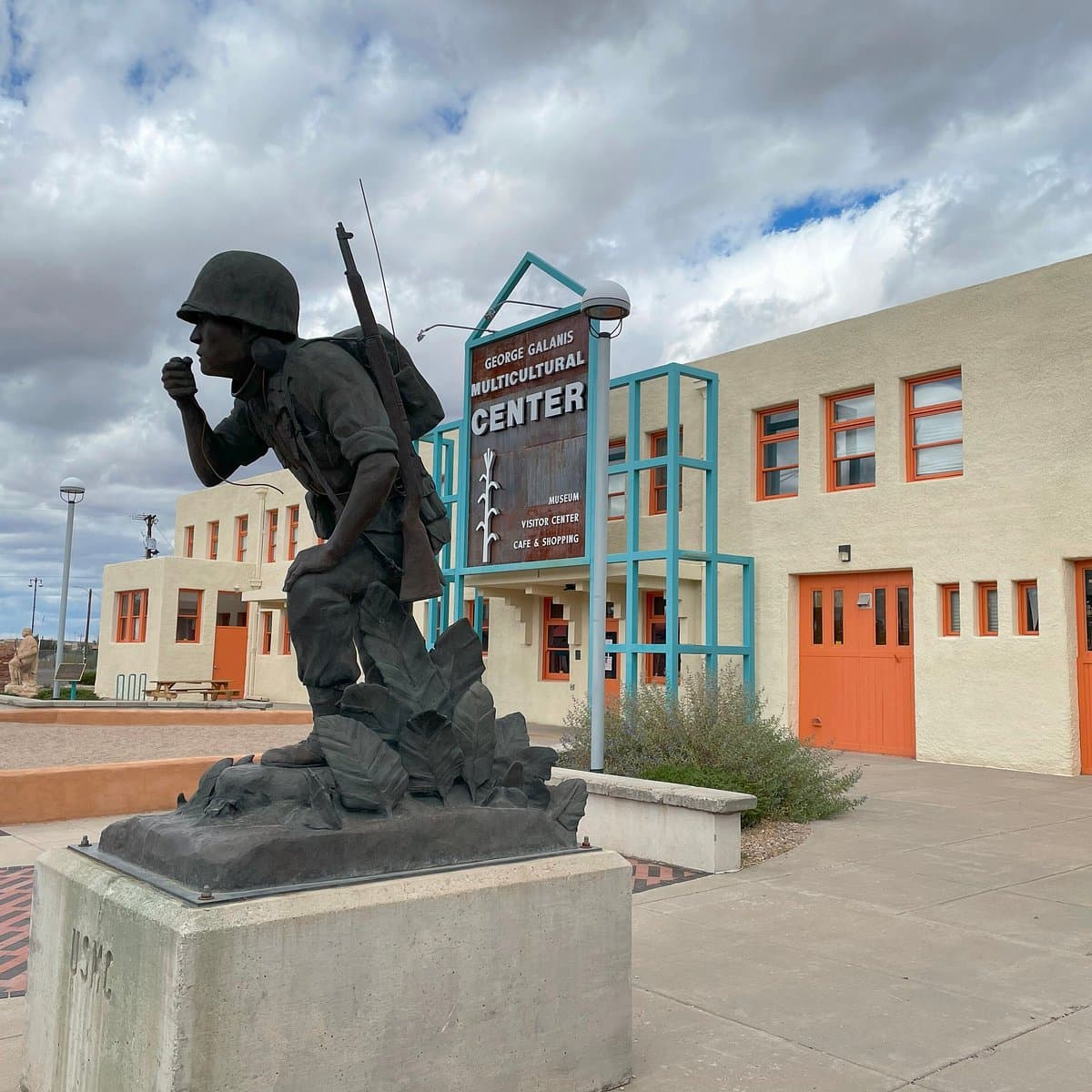
Gallup’s Navajo Code Talkers story is still visitable, not just remembered. A short local loop through the Gallup Cultural Center, Comfort Suites East Gallup Route 66, and the city’s museums and galleries puts military history in places you can actually walk into. For McKinley County families, veterans and visitors, that makes the story more than a lesson, it becomes a set of stops tied to local memory, Native service and tourism.
Gallup’s military history runs through the Code Talkers
Visit Gallup frames the city’s military tradition as one that spans more than a century, with citizens serving in every American conflict. Its Navajo Code Talkers page gives that long arc a sharply local anchor: Gallup’s connection to World War II is especially poignant because of the 29 Navajo Code Talkers. The page also preserves Maj. Howard Connor’s line from Iwo Jima in 1945: “Were it not for the Navajos, the Marines would never have taken Iwo Jima.”
That quote still does a lot of work in Gallup because it ties a global war to a very specific place and community. The Navajo Nation’s history page adds another layer by noting that the Navajo language was used during World War II, which is why the Code Talkers story belongs both to Gallup and to Diné history across the wider Navajo Nation.
Start downtown at the Gallup Cultural Center
The Gallup Cultural Center gives the trail a civic starting point. Its building was dedicated in May 1923, and it describes itself as “a central space to remember, explore, and enjoy the uniqueness of our community.” That makes it a natural stop for anyone trying to understand how Gallup presents its own identity through place rather than through a single display case.
The city’s Museums & Galleries section points to a broader network of interpretive stops, and the Cultural Center fits inside that larger map. In practical terms, that means the Code Talkers story does not sit apart from the rest of Gallup’s visitor experience. It sits alongside the city’s cultural institutions, which gives residents a place to point relatives and visitors who want a fuller sense of Gallup’s heritage landscape.
The Veterans Exhibit at Comfort Suites turns remembrance into a destination
The most concrete Code Talkers stop in town is the Veterans Exhibit at Comfort Suites. Visit Gallup says the hotel’s award-winning Veterans Museum includes one of the largest collections of Medal of Honor recipients challenge coins in the country, along with a Navajo Code Talkers room, a Pearl Harbor exhibit, a Medal of Honor Quilt and a Vietnam Veterans Memorial Wall. The exhibit also includes a Battlefield Cross display featuring dog tags of fallen veterans and a Hands of a Veteran feature, which gives the space a layered memorial feel rather than a single-topic display.
That matters because it makes the history visible in a place travelers already use. A Veterans Breakfast Club feature singled out Comfort Suites East Gallup Route 66 as “America’s Most Veteran-Friendly Hotel,” reinforcing its reputation as a stop that goes beyond lodging. On Route 66, that turns the hotel lobby into part of the heritage trail, with veteran memory folded into the visitor economy instead of hidden from it.
Why the Gallup trail reaches beyond one museum
The Code Talkers story in Gallup is local, but it sits inside a much larger national record of service. Smithsonian National Museum of the American Indian materials note that many Code Talkers earned Purple Hearts, Silver Stars, Good Conduct Medals and Combat Infantry Badges during and after the war. Smithsonian also notes that the medal presented to the Native American Code Talkers is preserved at the National Museum of American History, which places Gallup’s local exhibits within a recognized national history of military honor.
The Navajo Nation context gives the story its scale: the nation extends into Utah, Arizona and New Mexico, covering over 27,000 square miles. That geography helps explain why Gallup’s Code Talkers stops matter to families across the region, not just to museum visitors. The history is national, the language is Navajo, and the places where Gallup keeps it visible are still open for anyone who wants to follow the trail in person.
This article was produced by Prism’s automated news system from verified source data, official records, and press releases, then run through automated quality and moderation checks before publishing. The system is built and supervised by the people who set the standards it runs under. Read our full AI policy.
Did this article answer your question?