Gallup’s coal roots earned it the nickname Carbon City
Gallup’s coal camps still shape today’s neighborhoods, downtown streets, and family histories, from Clarkville and Gamerco to the Commercial Historic District.
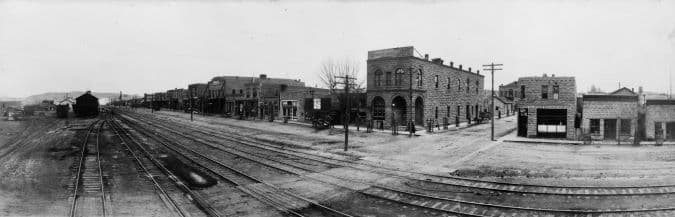
Gallup’s nickname, Carbon City, came from a coal economy that was once visible in every direction, from the ridges outside town to the railroad yards that carried the fuel away. The industry no longer anchors daily life the way it once did, but its imprint still runs through McKinley County in neighborhood names, abandoned camp sites, family memory, and the downtown streets built to serve rail and mine workers.
How Gallup became a coal town
Gallup began in 1880 as a headquarters along the Atlantic and Pacific Railroad right-of-way, and it took its name from David Gallup, an A&P paymaster. The town incorporated in 1891, McKinley County was created at the turn of the century, and Gallup was the county seat by 1901. When coal was found in the hills around the growing community, the railroad connection turned into an economic engine that tied the town’s future to mining and freight traffic.
Coal mining in the Gallup area began in 1882 when the Atlantic and Pacific Railroad reached the town. By the 1940s, the link between mine and rail was still unmistakable: in March 1943, the Gallup American Mining Company was supplying the Atchison, Topeka and Santa Fe Railroad’s freight yards with about 150 carloads of coal a week. That is the scale that made Gallup more than a rail stop. It was a supply point for the railroad economy that helped define western New Mexico.
Where the camps were, and what they looked like
The coal story was never confined to one mine. More than a dozen camps spread through the canyons and ridges around Gallup, and each one left a different mark on the landscape. Clarkville stood out for having a two-story brick commissary, a school, a library, and a hospital. It was also unusual for a mining camp because it had no saloon and prohibited liquor sales, a reminder that company rules shaped daily life as much as the work underground did.

Camp Heaton sat about three miles northeast of Gallup and was eventually abandoned when the mine closed. Structures were moved to Gamerco, another company town that grew larger and more developed as the coal company shifted its focus. Gamerco had a meat market, golf course, clubhouse, shower house, tennis courts, swimming pool, and baseball park, which makes it one of the clearest examples of how mining camps could become full community centers rather than temporary shacks on a hillside.
Mentmore opened in 1913 with a company store, post office, school, and power plant. Allison grew to more than 500 residents at its peak. The Defiance Coal Company owned about 320 acres of coal about six miles west of Gallup, another sign of how the county’s coal economy spread across a wide swath of land rather than a single isolated pit. Small frame houses, company stores, hotels, and public buildings all formed a network of places that helped turn mining into settlement.
The labor fights that shaped the county
Coal brought wages, but it also brought conflict. A Gallup historical marker says mining was one of the area’s biggest industries from the 1880s through the 1950s, and the city’s coal-mining history notes that by the Great Depression, half of Gallup’s coal miners were out of work. That collapse hit a workforce already divided by unequal power between owners, railroad interests, and laborers.
The National Miners’ Union organized in Gallup’s coal fields in 1933 and called a strike for union recognition. Governor Arthur Seligman declared martial law in Gallup during the 1933 coal strike, showing how quickly a local labor dispute became a countywide crisis. Blacklists and evictions followed, and the violence around the strike aftermath left scars that still matter when the county looks back at how work, housing, and authority were arranged. Coal was not just an industry here. It was a system that shaped who could live where, who controlled the housing, and who had leverage when demand fell.
What remains in plain sight today
The most visible remnant of the coal era is not a mine entrance. It is downtown Gallup itself. The Gallup Commercial Historic District, listed on the National Register in 2016, contains the largest concentration of historic commercial buildings in the city. The district includes 65 contributing buildings, one contributing structure, and one contributing object, and it runs along West Route 66 and West Coal Avenue, where the railroad-and-coal economy once fed stores, offices, and service businesses.
That downtown core matters because it still reflects the logic of the old town: rails, freight, trade, and workers moving through a compact commercial strip. The coal camps were often erased, repurposed, or absorbed into later development, but the built environment they helped create remains visible in street patterns and surviving buildings. In a county with 72,902 residents and a city of 21,899, those physical traces are part of the public record of how the place came together.
Why the coal history still matters in McKinley County
Gallup’s coal roots are not just a museum story. They explain why neighborhood names, property lines, and family histories still sound the way they do around town. They help explain why some places vanished when the mines closed, why other places such as Gamerco grew into fuller communities, and why downtown Gallup still carries the commercial footprint of a railroad town built to serve extractive industry.
They also connect Gallup to the wider landscape of McKinley County and the Rio Puerco valley, where rail access, labor migration, and company-town development reshaped settlement patterns across generations. As the county moves forward, that history remains tied to economic identity: not as nostalgia, but as the origin of the streets, camps, and institutions that still define life here.
This article was produced by Prism’s automated news system from verified source data, official records, and press releases, then run through automated quality and moderation checks before publishing. The system is built and supervised by the people who set the standards it runs under. Read our full AI policy.
Did this article answer your question?