Hotel El Rancho links Route 66, Hollywood and Gallup tourism
Hotel El Rancho still sells Gallup’s Route 66 myth, but its real value is tourism traffic and preservation work on East Highway 66.

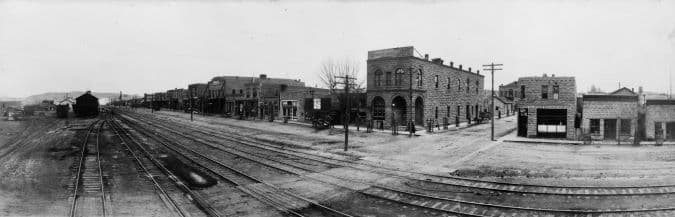
Hotel El Rancho turned Gallup into a Route 66 stage set for Hollywood royalty, and the building still anchors one of McKinley County’s most marketable stories. The National Park Service dates it to 1936, when Joe Massaglia built it along U.S. Route 66 for R.E. “Griff” Griffith, the brother of film director D.W. Griffith. Today the question is less whether the hotel has history and more how much that history still pays for Gallup, from room nights and restaurant stops to the preservation costs that come with a landmark at 1000 E. Hwy. 66.
Hollywood on East Highway 66
Griffith’s connections at Paramount, MGM and 20th Century Fox made Hotel El Rancho a natural base for directors, actors and film crews chasing western landscapes. The National Park Service describes it as a large Rustic-style building, and that matters because the architecture does part of the storytelling before a guest ever checks in. The carved wood, Navajo rugs, trophies and stairways in the lobby create the Old West atmosphere that the hotel has sold for generations.
That movie-town identity is rooted in Gallup’s place on the map. Route 66 ran straight through Gallup by 1926, and the city’s stretch of the road was paved in 1934, giving the town a hard connection to the highway era just as the film industry was looking west. Gallup is the county seat of McKinley County, so the hotel sits not only in a tourist district but in the civic center of the county’s most visible commercial corridor.
What to look for inside
The hotel’s appeal is not limited to the people who once slept there. Its own backstory names a line of recognizable guests, including Robert Mitchum, Katherine Hepburn, Spencer Tracy, John Wayne, Gregory Peck, Kirk Douglas, Humphrey Bogart and Ronald Reagan, along with Elia Kazan, Melvyn Douglas, William Holden, Billy Wilder, Ward Bond, Lon Chaney Jr., Jose Ferrer, Kim Hunter, Troy Donahue and Suzanne Pleshette. The rooms still carry star names, which turns the property into a kind of working archive for visitors who care as much about screen history as they do about lodging.
A quick walkthrough makes the hotel’s appeal plain:
- The lobby’s carved wood and Navajo rugs give the building its strongest visual identity.
- The stairways and trophy displays keep the interior tied to the western image the hotel has promoted for decades.
- The rooms named for famous guests turn a stay into a direct link with Hollywood lore.
- The exterior at East Highway 66 keeps the property visible to Route 66 travelers moving through Gallup.
That combination is why Hotel El Rancho has outlasted simple nostalgia. It is not a museum piece, but it also is not just a motel. It still functions as a commercial property whose story is built into the walls.
Why Gallup became a film town
More than 100 westerns were filmed around Gallup during the 1930s and 1940s, which helps explain why the hotel’s rise was so tightly linked to the movie industry. Visit Gallup notes that El Rancho benefited from experienced workers from a nearby Fred Harvey Company hotel, a practical advantage that mattered as much as the celebrity guest list. Good service, local labor and a busy highway location gave the hotel a business model that fit the era when western movies and road travel were feeding each other.
The National Park Service says the hotel remained linked to Hollywood and the movie industry until the mid-1960s. That timing matters because it marks the point when Gallup’s identity began to shift from a film-adjacent boomtown to a community trying to hold onto its roadside economy as travel patterns changed. El Rancho’s history tracks that larger transition better than almost any other building in town.

Preservation, decline and the hotel’s current role
The National Park Service listed Hotel El Rancho in the National Register of Historic Places in 1988, and in 2003 the property received a Route 66 Corridor Preservation Program cost-share grant for a new wood-shingle roof. Those details matter because the hotel’s value is not only cultural. A building that big, old and visible on a historic highway needs constant upkeep if it is going to keep drawing visitors instead of fading into a backdrop.
The pressure came when the interstate era weakened Route 66 and bypassed many roadside businesses. Like many properties built for the highway boom, El Rancho later closed during that downturn before eventually being revived. That revival is the key point for Gallup today: the hotel survives because it still has a job to do in the local economy, not because it can live on memory alone.
For businesses in Gallup, the hotel remains part of the city’s heritage-tourism engine. Visitors who come for Route 66 and film history still need fuel, food, retail stops and places to stay, and El Rancho keeps a piece of that traffic on East Highway 66 instead of sending it past town. For residents, the landmark is a reminder that Gallup’s most profitable image was built by transportation, entertainment and preservation working together, with the hotel at the center of all three.
This article was produced by Prism’s automated news system from verified source data, official records, and press releases, then run through automated quality and moderation checks before publishing. The system is built and supervised by the people who set the standards it runs under. Read our full AI policy.
Did this article answer your question?