How McKinley County’s overlapping governments affect residents daily
In McKinley County, the answer to “who handles this?” depends on where the problem sits: county, city, Navajo Nation, or Zuni Pueblo.
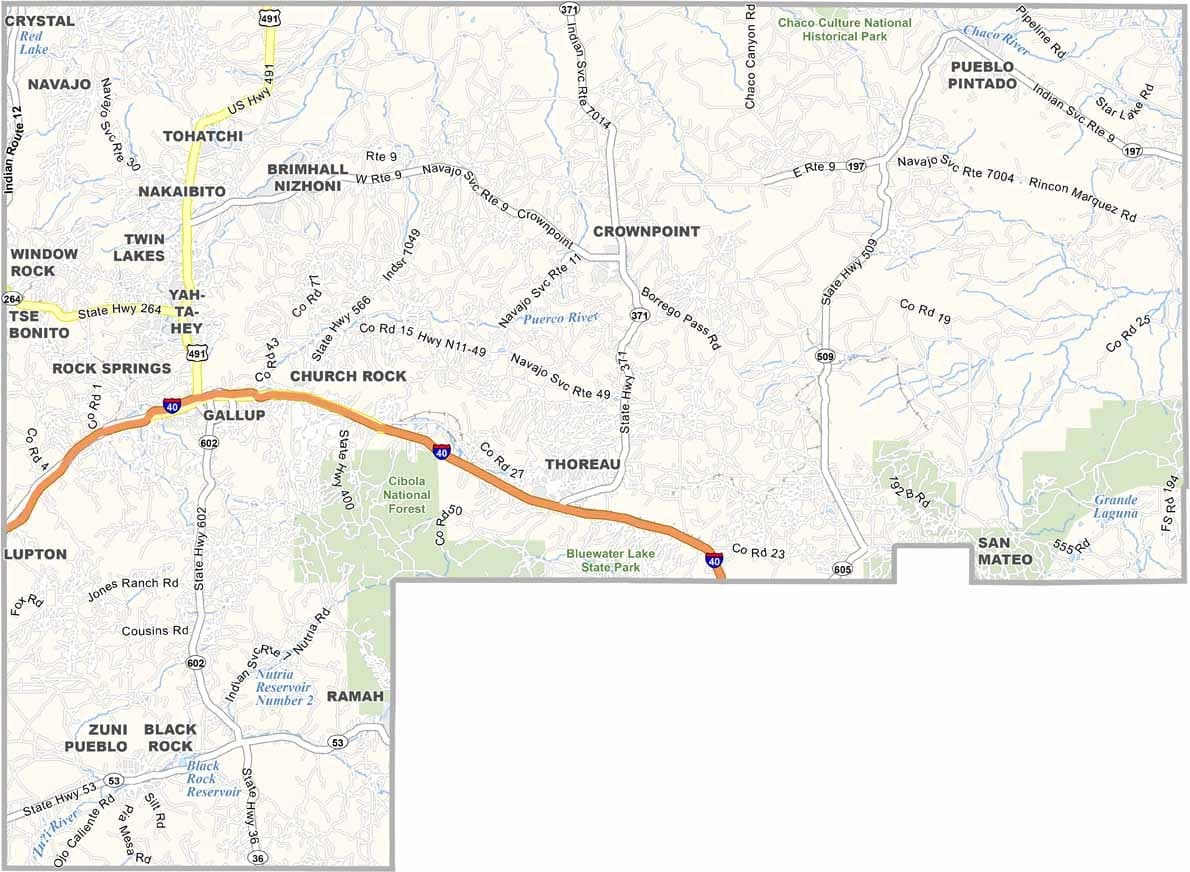
A street complaint, a land issue, or an election question in McKinley County can point to different offices because the region is shared by the City of Gallup, the Navajo Nation, the Pueblo of Zuni, and county government.
One county, four layers of authority
McKinley County covers 5,455 square miles and had 72,902 residents in the 2020 Census, so distance and jurisdiction matter here in a way they do not in many smaller counties. Gallup had 21,023 residents in 2024 estimates, but it is still only one municipality inside a much larger county that overlaps Navajo Nation and Zuni Pueblo land.
The county was created in 1901 and named for President William McKinley. A 2010 Census-based profile put the county at 78% Native American and 13.3% Hispanic, while a 2018 profile found 54.8% of residents spoke a language other than English at home.
Start with where the problem is happening
The fastest way to sort out a local problem is to ask where it happened. If it is a county road or a county facility, the county is the right starting point. If it is a city street in Gallup, the City of Gallup is the right place. If the matter involves tribal land, tribal authorities are the correct point of contact.
That simple test saves time because the county’s geography is large and its governments overlap. McKinley County’s civic structure includes county government, municipal government, and sovereign tribal governments, so a single complaint can land in different offices depending on the exact location.
Where county business is handled
County government is centered in Gallup even though its authority reaches far beyond the city. The McKinley County Board of Commissioners meets at the McKinley County Courthouse, 207 West Hill Avenue, Third Floor, Gallup, NM 87301. The county clerk’s office is also listed at 207 West Hill Ave, which is a reminder that many county services are physically anchored in Gallup.
For county purchasing, contracts, and other buying decisions, the Procurement Department is the central buying agency for McKinley County and is responsible for procurement of all goods and services for county government. That makes it the place to look when a resident, contractor, or vendor needs the county’s formal purchasing process rather than a city or tribal process.
Gallup is a city government, not the whole county
Gallup is a municipal government incorporated under the laws of New Mexico. That distinction matters because city government handles city services inside municipal boundaries, while the county handles countywide functions and the tribal governments handle matters on tribal lands.
In practical terms, if a problem is tied to a Gallup city street, a city permit, or another municipal service, the city is the first place to check. If the same issue sits outside the city limits, the county may be the correct office instead.
Navajo Nation and Zuni Pueblo are sovereign governments
The Navajo Nation is not a neighborhood association or a branch of county government. The Navajo Nation Department of Justice provides legal services to the Navajo Nation Government, including the three branches of government, executive branch divisions, 110 chapters, and entities. A Navajo Nation Council report states legislative decisions affect more than 400,000 Navajo people.
The Pueblo of Zuni also operates as its own government. The Zuni Tribe has legislative, executive, and judicial departments. That means land use, courts, and many community priorities on tribal land do not flow through county or city offices at all.
For residents, that matters most when the issue touches land, membership, courts, or services on tribal territory. A road, utility, or development question can become a tribal matter the moment it falls on Navajo Nation or Zuni Pueblo land rather than county or city jurisdiction.
A practical “who to call” map
- County roads, county facilities, county buying and contracts: McKinley County government, usually through county departments or the Board of Commissioners.
- A city street or other municipal issue inside Gallup: City of Gallup.
- Tribal land, tribal government questions, or tribal legal systems: Navajo Nation or Pueblo of Zuni authorities.
- Voting and election information: McKinley County Clerk’s Office first for local election matters, and the New Mexico Secretary of State’s Voter Information Portal, NMVote.org, for state voting information.
- Cross-boundary water, infrastructure, or growth planning: more than one government may be involved, often through intergovernmental agreements.
That last category is common in McKinley County because intergovernmental agreements are agreements among tribal, state, and local governments to solve problems of mutual concern. The Navajo-Gallup water project has shown how often those agreements are needed for infrastructure that serves more than one jurisdiction.
Why elections can be confusing here
Election help is one of the places where overlapping authority can frustrate residents the most. Native American voting-rights research has documented barriers to political participation in New Mexico and other states. In McKinley County, that context is heightened by the county’s Native population and by the fact that many residents speak languages other than English at home.
New Mexico’s Secretary of State provides the Voter Information Portal, NMVote.org, for voting and election information. Voters in New Mexico can vote at any polling place in the state on Election Day, which is useful when a voter is away from the home precinct or uncertain which location is correct.
Why the county looks this way today
Its economic history includes the decline of mining, ranching, and manufacturing after the 1970s, which left county leaders to manage development, services, and infrastructure across a wide territory with different governments and different priorities. The county’s economic development page references a Smart Growth Commission, showing that coordinated planning remains part of the county’s work.
This article was produced by Prism’s automated news system from verified source data, official records, and press releases, then run through automated quality and moderation checks before publishing. The system is built and supervised by the people who set the standards it runs under. Read our full AI policy.
Did this article answer your question?