Book on Peshtigo Fire centers Menominee history and survivors
Susan Gordon’s Peshtigo Fire novel recasts a national tragedy as a Menominee story of survival, family memory, and tribal presence that still shapes the county’s identity.
The Peshtigo Fire is often remembered for the scale of its destruction. Susan Gordon’s new novel pushes the story further, centering the Menominee people, the survivors John Mulligan and Jennie Lenerville, and the families who kept the fire alive through memory rather than headlines. In Menominee County, that matters because the disaster was not only a regional catastrophe in 1871, but also part of the area’s living record of who endured, who helped, and whose history was left out.
A fire that still defines the region
The fire struck on October 8-9, 1871, the same night as the Great Chicago Fire, and it remains the deadliest wildfire in American history. The Wisconsin Historical Society says it destroyed a swath about 10 miles wide and 40 miles long, burned more than 280,000 acres across several northeastern Wisconsin counties, and killed about 1,500 people. The National Weather Service and University of Wisconsin sources describe it as the deadliest fire in American history, and Peshtigo was consumed in about two hours.
That scale still shapes how the disaster is understood in Menominee County and the surrounding region. Peshtigo was not the only place hit. Nearby settlements including Marinette and Menekaunee were damaged or destroyed, and the fire raced across a landscape where people were suddenly forced into triage, shelter, and survival. For modern readers, the event is not just a story of flames. It is a story of how fragile settlement, health care, and mutual aid were in a frontier region that was already woven together across county and state lines.
Susan Gordon’s book re-centers the people the fire passed through
Gordon, a native of Shawano now living in Olympia, Washington, said she had long wanted to tell the story of the Peshtigo Fire and the people around it, but kept waiting for someone else to write it. After the death of her oldest son, she began with a poem, then moved into research and writing, eventually producing Conflagration: How Love and Courage Survived America’s Deadliest Fire. She built the novel around real-life survivors John Mulligan and Jennie Lenerville, using their story to show that the fire’s legacy is also a story of attachment, care, and endurance.
That choice matters in a place like Menominee County because the most durable local histories are often carried through family storytelling, not archives alone. A book that follows survivors instead of only ashes gives readers a way to understand how disaster is remembered at kitchen tables, in tribal memory, and in the names passed down across generations. It also broadens the frame beyond ruin, making room for love, aid, and the decisions that allowed people to live through the night.
The Menominee were participants in survival, not bystanders
One of the book’s strongest claims is that the Menominee people were not passive bystanders in the disaster. Gordon’s research led her to accounts of the tribe’s own preparedness, including digging trenches around settlements and opening homes to injured fire victims who needed shelter. Those details matter because they place Indigenous knowledge and emergency response inside the history of the fire, not at its margins.
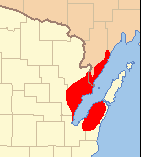
David Grignon of the Menominee Indian Tribe of Wisconsin praised the book for acknowledging Menominee people who tried to help others when the fire struck Peshtigo. His point reaches beyond a single novel. The region was and is Menominee land, and the tribe says its history in the area now known as Wisconsin, and parts of Michigan and Illinois, dates back 10,000 years. In that context, the fire becomes part of a much longer story of continuity, not a break that erased what came before.
What the record preserves about aid and family ties
Contemporary newspaper coverage preserved in the University of Wisconsin digital collections shows that help was already moving as the first reports came in. The account says, “The people here and the resident physicians both here and at Menominee, are nobly rendering all the aid in their power.” That line captures more than speed. It shows that medical care, transportation, and local coordination were central to survival in the fire’s aftermath, with people in Marinette and Menominee already carrying victims, opening space, and responding before the scale of the disaster was fully known.
The Wisconsin Historical Society’s account of Abraham and Elizabeth Place adds another layer to the region’s memory. Elizabeth Place is identified as a Menominee woman and a Peshtigo Fire survivor, and the record notes the complicated attitudes of the time toward interracial marriage. In plain terms, the story shows that Indigenous-white family ties were already part of the social fabric that the fire affected. That makes the disaster more than a tally of dead and missing. It becomes a record of households, kinship, and the people whose survival depended on one another.
Why this story still belongs in Menominee County now
The force of Gordon’s book is not only that it revisits a famous disaster. It insists that the fire story is incomplete without the Menominee people who lived on the land before the flames, helped neighbors when they could, and remained there after the smoke cleared. For Menominee County readers, that is a reminder that what communities preserve is not only architecture or official monuments, but also the names, families, and Indigenous histories that keep a place honest.
As older tragedies fade from everyday conversation, the risk is not just forgetting a date or a burn scar. The deeper loss is forgetting who stood in the path of the fire, who organized aid, who survived by instinct and shared knowledge, and who was later written out of the story. Gordon’s novel helps pull those names back into local memory, where the region’s history is strongest when it is shared, recognized, and kept alive.
This article was produced by Prism’s automated news system from verified source data, official records, and press releases, then run through automated quality and moderation checks before publishing. The system is built and supervised by the people who set the standards it runs under. Read our full AI policy.
Did this article answer your question?